

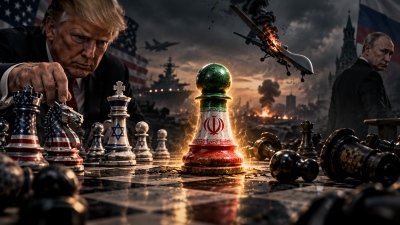
The military and diplomatic thriller unfolding in the Persian Gulf region is reaching its climax... At a moment when reports indicated that the US and Iran, through behind-the-scenes consultations, had agreed on a gradual opening of the Strait of Hormuz alongside the lifting of the American blockade of Iranian ports—a move that could have led to a broader agreement and a permanent ceasefire—the two sides instead engaged in a hours-long military clash east of Hormuz, involving a heavy exchange of fire. President Trump maintained that it was a "friendly strike" and that the ceasefire remains in effect, while the Iranians, for their part, accused the US of violating the truce and warned that they would send them to the bottom of the Gulf. Analysts argue that this is a case of "controlled escalation" as both Washington and Tehran attempt to demonstrate their resolve and power to impose their terms at the negotiating table. However, it is becoming clear that Trump has already been defeated and humiliated. One only needs to look at the statements Trump has made over time to see the fate of the maximalist demands he had set for Iran. It is evident that the American president has not achieved any of his goals. Many analysts do not rule out that a humiliated Trump is capable of anything—even unleashing total chaos in the Persian Gulf to satisfy his ego and prove his strength. Reports already suggest he is still considering a ground invasion scenario, though even in this case, it appears he is too late.
Failing to achieve his goals
It appears Trump has fallen back into a familiar pattern, similar to his previous threats regarding the "obliteration of entire civilizations." This is a tactic now considered recognizable: a public escalation of tension, the imposition of suffocating deadlines, and threats of overwhelming military force, while simultaneously leaving a window open for diplomacy. It remains to be seen what will emerge from the latest round of peace talks regarding the war with Iran, even as the two sides were exchanging fire. President Donald Trump has claimed in the past that a deal was "just around the corner." And the potential agreement now on the table looks, in any case, more preliminary than final. What seems increasingly clear, however, is that Trump is not achieving what he originally promised with this war.
Abandoning his demands one by one
In his apparent anxiety to end a conflict that proved far deeper and more resilient than he predicted—and which plunged his popularity to historic lows—Trump appears to be abandoning many of his original maximalist demands one by one. This does not mean that any agreement that eventually emerges cannot be considered a success. It does mean, however, that it falls significantly short of the bar he himself set just two months ago.
Talks on... a memorandum of understanding
Current talks, as reported by CNN, appear to be focusing on drafting a brief memorandum, which would outline the process for a negotiated end to the war. As of Thursday, however, the US was still awaiting Tehran's response to the proposal. The memorandum would trigger a 30-day negotiation period with the primary goal of "freezing" the Iranian nuclear program for a specific timeframe—American officials are reportedly asking for at least 10 years—as well as the surrender of Iran's stockpiles of highly enriched uranium. In exchange, the US could move toward concessions, such as sanctions relief and the release of billions of dollars in frozen Iranian assets. At the same time, both sides would commit to lifting restrictions on navigation in the Strait of Hormuz.
They will never get nukes
From the beginning of the war, however, Trump maintained that his goal was not a temporary "freeze" of the nuclear program, but to ensure that Iran never acquires nuclear weapons. He had repeated this many times, placing particular emphasis on the word "never." Even the prospect of a negotiated deal was something he had categorically rejected. "There will be no deal with Iran except for UNCONDITIONAL SURRENDER!" Trump had written on social media one week after the start of the war.
No regime change
Another objective that appears to have been quickly abandoned was regime change in Tehran. In his address on the night the war began in late February, Trump had spoken directly to the Iranian people, saying: "When we are finished, take back your government," adding: "It will be yours for the taking." "Now is the time to take your destiny into your own hands and unlock the prosperous and glorious future that is within your reach," he had stated. "This is the moment for action. Do not let it pass." This was not a random aside; it was the closing of his speech. Today, however, regime change is not even part of the negotiations. Trump argued that the elimination of several Iranian officials constituted "regime change" in itself, an argument that is hardly convincing—especially when the current Supreme Leader is the son of the previous one.
Failure in the Middle East
Another key goal of the American administration was ending Iran's support for allied organizations in the Middle East, such as Hamas and Hezbollah. On March 2, Trump had stated that one of his main aims was to ensure that Iran "will no longer be able to arm, fund, and direct" these groups. Two days later, White House spokesperson Karoline Leavitt had spoken of the need to ensure that "Iran's proxies in the region can no longer harm Americans." When Trump falsely claimed in mid-April that Iran had agreed to "everything," he told CBS News that Tehran had accepted stopping all support for allied groups. Today, however, there is no reason to believe that this threat has been eliminated or that it constitutes a core point of the talks. The details of the negotiations that have come to light, including through CNN, do not even include mentions of these organizations. And when Trump spoke to PBS News about the chances of a deal on Wednesday, he made no mention of the subject.
Far from the objectives
Rarely does a war achieve all its objectives. However, it is striking how maximalist Trump's goals were from the start—and how quickly his administration appears to be abandoning several of them. In some cases, American officials seemed to stop trying almost immediately. And at least some of the hardliners toward Iran appear to now realize that the outcome may be far from what they expected.
The question to Hegseth
At a Pentagon briefing on Tuesday, a journalist who had previously praised the Defense Department and the war effort pressed Defense Secretary Pete Hegseth to explain why neither regime change nor Iran's unconditional surrender had been achieved. "What happened to that commitment to the Iranians?" the journalist asked. "And when did the President decide to abandon the demand for unconditional surrender?" Hegseth argued that Trump did not back down and left open the possibility that the Iranian people might overthrow their government at some point in the future, if they so wish. He then added that the main goal remains to ensure that any agreement with Iran will include a provision so the country "never acquires a nuclear weapon." As he said, Trump "remained committed to this, and the talks revolve around this goal." Just a few days later, however, it seems even this "never" may no longer apply.
Donald Jensen (American Diplomat): Controlled escalation, no comprehensive agreement
Former American diplomat and security expert Donald Jensen characterized the recent naval clash between the US and Iran in the Strait of Hormuz as a "controlled escalation" rather than mere skirmishes, arguing that both sides are "trying to show their resolve" while simultaneously attempting to "reach a framework of agreement on certain critical issues." Speaking to Al Jazeera, Jensen estimated that it is possible for some form of agreement to exist between Washington and Tehran, however, "it will not be the comprehensive agreement that either side desires." As he said, the agreement will be "much more limited" and will focus primarily on ensuring navigation in the Strait of Hormuz. At the same time, he warned that broader diplomatic goals—"particularly those concerning Iran's nuclear program"—will have to be "temporarily set aside" as international priority shifts toward the need for the "global economy to return to normal operation."
Trump may take the risk and decide on a ground invasion of Iran
US President Donald Trump is reportedly considering the possibility of a ground operation in Iran, however, he is already significantly late in moving forward with such a move, according to Tehran University professor Mohammad Marandi. "There is a high probability that Trump will take the risk. Most of the new equipment moved to the region is intended for ground operations. Huge sums have been spent, and I don't believe this is just a bluff. Therefore, the probability of an attack is high. But I believe it is now too late for such an operation," Marandi stated. According to him, the Americans' strategic difficulty is directly linked to the extreme temperatures expected to hit the Middle East during the month. "In the Arabian Peninsula, from mid to late May, the heat becomes extreme and temperatures soar. By the end of the month, conducting war operations becomes extremely difficult. The US forces will face serious problems," the analyst noted characteristically.
Kamala Harris fires at Trump over Iran: He is not an idiot, but he is dangerous – Russia is the big winner
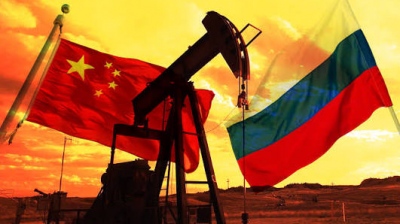
Former Vice President Kamala Harris launched a fierce attack on US President Donald Trump, calling him dangerous. "I see the war with Iran, which the American people do not want and which was not authorized by Congress—but even if it had been authorized, it should never have started," Harris told the audience during a discussion with Nevada Democrats in Las Vegas. "He talked about total destruction and then said he did it. All of this is just bullsh*t," Harris said to loud applause, noting that she had promised not to swear in public again. "Do you want to know who is the big winner of the war with Iran? Russia. Because of oil, what did he do? He lifted sanctions against Russia. Do you know what that means? They are making money selling oil that they previously couldn't sell. What else does it mean? That we are sending artillery, ammunition, and anti-aircraft systems that would otherwise be headed toward Ukraine. So the consequences are enormous," Harris stated. "I am not going to call him an idiot. He is dangerous. He is dangerous," Harris continued.
www.bankingnews.gr





Σχόλια αναγνωστών