

The strategic balance shifts toward Tehran - Iran is expected to deliver its response to the American plan to Pakistani mediators on Thursday, May 7.
Despite categorical denials from top Iranian officials regarding a deal with the US, the Americans insist that both sides are nearing an agreement, though they do not rule out last-minute surprises. Indeed, American media outlets report that today, Thursday, May 7, the US expects Tehran’s formal response to the peace proposal submitted by Washington. While President Donald Trump claims a deal is imminent and threatens "harder" bombings if Tehran refuses, his Iranian counterpart, Masoud Pezeshkian, reportedly told Emmanuel Macron that Tehran cannot trust the US, citing military attacks following previous negotiations. Meanwhile, Mojtaba Khamenei, representative of Iran’s Supreme Leader, stated that Iran speaks from a position of strength, as the Revolutionary Guards send a clear message: Iran will not negotiate its nuclear program and control of the Strait of Hormuz must remain in Iranian hands. Under a cloud of suspicion, fake news, and propaganda, all eyes are on Tehran’s response, which will also reveal the extent of China’s role in pressuring for a settlement.
Message from Mojtaba Khamenei: Negotiate from a position of strength...
The representative of the Supreme Leader to the Islamic Revolutionary Guard Corps emphasized the importance of unity, stating: "If you go to negotiations, go from the position of a victorious and angry nation." According to the Tasnim news agency, the representative made these remarks during a ceremony for Admiral Alireza Tangsiri. He urged Iranians to maintain unity and cohesion, warning against allowing "infiltrators" to create rifts in their defensive barrier. He further asserted that if Iran’s rights are not granted, they will be taken by force in the Strait of Hormuz through defiance of "arrogance."
Mohsen Rezaei: Nuclear program not up for negotiation, Hormuz belongs to us
Mohsen Rezaei, former commander of the IRGC and current member of the Expediency Discernment Council, declared that Iran "will not negotiate the nuclear issue with anyone" and that control of the Strait of Hormuz must remain with Tehran. He warned that if management of the strait slips from Iran’s hands, the enemy will weaponize it against the Iranian people. Rezaei emphasized that the "Iranian model" requires regional security to be provided by regional actors, demanding that foreign forces—whether American or European—must depart.
Iran's response expected today, May 7
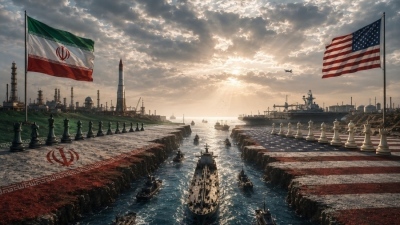
Iran is expected to deliver its response to the American peace plan via Pakistani mediators today. Iranian sources emphasize that nuclear negotiations are currently off the table; the focus remains strictly on ending conflicts across all fronts. Tehran is demanding direct guarantees from the UN Security Council, the lifting of sanctions, and the reopening of the Strait of Hormuz. Only after these goals are met will Iran consider discussing its nuclear program. Additionally, Iran has established the "Persian Gulf Strait Authority," asserting that the maritime regime has changed and all passing vessels must now communicate with Iranian authorities. While some hope the human and economic cost of the war will drive a settlement, Trump’s past claims of an "imminent deal" have frequently been met with Iranian intransigence.
Trump at a dead end
If words could win wars, the conflict with Iran would have ended long ago. However, the president remains unable to find an exit strategy from a war that was supposed to last six weeks but is now entering its tenth. Trump is trapped between a geopolitical reality and domestic political pressure. Iran’s leverage over the Strait of Hormuz prevents a military conclusion at an acceptable cost. Domestically, with an approval rating near 30% and gas prices exceeding $4.50 per gallon, the president lacks the political capital to sustain a prolonged conflict. This reality explains his relentlessly optimistic statements regarding peace talks and his tendency to announce or shift military strategies without warning.
The last hope
The final hope rests on a one-page memorandum currently being negotiated through Pakistani mediation, as reported by CNN. The document would end the war and initiate a 30-day period to resolve core disputes. While this simple approach appeals to Trump’s preferences, a single page seems insufficient to resolve nearly half a century of hostilities, including complex nuclear issues and regional proxy networks. Furthermore, Iran's demands for massive sanctions relief and control over oil transit through the Strait of Hormuz remain significant hurdles for any lasting peace.
The new American operation that lasted only hours
Washington’s war effort has been characterized by strategic confusion and sudden shifts. For instance, Secretary of State Marco Rubio mentioned Tuesday that "Operation Epic Fury" had concluded, only to spend an hour promoting a new initiative, "Project Freedom," aimed at reopening the Strait of Hormuz. However, within hours, the project was paused after escorting only a few ships. Trump claimed the pause was intended to bolster peace talks, but the rapid flip-flopping failed to project American resolve. Experts describe this as a failed "silver bullet" strategy—the belief that a single decisive action could force Iran to bow.
Iranians refuse to bend
Initial American and Israeli strikes targeted high-ranking officials, including the Supreme Leader, followed by an air campaign and a naval blockade. Yet, none of these moves have destabilized the regime, as a new generation of hardliners has filled the leadership vacuum. There are no signs of a fracture within the Revolutionary Guards that would suggest a regime collapse. In a war that Iranian leaders view as existential, survival is perceived as a form of victory.
A "skirmish"...
Those expecting clear strategic thinking were disappointed by the president's comments to a group of military mothers on Wednesday. Trump appeared vague, downplaying the scale of a massive operation involving thousands of US troops. He referred to the conflict as a "skirmish," claiming things are going "incredibly well," much like the brief operation in Venezuela. It is notable that 70 days into the war, the president still compares it to the hours-long effort against Nicolás Maduro. Such improvisation and denial do not suggest a leader with a clear path out of the conflict.
When military operation fails to yield strategic success
This war serves as a lesson in how smaller nations can resist superpowers through asymmetric warfare. While the administration claims to have damaged Iran's naval and air capabilities, Trump's refusal to deploy ground troops—a rare act of restraint—means a definitive military victory was never likely. The limitations on US operations, combined with Iran’s realization of its power over the Strait of Hormuz, have blurred the battlefield. Analysts point to a vast gap between American operational capabilities and the difficulty of achieving a successful strategic outcome.
"This conflict is not over"
This gap explains Trump's inability to secure a quick victory despite significant military results. There has been no popular uprising in Iran, nor has Tehran abandoned its nuclear ambitions. There are no guarantees that the Revolutionary Guards won't rebuild their networks in Lebanon or Gaza. As experts noted on CNN, the conflict is far from resolved. Even if operation names change or ceasefires are announced, the reality remains: the Strait of Hormuz is closed, oil prices are sky-high, and American companies are suffering.
How the US negotiating position weakened
The vulnerabilities of the American position were revealed when Marco Rubio stated the US "preference" is to reopen the Strait of Hormuz for free use. However, the straits were already open before the war began. By making the waterway a central negotiation point, the strategic balance has shifted in Tehran's favor. While a quick resolution is vital for soldiers and civilians alike, the president's ambiguity and the reliance on a one-page memorandum raise serious doubts about the administration's ability to secure a meaningful peace.
Mohamad Elmasry: US more serious about a deal
According to analyst Mohamad Elmasry, the United States is showing signs of being more serious about a deal, though questions remain regarding American compromises. Elmasry noted that the details of the 14-point proposal sent to Iran are unknown, but Iranian statements suggest the proposal may not meet Tehran's requirements. He argued that Trump has spent weeks trying to force an Iranian capitulation, a goal the analyst believes is unlikely to be achieved.
CNN: Nearing an agreement
Despite denials from Iranian officials like Speaker Mohammad Baqer Ghalibaf, who dismissed reports of a framework agreement, CNN continues to report that both sides are close to a memorandum to end the war. White House officials reportedly received positive signals from Pakistani mediators on Tuesday. This renewed diplomatic effort suggests that, despite the rhetoric, a compromise may be moving forward.
"Very good talks"
Trump touted the diplomatic progress on Wednesday, stating the US had "very good talks" with Iran. A one-page draft reportedly includes a 30-day negotiation period to resolve thorny issues like nuclear stockpiles, frozen assets, and the Strait of Hormuz. While earlier proposals sought a 20-year moratorium on uranium enrichment, the current draft may discuss a 10-year period.
What the memorandum includes
Specifics remain unconfirmed, but sources suggest the plan involves Iran moving its highly enriched uranium out of the country. Trump told PBS that terms would involve transferring the material to the US and closing underground facilities. However, a similar demand contributed to the collapse of Vice President JD Vance's previous talks in Pakistan, raising questions about how Trump's latest rhetoric will affect current negotiations.
Reviewing the proposal
Iran is still reviewing the latest US proposal, according to Foreign Ministry spokesperson Esmaeil Baghaei. Positive signs from Pakistan reportedly influenced Trump’s decision to pause "Project Freedom." However, sources told CNN that the more the US pushed aggressive military agendas, the more it empowered Iranian hardliners.
Hardliners gain ground
Trump’s priority is a diplomatic exit and reopening the straits. While the president expressed optimism, he also issued a fresh threat on Truth Social: if no deal is reached, bombings will resume at a higher intensity. Administration officials had hoped to finalize a framework involving an enrichment suspension and the lifting of Hormuz restrictions in exchange for sanctions relief, a goal previously pursued by Vance, Witkoff, and Kushner.
Wall Street Journal: US wants 20-year enrichment halt
The Wall Street Journal reports that the US is demanding a 20-year moratorium on Iran's nuclear enrichment and the surrender of all enriched material. Washington also seeks the dismantling of facilities at Fordow, Natanz, and Isfahan, along with a ban on underground activities and "on-demand" inspections.
Mark Kimmitt: Trump's demands are unrealistic
Former Assistant Secretary of State Mark Kimmitt argues that Trump’s demand for zero enrichment is unrealistic. He noted that Iran will likely insist on its right to enrich uranium to 3.67%, as permitted under international treaties. Kimmitt suggested that while a permanent halt is unlikely, Trump could still claim a diplomatic victory if he secures a temporary suspension of all enrichment activities.
www.bankingnews.gr




Σχόλια αναγνωστών