

In a period where geopolitical tensions and disruptions in global supply chains are reshaping the map of international trade, critical maritime passages are returning to the center of global economics and strategy. From the Strait of Hormuz to the Strait of Malacca and alternative infrastructure projects in Asia, the "arteries" of global trade are being transformed into arenas of competition, energy pressure, and geopolitical influence.
Already, Hormuz is closed, and its impact on energy, industry, and transport highlights how fragile the global production chain has become, affecting everything from US and European automakers to aviation and logistics worldwide. At the same time, in Asia, the discussion regarding new trade corridors and alternative sea and land routes is being rekindled, with major powers redrawing power strategies around critical passages and infrastructure. In this environment of increasing uncertainty, global flows of trade, energy, and technology are no longer determined solely by the market, but also by geography, security, and the control of strategic points, which are gaining ever-greater importance for the world's economic and political balance.
The tentacles of the Hormuz crisis
Not only oil and gas companies, but also automotive and aviation industries are praying for the liberation of the Strait of Hormuz. And this is true across the entire world. What are they suffering from, and what are they being forced to abandon? The three Detroit companies—General Motors, Ford, and Stellantis (which owns various brands, including Jeep)—all speak of commodity inflation. Everything is becoming more expensive, from aluminum to plastics and paints. The rising prices for chips used in car wiring are worsening the situation. They calculate that all of this will cost American automakers alone $5 billion in additional annual costs.
Inflationary pressures
Naturally, they will pass this cost on to customers. Initially, this may not manifest as an immediate price increase, as manufacturers will fear a drop in sales, but rather as a lack of discounts, a reduced choice of equipment levels, and longer delivery times. However, if the situation is not resolved within six months, car prices will rise by five to ten percent, or even more for certain models. This will affect not only the US but the entire world. The Hormuz crisis is unique because it affects all regions indiscriminately. The German automotive industry—Volkswagen, BMW, and Mercedes—is also suffering. Their main problem is the lack of helium, which is essential for the production of semiconductors, batteries, chips, airbags, and so on. Qatar supplied just under half of the Germans' needs, but now deliveries have stopped due to the closure of the strait.
Everyone will be affected
However, the Japanese automotive industry faces the most difficult situation. Toyota and Mazda are complaining about actual shortages of aluminum, car parts, petrochemicals, paint thinners, and other components. While American automakers can get away with increased costs, Japanese factories may not close entirely, but they might significantly reduce the production of certain models until the supply chain is restored. This would mean much greater losses.
Who can benefit
Electric vehicles and hybrid models are at greater risk, especially in Europe. However, Chinese electric vehicles and hybrids could benefit significantly from this situation and capture additional market share from the Europeans. This is because the Chinese auto industry depends less on Middle Eastern suppliers and produces many components itself, including chips. Chinese electric vehicles could, in terms of both price and availability, undercut their European competitors both within Europe and globally. This will increase tensions between countries but will be quite satisfactory for buyers.
The fuel problem
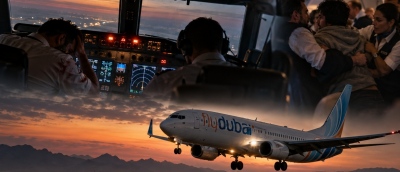
The increase in fuel prices at gas stations will annoy all drivers without exception. Flights are also becoming more expensive and, in fact, are becoming a rare commodity on a number of routes. The world has never seen an aviation crisis of this magnitude, especially concerning jet fuel. There have been occasional problems with refueling, but these were limited to isolated areas and local crises. Now, however, absolutely every global carrier is involved in one way or another.
Similarities with the 1970s
During the oil crisis of the 1970s, jet fuel prices also skyrocketed for everyone, but the logistical problems we have now did not exist then. Carriers are facing losses in the millions, and the entire aviation industry is facing losses in the billions. This is not only due to shortages and rising jet fuel prices but also to lost profits from flight cancellations and increased operating costs, including compensation. According to IATA, Middle Eastern airlines carried 61% fewer passengers in March compared to a year earlier. In other words, passenger traffic was cut by more than half. Emirates, for example, is operating at only two-thirds of its pre-crisis capacity. No recovery in traffic is expected in May. The largest Middle Eastern airlines—Emirates, Etihad, and Qatar Airways—were the first to take a significant hit and, of course, have not fully recovered. They were forced to significantly adjust their schedules for May.
Cutting seats
Thousands of flights have been cancelled worldwide. According to Cirium, global airlines have removed two million passenger seats from their schedules. The German airline Lufthansa alone has cut 20,000 flights, earning the top spot in this "anti-aviation" ranking. This will save the airline over 40,000 tons of jet fuel. Delta Airlines and Turkish Airlines have also cancelled many flights. Air France reports that it has received recommendations not to add extra flights to Singapore and Tokyo, two major hubs for airlines. Airports are simply trying to save fuel. Airlines are attempting to reduce fuel consumption wherever possible to ensure longer-lasting fuel reserves. For example, they are replacing larger aircraft with smaller ones that consume less fuel. Western media report that Etihad previously used a large 400-seat Airbus A350 to fly from Abu Dhabi to Hong Kong. Now, it has been replaced by a more compact Boeing 787 with 220-300 seats.
The "safe" players
However, as always in every crisis, there will be those who can benefit from it. The conflict has logically increased the demand for direct flights between Europe and Asia, avoiding layovers in Abu Dhabi or Dubai. Air France and Air China have now begun introducing additional direct flights on this route using spacious Boeing 777 aircraft. Russia remains less vulnerable here, as in other markets. The Russian Ministry of Energy assures that the country is fully self-sufficient in aviation fuel. However, generating excess profits will be difficult, as Russian airlines have been blocked from many international destinations. Nevertheless, direct flights from Russia to Asian countries are undoubtedly in high demand right now. Even without an immediate price increase, this will mean higher transport costs, as direct flights are inherently more expensive than connecting flights.
Another strait under threat
There are three stories regarding "waterways for the world of tomorrow": they are simply magnificent and, first, show who will be who in this world of tomorrow. Second, they show which new or old routes goods will follow tomorrow (with the addition of the word "probably"). Thus, nothing is eternal or sacred anymore regarding free navigation—neither the Strait of Hormuz, nor even, perhaps, the Suez Canal. But there is a much more important artery: the Strait of Malacca, which connects the Indian Ocean with the Pacific Ocean. About one-third of all global trade flows through it, including (according to various estimates) 20% of global oil shipments and up to 80% of China's oil imports.
Trump's concern
Now, as Americans sadly discuss what Donald Trump will do in Beijing on May 14 (if he goes), it has almost become commonplace to say: well, okay, he has nothing with which to pressure the Chinese, but he can close the Strait of Malacca, and Beijing will have a difficult path. This is the reality—blocked straits. The result—the first plot point—is that the Thai project at the Isthmus of Kra (44 kilometers wide) has been revived once again. This is a very thin strip of land at the base of the Malacca peninsula, comically similar to a similar strip of land between North and South America, the Panama Isthmus (48 kilometers at its narrowest point). And who in Asia hasn't planned, for various reasons and considerations, to connect two oceans—the Pacific and the Indian—through the Isthmus of Kra. But now things are getting serious.
Thailand's role
Since last fall, Thailand has had a new government, led by a remarkable and flamboyant figure, Anutin Charnvirakul. This government, as recently revealed, is seriously launching "Project Kra" through a series of meetings with investors. The preliminary cost has already been announced: "over $30 billion." This idea has been the subject of a series of negotiations, particularly between the governments of Thailand and Singapore. This port city was founded in the early 19th century by the British to control the Strait of Malacca and remains very important to them today. But other negotiations are also underway across Asia and beyond.
It's not like Panama
We are not talking about a new Panama Canal here, but about a more modern construction—a "land bridge" across the isthmus, connecting two existing port cities in the waters of the Pacific and Indian Oceans. It is not 44 kilometers long, but rather 90, with plans for the construction of a highway and a railway line, as well as other infrastructure. While a new route for supertankers is not envisioned, it represents a relatively small start to relieving congestion in the world's main artery. The general idea: robotic (Chinese-style) container handling from sea to land and back—a journey of just a few hours from ocean to ocean.
Beijing's planning...
This style is unmistakably Chinese—it is clearly part of Beijing's plans to create, essentially, a new trade infrastructure across Eurasia and the world. Everything here is linked to its own successfully implemented projects for building a railway network across Southeast Asia, as well as many other ideas. But there is also India. And here begins the second story—called the Nicobar Islands. These are the ones located at the entrance to the Strait of Malacca from the Indian Ocean. They belong to India.
What is really happening today
Suddenly, the discussion regarding the "Great Nicobar" project was rekindled, as were visits by opposition leaders. The essence of the project is the construction of a transshipment hub for goods, a naval and air base, and a center for monitoring the entrance to the Strait of Malacca. In short, a "logistics nerve center" for two oceans. We are essentially witnessing a tug-of-war between the two superpowers of tomorrow—India and China. The US, with its habit of blocking trade arteries—who is it in the end? Which America or Europe? Thus, we read in ideologically biased Indian media about how, nearly a thousand years ago, the Indian ruler Rajendra Chola sent a powerful naval expedition across the ocean into these waters. Because back then, in those parts, roughly where Indonesia and Malaysia are today, there was a state called Srivijaya, which interfered with India's trade with China. And Srivijaya was not satisfied—we can repeat the same. That is how a true power behaves.
India's position
The above should not be seen in isolation from the machinations of the West. A predictable outcry has broken out regarding the Great Nicobar Project, including claims that any construction there will affect the climate in Delhi or Mumbai. What is so predictable about this? The fact is that environmental activists have said roughly the same thing about a long list of projects: the Mumbai metro, the Kudankulam nuclear power plant, and the steel mill in Odisha. In short, no national project of which the country is proud and which has led to its impressive growth in recent years has escaped the "green plague." "A market for environmentalists waiting for foreign funding has developed in the country" is the mildest conclusion from astute observers. The takeaway from this is one thing: the world will be non-Western—it already is. This new world will see the creation of numerous new trade routes, replacing and complementing those that supported the old world. Finally, the simple geographical fact of possessing territories and coasts like Russia makes it essential for this future world. And active participation in creating such routes—even more so.
www.bankingnews.gr




Σχόλια αναγνωστών