

In recent weeks, Ukraine has intensified its attacks—using either drones or missiles—against targets deep within Russian territory. Just earlier today, Tuesday 5/5 at dawn, the Ukrainian armed forces struck the city of Cheboksary, located at a distance of... 1,200 kilometers from the Russian-Ukrainian border. Russian analysts argue that this strike was executed via a simultaneous attack by a swarm of drones and Flamingo missiles, while others are quick to link this attack to a "rehearsal" for a potential strike on Moscow ahead of the May 9th parade. The ongoing Ukrainian attacks, combined with President Zelensky’s threats of an attack on Red Square during the May 9th victory parade, have triggered alarm and fury in Russia, to the point where Moscow is threatening to level Kyiv. Nevertheless, more and more experts argue that the situation has evolved such that whoever wins the drone war will ultimately emerge as the victor in the overall military confrontation.
Over Moscow
On the night of Monday, May 4, a Ukrainian drone penetrated all levels of Russian anti-aircraft defenses and flew over Moscow. Its flight was recorded by numerous eyewitnesses, and the videos were immediately disseminated by Ukrainian sources. An explosion was also reported in the area of Mosfilmovskaya Street, just a few kilometers from the city center. In the morning, it became known that the drone struck a 36-story building. One of the residences was severely destroyed, while windows were shattered and the facade damaged in neighboring apartments. Moscow Mayor Sergey Sobyanin confirmed both the strike and the falling debris in the city. In total, on the night of May 4, Russia's air defense forces shot down 117 long-range enemy drones, while the Russian Ministry of Defense announced that over the last few hours, air defenses intercepted 6 cruise missiles and 601 drones.
The shock warning
This attack on Moscow comes at a particularly sensitive time. Russia declared a ceasefire with Ukraine for May 8 and 9 to allow the Victory Day parade for World War II to take place, with the Russian Ministry of Defense warning that if Ukrainian forces attempt to disrupt the May 9 parade in Moscow, a missile strike on central Kyiv will follow. Online discussions even suggest the possibility of Russia choosing preemptive action, estimating that by May 9, the Ukrainian leadership might not even be in the city. Russian military analyst Viktor Baranets stated that Russia’s reaction would be "proportional," targeting "decision-making centers" such as the Ministry of Defense, the General Staff, and the Ukrainian Parliament. He also estimated that Volodymyr Zelensky might relocate away from Kyiv.
Threats to Red Square
It is noted that Zelensky, in statements from Armenia, mentioned that Ukrainian drones can reach as far as Red Square during the parade. Analyst Andrey Revnivtsev noted that fears of an attempt to disrupt the parade have existed since 2022, but until recently, Ukraine did not possess its current drone capabilities. He added that Kyiv’s political direction is heavily influenced by the United Kingdom, which, according to him, is linked to some of the most sensitive attacks against Russia. However, following Russia’s threats, Zelensky announced the start of his own ceasefire from 00:00 on the night of May 5 to 6, without specifying its duration. Essentially, he proposed an indefinite ceasefire.
What Zelensky is seeking
The calculation is clear. On one hand, Zelensky does not want to directly reject a ceasefire that has already been supported by US President Donald Trump. On the other hand, if Russia does not accept the ceasefire from May 6, Kyiv will have a reason not to observe the truce on May 8 and 9: "we proposed a cessation, but Russia violated it, therefore we will not observe the ceasefire on May 9 either." Thus, Kyiv’s calculation is based on Russia rejecting the proposed ceasefire from May 6. For now, this seems quite likely, as Moscow will be loath to cede the initiative to Kyiv. Is there a chance the Kremlin will agree to an "expanded" ceasefire from May 6 to May 9? There is, but it is small.
What will happen on May 9
What happens if the ceasefire collapses and hostilities continue on May 9? In this case, Zelensky will likely attempt a strike against Moscow, given the attractiveness of such a scenario for several reasons: communication-wise (boosting Ukrainian morale and striking Russian morale), geopolitically (proving again that "Russia should not intimidate"), and even regarding domestic politics (overshadowing the "Mindich tapes" scandal). An obstacle could be Trump’s stance—but only if he explicitly and beforehand threatens Zelensky with severe consequences in the event of an attack on the parade (e.g., cutting off Starlink and intelligence sharing). However, it is not certain that Trump will make such threats.
The response
Another question is whether any attack will actually reach Red Square. To date, anti-aircraft defense systems protect Moscow quite effectively—only isolated drones have rarely managed to penetrate them. Nevertheless, if Kyiv decides to attack on May 9, it will try to launch as many drones and missiles as possible. The Russian Ministry of Defense has already promised "retaliation" in the form of a "massive missile strike in the center of Kyiv." However, first, Russia has already repeatedly struck Kyiv with missiles, including the center. The fact that this did not happen frequently was due to the effectiveness of anti-aircraft defenses rather than "self-restraint." Second, defenses could be bypassed by "Oreshnik" type missile systems, which Ukraine cannot intercept. However, without a nuclear warhead, they would not cause extensive damage, while the use of nuclear weapons entails serious risks for Russia itself. Nevertheless, the situation is already being exploited by the "war faction" in Russia for a new escalation of nuclear rhetoric. Third, which specific targets in central Kyiv could be hit? Zelensky and the military-political leadership would likely be in bunkers or outside the city that day. Conversely, any civilian casualties would be used by Ukrainian authorities for a new international campaign against Russia.
Blurred landscape
Overall, there is still no clear picture of exactly what Russia will do in the event of an attack on the parade. It is possible that the decision will depend on the extent of damage caused. If all drones are shot down before reaching Moscow, there might not be a specific response. But if some reach Red Square, then there will be a reaction—potentially even more powerful than what has already been announced. It is also possible that Vladimir Putin will try to leverage the situation to exert new pressure on Donald Trump and Europe, aiming to push them to pressure Kyiv harder, both to stop attacks against Russia and to accept peace terms of the "Anchorage" type, highlighting the risk of a major escalation. In any case, as already noted, the war is entering an extremely dangerous phase—where both sides can abruptly raise the stakes, creating the risk of a transition to catastrophic scenarios, including a nuclear war. Under these conditions, the best for everyone would be for calm to prevail in the coming days.
Burning for a month
The strike on Moscow coincided with the fourth massive attack on a fuel facility in Tuapse, which has been burning for almost a month. Meanwhile, Baltic countries once again allowed the passage of drones that attacked the Primorsk port near St. Petersburg. The event was confirmed by Governor Alexander Drozdenko, who reported the participation of over 60 drones and a fire at the port.
Targets 1,500 kilometers from the border
A few days earlier, a fire also occurred in Perm, following an attack by An-196 Lyutyi type drones on a refinery, 1,500 kilometers from the Ukrainian border... while earlier today at dawn, Ukraine in another show of force struck with drones and likely missiles the city of Cheboksary, located about 1,200 kilometers from the Russian-Ukrainian border. On the night of May 5, a "missile danger" state was declared in the Republic of Chuvashia. The head of Cheboksary city, Stanislav Trofimov, called on residents to move away from windows and take shelter in areas with solid walls, while flight restrictions were imposed at the city's airport. At approximately 01:30 (Moscow and Greek time), the Telegram channel SHOT, citing eyewitnesses, reported several explosions in the city. According to the Mash channel, debris from a downed drone fell on a shopping center building in the southern part of the city, causing damage to the facade and windows. At 02:30, the strikes were confirmed by the head of the republic, Oleg Nikolaev, who stated that "the services functioned normally and immediately."
New attack
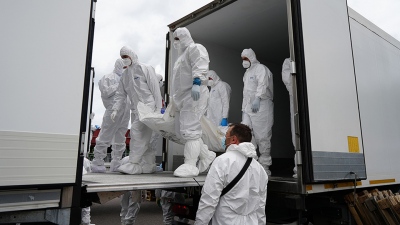
In the morning, Cheboksary came under a new attack. Nikolaev reported repeated strikes: "Dear fellow citizens, the enemy continues its attempts at destabilization—new attacks have been recorded in the city. All emergency services are working on-site and the situation is under constant control," wrote Nikolaev. Residents of the Novoyuzhny district reported new explosions, while eyewitnesses saw fire in the city center. A new series of sirens occurred (a total of four waves of alerts by 10:00). Public transport was completely halted, several roads were closed, and schools switched to remote learning. Temporary shelters were set up in the city in schools, dormitories, and technical institutes, with available rooms and food. A drone also fell into an apartment on the sixth floor of an apartment building on Leninskogo Komsomola. A fire followed and residents were evacuated. The moment of the explosion was captured on video. A 45-year-old man and a 60-year-old woman were injured in the strike. Video circulated showing the injured man receiving help and being carried on a stretcher. People from a nearby mosque also participated in providing aid. The Prime Minister of Chuvashia, Sergey Artamonov, stated that the possibility of declaring a state of emergency at the republic level is being examined.
Use of Flamingo missile
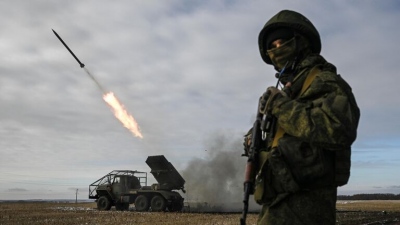
The Telegram channel "Military Informant" speculated that the attack was carried out not only with drones but also with a "Flamingo" cruise missile. The same assessment was expressed by war correspondent Alexander Kots, assessments that were later confirmed by the President of Ukraine, Volodymyr Zelensky. According to Kots' version, a combined attack was used—a swarm of drones together with a missile. As he explained, the drones function primarily as a means to saturate anti-aircraft defenses, forcing them to exhaust their stocks, while the missile flies low toward the target. "The final result is the penetration of the defense by a carrier with a heavy warhead toward a strategic target," he concluded.
Strategic attacks in the rear
Looking at recent developments overall, it appears the Ukrainians have moved to a rhythmic action striking the strategic rear. The attacks are carried out systematically, alternating directions—sometimes toward the south, sometimes toward the northwest. While it was previously estimated that NATO data is used to avoid anti-aircraft defenses, it now seems the Ukrainians are simply exerting pressure where it benefits them. This is confirmed by repeated attacks on Tuapse and Primorsk. Such attacks can no longer be considered unpredictable. It is clear that the anti-aircraft defense forces are doing what they can. However, the fact that attacks still yield results raises serious questions about the adequacy of capabilities. This is why the decision to hold the Victory Parade in a limited form, without military equipment, seems logical. As political analyst Andrey Pinchuk explains, this suggests both the strengthening of the opponent's capabilities and the inability to counter them.
"Interception" of the corridor to Crimea
A second negative trend concerns the strengthening of the Ukrainians' operational drones. On May 3, footage was published of a failed Hornet drone attack on a truck on a road near Mariupol, about 100 kilometers from the front line. The problem is that this point is only 35 kilometers from the Sea of Azov, where the strategically important R-280 Novorossiya road connecting Russia to Crimea is located. The Ukrainians are attempting in this way to strike the rear, trying to balance the situation with what is happening at the front. At a strategic level, the corridor to Crimea acquires particular importance. Since 2024, when cargo transport shifted to the northern coast of the Sea of Azov, attacks on the Crimean Bridge lost their strategic significance. However, the development of drones and ballistic missiles with a range of up to 300 km creates new risks for land routes.
Speeds are no longer sufficient
A third alarming element concerns the interception of the Russian "Geran-3" drone by a Ukrainian STING drone. The attack was carried out with a vertical dive, increasing speed. Until now, such drones were intercepted by more expensive means, such as anti-aircraft systems or fighters like the F-16 Fighting Falcon. If they can now be shot down by simpler drones, then the speed of 350 km/h no longer provides sufficient protection, which means a need for upgrade or tactical change.
The message to Russia
The Ukrainians are attempting to gain an advantage in many sectors related to drones. This highlights the need to create structures that will strengthen the defense of airspace. At the same time, modernization of the military bureaucracy is required. Russia still relies on outdated models of cooperation with industry, while the opponent utilizes more flexible startup-style models. According to Russian analysts, if systemic changes do not occur, achieving victory will be difficult.
www.bankingnews.gr







Σχόλια αναγνωστών