Did Iran or the United States suffer more from the war in Iran?
At first glance everyone would answer that the loser is Iran but the American Responsible Statecraft disagrees. and explains that the big loser is the United States.
The government of the United States pretends that the major global energy crisis after the start of the illegal war against Iran will not harm the United States and will even benefit it, analysts and expert observers believe that the United States will suffer more than China, Russia or the European Union from the oil shock that will arise globally after this war.
Old misconceptions
In this context, the American outlet Responsible Statecraft stated in its analysis that the oil crisis will surprise many Americans, as Trump and his associates invoke old misconceptions to prevent panic and opposition from the American public to the war.
Oil shock for the US economy
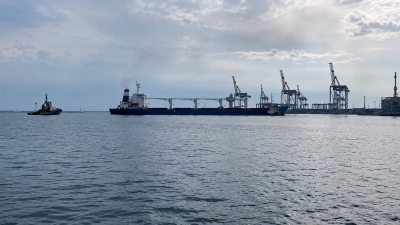
According to the publication, the warning comes as the President of the United States Trump and members of his administration claim that the massive US oil production will protect the country from price crises caused by the closure of the Strait of Hormuz by Iran, but they are wrong.
Responsible Statecraft explained that oil production in the United States does not protect American consumers from oil price fluctuations, which are determined by the interaction of supply and demand in the global market.
Responsible Statecraft stressed that the calculations of the Trump administration are dramatically distorted, because the US economy consumes larger quantities of oil to produce each unit of economic output compared to competing countries and the United States will be more affected by the price shock than other countries.
Every day 100 million barrels of oil are required
Responsible Statecraft continues by saying that under normal conditions, the global market needs about 100 million barrels of oil per day, but the closure of the Strait of Hormuz due to Trump’s war on Iran led to a sudden drop of about 10 million barrels per day.
This reduced global oil inventories and increased prices in all countries involved in the global oil market, including the United States, regardless of whether these countries directly consume oil from the Persian Gulf or not.
The empty tankers, the precise mechanism of crisis transmission
Responsible Statecraft continues by saying that under normal conditions, the global market needs about 100 million barrels stated that the flow of empty tankers crossing the Atlantic to load American oil, which Trump boasted about, is actually the precise transmission mechanism through which the shock spreads.
In other words, these tankers transport American oil to Asia, where prices are higher, which in turn leads to higher oil prices in the United States.
Gasoline at 4.24 dollars in the US from 3.03 dollars
According to the report, data from the US Energy Information Administration (EIA) for the week ending April 24 showed a significant decrease of 6.2 million barrels in US crude oil inventories, confirming that the transition is underway.
Estimates from the EIA show that the average price of gasoline in the United States increased to 4.24 dollars per gallon in April, compared to 3.77 dollars per gallon in March and 3.03 dollars per gallon in February, before the start of the war.
Responsible Statecraft stressed that even if the Strait of Hormuz reopens at full capacity tomorrow, gasoline prices in the United States will increase in May due to the delayed effects of oil extracted from the Persian Gulf that has already left the market.
Energy shock and its link to recession
The website Responsible Statecraft stressed that it is not an exaggeration to say that we are on the brink of a global economic collapse, as oil consumption is a necessity that cannot be quickly reduced.
Oil price crises are linked to recessions, as sharp increases in oil prices preceded recessions in the United States after World War II.
The increase in gasoline prices would force American families to reduce spending on everything else, leading to a massive demand shock for other goods.
Also, the increase in transportation costs for goods such as food and clothing would lead to a sharp increase in the prices of these basic goods, fueling inflation in the country.
The dependence of the US economy on oil
According to Responsible Statecraft, the US economy depends heavily on oil, which means it requires more oil to produce each unit of GDP than China, Russia and the entire European Union combined.
For every dollar of economic output, the US economy consumes twice as much oil as the European Union, 40% more than China and 20% more than Russia.
The two factors
There are two main factors that explain America’s heavy dependence on oil:
1) First, the United States is known for its culture that «loves cars» and its transportation system has always been more dependent on cars than other major powers.
2) Second, the United States has been slow in transitioning to electric vehicles, which can operate almost entirely on electricity networks independent of oil.
China, in particular, has long encouraged the use of electric vehicles and electric railways for strategic reasons, recognizing the security benefits of decoupling its transportation system from the global oil market, which is subject to price fluctuations, according to Responsible Statecraft.
Time is not on Trump’s side and he must make a deal with Iran
In the long term, the United States should follow China’s strategy and reduce risks associated with oil dependence. Therefore, in the short term, the only solution is to reach an agreement with Iran to reopen the Strait of Hormuz, and the sooner this happens, the better.
Trump’s negotiating power will decrease as unrest intensifies and oil prices rise in the United States, and time is not on Trump’s side.
How the Strait of Hormuz destroyed the US satellite internet Starlink?
Given the high risk of cutting submarine fiber optics in the strategic Strait of Hormuz, the satellite internet Starlink is recognized as a fast and flexible alternative solution to maintain communication stability in critical situations.
The general perception was that a network of more than 9,400 satellites in low Earth orbit could operate independently of physical ground infrastructure and maintain global communications, but reality in the field showed the opposite.
According to an analysis published by the Center for Homeland Security (HSToday) on April 8, 2026, the closure of the Strait of Hormuz has revealed a new category of vulnerabilities in infrastructure that the US resilience doctrine is currently unable to model. According to the analysis, low Earth orbit satellite communications, both military and commercial, depend on ground infrastructure.
Starlink vulnerabilities
Critical inputs in this sector, which pass through the Strait of Hormuz, include helium, specialized cooling gases and specific families of semiconductors.
The analysis emphasized:
To disrupt the Starlink network, an adversary does not need to attack a satellite or target a ground station.
The degradation of the environment is distributed and deniable.
The simple closure of a maritime passage, without a single shot being fired, has disrupted the supply chain of critical satellite network equipment.
The disruption is more than a temporary logistical crisis.
By the end of 2025, the Starlink network reportedly had about 150 ground stations in operation worldwide, with nearly 30 more locations in various stages of construction or approval.
However, analysis by Quilty Space suggests that the number could increase to more than 500 locations by 2026, including new nodes.
The Strait of Hormuz: The golden artery of global logistics
To understand the depth of this crisis, it is necessary to examine why a passage of 50-90 kilometers in southern Iran could paralyze the supply chain of a satellite network.
According to a report by the United Nations Conference on Trade and Development, more than 80% of global goods are transported by sea and the cost of maritime transport per ton-kilometer is less than 1.5 dollars, while the cost for air transport ranges from 4 dollars to 12 dollars.
Equipment for Starlink ground stations, each site weighing several tons, essentially has no alternative but to be transported by sea.
Through the Strait of Hormuz pass 20 million barrels of oil per day, equivalent to 20% of global consumption, and 20% of global LNG trade.
But more important than oil is that 89% of crude oil and condensates passing through the strait are destined for Asia.
China alone imports 37.4%, India 14.8%, South Korea 12.1% and Japan 11% of this volume.
This geography has forced maritime routes from the United States and Europe to key ports of the Middle East to pass through the Suez Canal and the Strait of Hormuz.
When the strait is closed, neither oil nor the 1.4 meter antennas of Starlink ground stations arrive.
Three-layer architecture of the Starlink network
The Starlink network is designed as a three-layer architecture: a constellation of satellites in low Earth orbit, a network of ground stations, Gateway Stations, and user terminals, which are small antennas on rooftops.
In this architecture, each satellite essentially acts as a repeater: it receives the signal from the ground station and transmits it to the user and vice versa.
Ground stations act as a «bridge» between satellites in orbit and the terrestrial internet infrastructure, receiving data and routing it to the appropriate internet networks.
They are also responsible for sending control commands to satellites and managing network traffic.
A Starlink antenna on a rooftop connects directly to a satellite, but to provide global internet access, that satellite must be able to communicate with a ground station connected to fiber optics.
Without a ground station, the satellite signal has nowhere to send data.
The key is: Ground stations are large pieces of equipment transported by sea.
Maritime shipping is the hidden weakness of Starlink.
When ground cables are cut and ground equipment is unavailable
The issue becomes a crisis when we realize that the crisis in the Strait of Hormuz occurred simultaneously with the crisis of submarine cables that became more intense.
Submarine cables remain the backbone of the global internet, with more than 97% of global internet traffic passing through them.
According to expert reports, a pair of optical fibers in modern submarine cables can provide capacity equivalent to 224 terabit per second, while the total capacity of the Starlink system with more than 4,000 satellites is still much lower than this level and is not able to compete with the massive bandwidth of fiber optic cables.
Under normal conditions, Starlink can function as a backup option, but when submarine cables are out of operation and at the same time Starlink ground equipment cannot reach required locations due to the closure of the strait, the network faces the dilemma «no cable, no satellite».
This exposes a scenario of «simultaneous failure» that is often overlooked in risk analyses.
The paradox of lasers
One of the most advanced technical levels of Starlink in 2014 is the extensive use of inter-satellite laser links, ISL.
This technology allows satellites to transfer data between them in the vacuum of space at the speed of light, without needing direct line of sight with a ground station at all times.
Theoretically, this means that if ground stations are not built in the Middle East due to the crisis in the Strait of Hormuz, data could «jump» over the region and land at a station in Central Europe or East Asia.
But the recent crisis showed why reliance on lasers to compensate for the lack of physical infrastructure on the ground is rather «technological optimism» than a practical solution.
www.bankingnews.gr










Σχόλια αναγνωστών