

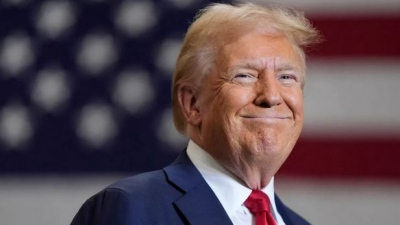
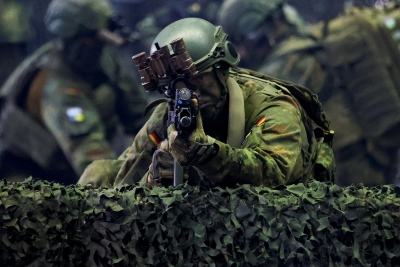
Confusion and intense anxiety have spread even to the US Pentagon caused by President Donald Trump, who left open the possibility of reducing the US military force that has been stationed in Germany for decades. As reported in Washington, such a step had not been planned, but is now being seriously considered. After all, it is not the first time Trump has raised this issue; during his first presidential term, he had spoken of withdrawing 10,000 American troopsfrom Germany. This is even more significant now that the American president is in an intense confrontation with Berlin and Chancellor Friedrich Merz, who recently leveled harsh criticism at Trump, arguing that the US is being humiliated in the war in Iran.
Many analysts speak of a scene of absolute rupture as Trump has expressed his frustration with the stance taken by his NATO allies—particularly Spain, Italy, France, and the United Kingdom—whom he accuses of not supporting his war effort against Iran at all.
The Pentagon did not expect this
Donald Trump's statement regarding a possible withdrawal of part of the American troops from Germany came as a surprise to US military leadership, according to Politico. "The decision on this matter will be made in the near future," the head of the White House wrote. According to the report, many at the Pentagon learned of the president's plans from his post on social media. This contradicts the recently adopted US global military presence strategy, which did not foresee reductions in Europe. "The Pentagon did not expect this and had not planned any reduction," said a source with knowledge of the situation. According to the same source, the issue must be taken "seriously," as Trump had already raised it during his first term—referring to the 2020 decision to withdraw 12,000 troops from Germany, which ultimately was not implemented.
During his second term, Trump has intensified his criticism of European allies, reaching as far as threats to withdraw from NATO.
Reactions and risks
Trump's statements were made shortly after his conversation with Russian President Vladimir Putin and amidst a visit by German military officials to Washington. In Berlin, they caused bewilderment. "Trump's policy of blunt threats has reached its limit. His rhetoric has become exhausting. The withdrawal of American troops from Germany would severely weaken the US themselves," a German official stated. According to Politico, Germany remains a key base for the American military presence: it hosts up to 40,000 troops, the headquarters of the US European and African Commands, and the largest military hospital outside the US. Experts note that a rapid withdrawal would require significant costs and could weaken deterrence capabilities. "There are transportation costs and, depending on the destination, significant construction expenses," said analyst Todd Harrison. As he explained, countries like Poland do not have the necessary infrastructure to host such a large number of soldiers.
Pressure from Washington
The statements regarding a possible troop withdrawal are part of Trump's broader criticism of NATO. In an interview with the Telegraph, he stated that he is seriously considering the possibility of the US withdrawing from the Alliance. "NATO never influenced me. I always knew it was a paper tiger," Trump said, adding that Vladimir Putin perceives it the same way. Earlier, Secretary of State Marco Rubio had also criticized the allies, characterizing NATO as a "one-way street." In the European Union, however, this position does not find agreement. The head of European diplomacy, Kaja Kallas, stated that she sees no reason for American criticism: "US requirements essentially coincide with what we can offer… I don’t understand what the problem is," Kallas noted.
Signal to Rome and Madrid
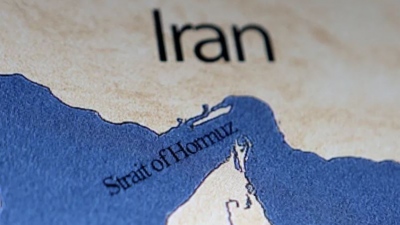
The previous day, Donald Trump also left open the possibility of reviewing the US military presence in other European countries, such as Italy and Spain. "Why wouldn't I? Italy helped us with nothing, and Spain behaved terribly," the American president underlined. In Rome, the statements caused bewilderment. Defense Minister Guido Crosetto stated: "I don't understand the reasons… We even expressed readiness to send protection for navigation." According to Crosetto, the Americans "highly appreciated" Italy's willingness to contribute to the security of navigation in the Strait of Hormuz.
On a tightrope
However, Trump's greatest tension is recorded with the Chancellor of Germany. According to Politico, German Chancellor Friedrich Merz spent months walking a tightrope in his relations with the US president. Now he seems to have lost his balance. Merz had made more concessions than most European leaders to maintain good relations with Trump, considering it strategically necessary to keep close ties with a leader known for his grudges. However, under increasing domestic political pressure, he intensified his criticism toward Trump and the war in Iran, issues that are particularly unpopular in Germany. With sharp criticism of the war earlier in the week, the Chancellor seems to have lost this delicate balance—and deeply annoyed Trump. After Merz told students that the US is being "humiliated" by the Iranian regime, Trump responded with an attack via Truth Social and threatened Berlin's worst-case scenario: the withdrawal of American troops from Germany.
Relations remain strong
Merz tried to downplay the tension and continue as normal, stating that relations with the US remain strong. "We continue to work here, as in other strategically important points in Germany, together with the United States and our NATO allies," he stated. He added that Germany is strengthening its military "for mutual benefit and the strengthening of transatlantic ties." Merz likely calculated that the issue would be forgotten and that Trump would back down according to the principle called "TACO" (Trump Always Chickens Out) on Wall Street. After all, he had seen Trump threaten Britain and Spain without taking action, despite disagreements with leaders Keir Starmer and Pedro Sánchez. However, Trump continued the attack: "The German Chancellor should deal more with the Russia/Ukraine war (where he is completely ineffective!) and with his country's problems, such as immigration and energy," Trump wrote. This tension represents a significant change from the previous positive relationship between the two leaders. Trump had previously praised the Merz government and called him a "friend."
Balancing strategy
Merz's strategy was to avoid public conflict with Trump, despite disagreements over Ukraine and trade, in order to maintain influence. This approach reflects Germany's general strategy: reducing dependence on the US, but simultaneously recognizing that American military power remains critical. However, from time to time, Merz expresses public dissatisfaction—either due to the economic impacts of the war in Iran or due to internal pressure. With his statement about the "humiliation" of the US, he may have crossed the line, provoking a president known for vindictive reactions.
Risks and reality
Despite the risks, German politicians appear relatively calm. They point out that the US needs its military presence in Germany for global operations. Christoph Schmid stated: "A withdrawal is not feasible in the short term and would weaken US operational capabilities." During his first term, Trump had announced a plan to withdraw 9,500 troops, which was not implemented and was finally canceled by Joe Biden. Now, Trump has more time to implement similar plans. For Merz, however, the greatest risk may be the loss of influence over Trump—particularly on issues such as support for Ukraine.
Attempt at normalization
In the meantime, Merz appears to be trying to restore the relationship. "The personal relationship between myself and the American president remains, in my opinion, excellent," the German Chancellor stated.
Pentagon: Classified email leaked and lights global fire: Throw Spain out of NATO
But Trump's relations are not problematic only with Berlin but rather with all the powerful European capitals—Paris, Madrid, Rome—including London. After all, the revelation of an email at the US Pentagon is recent, which more or less stated that Spain had crossed the line... Its refusal to actively support United States operations in the war with Iran, limited access to bases and infrastructure, and its openly critical stance toward Israel had caused outrage. In Washington, patience had run out.
The email that lit the global fire
The leaked message—revealed via Reuters—left no room for misinterpretation. The United States is considering ways to "punish" allies who did not stand by their side. And among them, Spain was at the center. Scenarios that until recently would have been considered unthinkable began to be discussed seriously: • Suspension of Spain's participation in NATO • Review of the American stance toward British sovereignty over the Falkland Islands • Reduction or even withdrawal of American forces from Europe These were not just pressures. It was a message of power—and a warning. On the other side of the Atlantic, circles close to Donald Trump were now speaking openly of "making an example." Spain had turned into a symbol—not only of resistance, but of "disobedience" toward American strategy. The options being considered were not limited to diplomatic measures. They included a significant reduction in military cooperation, a re-examination of joint operations, and pressure through economic and defense agreements. The message was clear: the alliance has a cost—and whoever does not accept it will pay for it in another way.
"Disobedient" Spain
In Madrid, the atmosphere was equally charged. The government of Pedro Sanchez had chosen a path that did not align with Washington. It was not a random decision, nor a product of momentary politics. It was a strategic choice. Spainstrongly condemned the war against Iran, adopted a clearly critical stance toward Israel, and limited the access of American forces to critical infrastructure. For Washington, this was equivalent to betrayal. For Madrid, it was a matter of national interest.
The pressure game
In the circles of Donald Trump's government, Spain is considered an "easy target." Not because it is weak, but because it does not possess the same geopolitical weight as countries like France or Turkey. The strategy was simple: to send a message to everyone through an example. The concept of ABO (Access, Basing, Overflight) was at the center. For the United States, these are not privileges but obligations within NATO. Spain's refusal to fully grant them was interpreted as undermining the North Atlantic Alliance.
A dead end with no easy exit
And yet, behind the aggressive rhetoric, there was a harsh reality: NATO does not have a mechanism for expulsion or suspension of a member. Alliance officials confirmed this clearly. The founding treaty does not provide for such a process. Even if attempted, it would take years—likely longer than the duration of the Trump administration itself. This did not mean the threat was empty. On the contrary, it opened the way for other, more indirect but equally powerful moves.
Europe on high alert
In European capitals, concern was growing. Many countries saw in Spain something more than a "disobedient ally." They saw a mirror. The opposition to the war with Iran was not exclusively Spanish. There was broader dissatisfaction with the direction of American policy. And as Washington increased the pressure, sympathy toward Madrid grew.
The scenario of a US withdrawal
The most concerning possibility was not Spain's expulsion. It was the withdrawal of the United States themselves from Europe—or at least the significant reduction of their military presence. This scenario was not theoretical. It was already on the table. The withdrawal of American forces would dramatically change the balance of power on the continent. It would force Europe to reconsider its strategic autonomy and would open new geopolitical fronts.
Behind closed doors
Within NATO, the discussions became increasingly intense. The words "unity" and "alliance" sounded more and more hollow. The reality was darker: an alliance built on common interests was now being tested by divergent strategies.
The Spanish perspective
For Spain, the choice was clear. It was not a confrontation with the United States, but a prioritization of national interests. Society did not desire new involvement in wars in the Middle East. The political leaderships, perceiving this dynamic, chose to keep their distance. What was interpreted in Washington as insubordination was considered responsibility in Madrid.
A thriller without end
As the days passed, the tension did not decrease. On the contrary, it escalated silently. An email had opened Aeolus' bag. A decision had turned into a crisis. And an alliance was entering an orbit of uncertainty. The question was no longer whether there would be consequences. It was how deep they would be.
The moment of truth
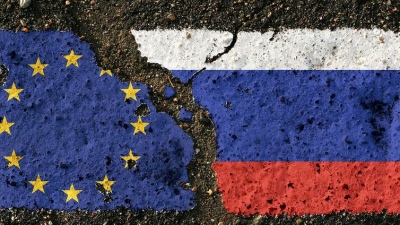
In this geopolitical thriller, there are no easy answers. Spain insists on its line. The United States is considering its next moves. And NATO is at a crossroads that may define its future. History has not yet been written. But one thing is certain: the shadows cast over the alliance are unlikely to disappear soon. The crisis was not just a diplomatic misunderstanding. It was something deeper—a clash of strategic perceptions that spread silently but threateningly beneath the surface of the Western alliance. As the days passed, the rift between Washington and Madrid turned into a dangerous geopolitical crack. Within NATO, the balances began to shift. It was no longer just about Spain. It was a test of cohesion for the entire alliance. The most experienced diplomats understood that if this crisis were not contained, it could open the way for a new era—an era where NATO would not function as a single block, but as a group of states with different and often conflicting priorities.
Old certainties are questioned
In the background of all this, there is a broader geopolitical reality: the world is transitioning to a more multipolar order. Old certainties are questioned, and alliances are being redefined. The crisis with Spain is not just an episode—but an episode that revealed deeper trends: reduction of American influence, increase in European autonomy, and strengthening of national strategic choices. No one could predict the outcome with certainty. The only thing for sure was that the situation had passed the point of simple disagreement. Washington was called upon to decide whether to escalate or retreat. Madrid, for its part, had to maintain the balance between independence and participation in the alliance. And NATO? It was in the middle, trying to keep together pieces that seemed more and more ready to move in different directions.
www.bankingnews.gr



Σχόλια αναγνωστών