

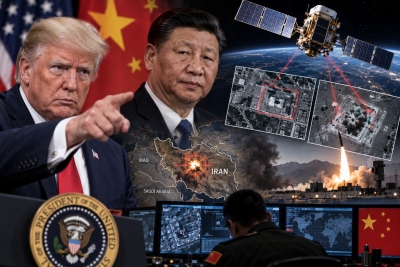
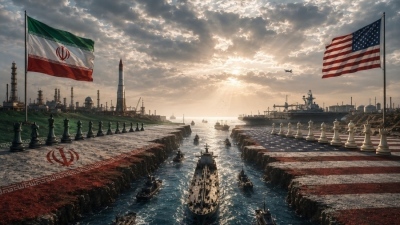
As the Middle East ceasefire thriller escalates and uncertainty grows over whether a new round of talks will aim for a deal, the US and Iran are locked in a peculiar competition of endurance. Their primary concern is signaling that time is on their side. Within this context, Trump has reportedly instructed his advisors—according to American media—to prepare not for a new round of bombings, but for a prolonged naval blockade of Iran to exhaust the regime's oil reserves and revenues. For its part, Iran bets that closing the Strait of Hormuz will continue to cause massive disruptions to the global economy and energy—with Brent prices already exceeding $113 per barrel—eventually forcing the US to back down first. There is no doubt that the war in the Middle East has taken on intense economic dimensions, evolving into a fierce war of nerves. Analysts and media suggest that the most unlikely scenarios should no longer be ruled out: such as Trump either "staging" a peace agreement with Iran or even unilaterally declaring military victory. Amidst this chaotic landscape where each side claims what it wishes, Mossad has caused a shock by recognizing that the entire military operation against Iran was a mistake and that the Iranians will never surrender.
Trump warning: Iran must get smart soon
US President Donald Trump warned Iran to "get smart soon." "Iran cannot get it together. They don’t know how to make a Nuclear Non-Proliferation deal. They better get smart fast!" Trump stated in a social media post.
Henningsen (US Analyst): Trump will stage a peace deal with Iran
US President Donald Trump may stage the conclusion of a peace deal with Iran, claims geopolitical analyst Patrick Henningsen. "Trump may decide to organize a fake peace deal, signing a document himself and pretending it was signed by an Iranian or someone else," Henningsen states. In his view, the White House chief could also simulate a change of power in Iran to create contact with a supposed new government. "Trump will likely force an Iranian to sign and say: here, this is the new president. Much like Juan Guaidó. And he will lean on a supposed next president of Iran for a while until a new wave of crisis breaks out," the expert notes.
Mossad shock: Everything wrong in Iran, Iranians will never raise the white flag
Udi Levy, former deputy head of Mossad, stated regarding Iran's resistance in the war with the US that the Iranians will never raise the white flag. "All assessments were wrong. In practice, Israel suffered an operational and strategic defeat against Iran—a defeat! The Iranians will never surrender and will never raise a white flag," argued Udi Levy, former head of special operations at Mossad. According to Levy, the Mossad plan, which envisioned starting with an attack by Kurdish separatists from Iraq reaching Tehran to overthrow the Iranian government, has failed. "When I look at the Strait of Hormuz issue, how it suddenly appeared as a surprise factor in this war—these were our strategic and operational errors," Levy pointed out.
Al Jazeera: Iran and US compete over who will endure longer
Iran and the US are trying to show who possesses greater "resilience." Iran is attempting to project an image of normalcy domestically and internationally by reopening its international airport, said Rob Geist Pinfold, lecturer in international security at King’s College London. "We have moved past the stage, at least for now, of a physical war... but we are still in a stage of intense competition between the US and Iran, where both sides are essentially trying to send the message that they have greater resilience, that time is on their side," Pinfold told Al Jazeera. Referring to the Iranian proposal, he explained that Tehran is "postponing all difficult issues for later," prioritizing the end of the war and the opening of the Strait of Hormuz. "But this simply doesn't work for the Americans because they feel that if they abandon the advantage they have—the leverage through physical force—the war could restart. The Iranians know this, and if they give it up, they are essentially handing over their strongest card," Pinfold notes.
Wall Street Journal: Trump order for naval blockade of Iran, end of bombings
US President Donald Trump has ordered the preparation of long-term pressure on Iran through restrictions on oil exports and navigation, the Wall Street Journal claims. Other scenarios, including the resumption of bombings, were considered in the White House but deemed more dangerous. The order represents a strategy of pressuring the Iranian economy through limits on oil exports. The decision followed discussions in the White House amidst ongoing conflict and efforts to find an alternative to military escalation. According to the WSJ, the transition to a long-term blockade was decided in recent meetings involving key administration officials. As Reuters writes, the strategy envisions restricting navigation to Iranian ports and reducing oil exports, which is expected to strain Iran's economy and limit its financial resources.
Why strikes were abandoned
The decision not to resume bombings is linked to the assessment of risks regarding further escalation. According to the Wall Street Journal, the White House believes new strikes could lead to a widening of the conflict and the involvement of additional regional players. Sources note that Trump considered various scenarios: resuming mass bombings, a quick exit from the conflict, or continuing pressure through economic means. Ultimately, the blockade was preferred as a less risky option. Furthermore, the military campaign had already reached a massive scale. In February–March 2026, the US and Israel carried out strikes on targets in Iran, including infrastructure and military facilities, followed by Tehran's counterattacks. The sides then moved to a temporary ceasefire, but negotiations did not lead to agreements. In this context, the US administration began considering long-term pressure tools not tied to direct military action. WSJ sources also point out that a full withdrawal scenario was "deemed undesirable" as it would not allow Washington to achieve key goals regarding the Iranian nuclear program.
How the blockade will work
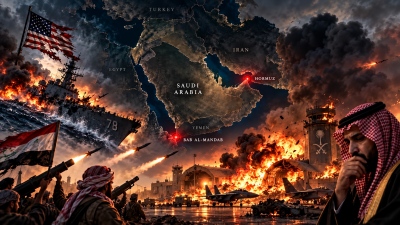
The maritime blockade of Iran was essentially imposed in April 2026, following the failure of negotiations and the closure of the Strait of Hormuz. It includes inspecting ships heading to and from Iranian ports and restricting oil exports—Tehran's primary revenue source. According to US estimates, these measures could cost Iran hundreds of millions of dollars daily. As the WSJ writes, the blockade is already having a noticeable impact on the Iranian economy. Tehran is seeking oil storage solutions and alternative supply routes to avoid a complete production shutdown. For its part, Iran is taking countermeasures. Specifically, during the conflict, it restricted transit through the Strait of Hormuz—the world’s critical oil trade artery through which approximately 20% of global energy supplies pass.
How the crisis affects Trump's popularity
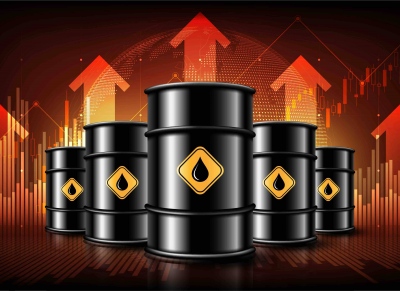
The continuation of the blockade is already impacting global energy markets. According to Reuters, oil prices are rising for the eighth consecutive session. The price of Brent reached $113 per barrel, while US WTI exceeded $100 per barrel. In the US domestic market, rising energy prices have already affected fuel costs. The average price of gasoline, per the WSJ, reached $4.18 per gallon—the highest level since the start of the conflict and about $1.20 higher than in late February. Reuters provides similar estimates. Since the start of the military phase, gasoline prices have risen over 40%, increasing pressure on households and inflation. The rising fuel costs and general economic consequences are directly affecting the administration's political metrics. According to a Reuters/Ipsos poll, Trump's approval rating dropped to 34%—down from 36% in mid-April and 47% in January 2025. Only 27% of respondents evaluate his economic policy positively, while support for measures tackling the cost of living stands at 22%.
Democrats prepare lawsuit against Trump
American lawmakers from the Democratic Party are considering filing a lawsuit against US President Donald Trump if, after May 1, he continues the military operation against Iran without obtaining Congressional approval, Time magazine reports. According to the War Powers Resolution of 1973, the US President is required to inform Congress within two days of deploying troops to foreign combat zones and can utilize them without consent for up to 60 days, with a possible 30-day extension for safe withdrawal. As Time notes, Trump officially informed Congress on March 2 of the start of military actions against the Islamic Republic, meaning he has until May 1 to continue the operation without legislative approval. House and Senate Democrats believe the upcoming 60-day deadline provides the best chance to challenge the war, which they view as illegally initiated. Currently, the lawsuit discussion is in early stages but may intensify if military operations continue past May 1.
Reuters: US Intelligence considering… unilateral victory
US intelligence agencies are analyzing Iran's potential reaction if US President Donald Trump unilaterally announces victory in the Middle East conflict, Reuters reports. Specifically, the US President authorized intelligence services and the CIA to study Iran's reaction to a possible move where he declares a unilateral victory and withdraws forces definitively. According to the agency, US intelligence is examining this scenario at the request of high-ranking administration officials alongside other developments. "The goal is to understand the consequences of a possible Trump withdrawal, which some advisors believe could lead to significant losses for Republicans in the year-end midterm elections," the report states. According to their previous analysis, the answer is clear: Iran would perceive it as its own triumph. It is noted that no final decision has been made: Trump may either announce the end of the conflict or resume operations. At the same time, a rapid de-escalation could reduce internal political pressure on the President. However, as Reuters points out, such a scenario could strengthen Iran's position, allowing it to restore its nuclear and missile programs, creating threats for US allies in the region.
The role of Russia
As Iran faces the economic consequences of a prolonged Strait of Hormuz blockade, attention turns north. With Gulf sea routes disrupted, Tehran may seek to depend less on the Gulf and more on a network of railways, Caspian ports, and sanctions-era trade routes connecting it with Russia. The significance of this relationship was highlighted this week when Iranian Foreign Minister Abbas Araghchi traveled to St. Petersburg for talks with Russian President Vladimir Putin, praising Moscow's "stable and unwavering" support. However, can Moscow truly serve as a "lifeline" for the strained Iranian economy—and would it even want to?
Growing but limited trade
Iran–Russia economic ties strengthened after the US withdrawal from the nuclear deal in 2018. The Russian invasion of Ukraine in 2022 accelerated this trend as both countries were cut off from the Western financial system. Trade mainly includes agricultural products (wheat, barley, corn), machinery, metals, and fertilizers. Iran has also supplied Russia with Shahed-type drones. According to Russian Energy Minister Sergey Tsivilyov, bilateral trade reached $4.8 billion in 2024, a 16% increase. However, experts note it remains limited compared to Iran's trade with China. Economist Mahdi Ghodsi explains trade isn't extensive because both countries produce similar products.
Alternatives to Hormuz
The core infrastructure of cooperation is the International North–South Transport Corridor (INSTC), connecting Russia to Iran via the Caspian Sea. Goods move from Russian ports across the Caspian to Iranian ports like Bandar Anzali, then via rail or road. Analyst Naeem Aslam stated the route could function as a "partial lifeline," with ports like Astrakhan ready for increased transport. However, a critical section between Rasht and Astara remains unfinished, though Russia has agreed to fund it.
Practical obstacles
Analysts point out that despite alternatives, the Strait of Hormuz remains irreplaceable due to scale and efficiency. Historian Adam Grimshaw emphasizes sea transport is the fastest and most economical solution. Professor Nader Hashemi notes that about 90% of Iran's international trade is maritime and cannot be easily replaced. Land transport increases costs and causes delays.
Does Russia want to help?
Many analysts believe economic support for Iran doesn't necessarily serve Russia's interests. Analyst John Lough points out Russia faces its own economic pressures due to the war in Ukraine. While it can offer limited help, full replacement of maritime trade is difficult. Conversely, Aslam argues supporting Iran could benefit Russia through higher oil prices and strengthened trade corridors. Overall, Iran–Russia cooperation offers temporary solutions but cannot fully replace maritime routes.
Massive stalemate for Trump: 3 options for crisis exit indicate Iran victory
As the ceasefire thriller continues, analysts estimate the US is sinking daily into an unprecedented stalemate with no victory or exit. Currently, negotiations are stuck on one key issue—the US naval blockade. Tehran demands its lifting as a condition for dialogue. President Donald Trump refuses, stating all parameters of the "deal," including the nuclear issue, must be agreed upon first.
From this stalemate, three exits are possible:
First: Donald Trump lifts the blockade in exchange for Iranian steps, such as opening the Strait of Hormuz, and negotiations continue. Iran would essentially emerge as the winner, as the Tehran regime remained and was strengthened, oil fields remained under its control, and exports could continue. Neighbors would see Iran's leverage (closing Hormuz) and America's inability to counter it, shifting regional geopolitics. Tehran could even accelerate its nuclear program. Furthermore, a new US attack would become harder as the Congressional midterms approach.
Second: Continuing the blockade without resuming hostilities until Iran agrees to US demands. According to US media leaks, some Trump aides believe Iran will exhaust its reserves in one or two months, forcing an end to oil extraction and hitting the budget hard. Thus, Tehran would eventually yield. Additionally, the US oil industry benefits from the Hormuz closure. However, points are debated:
-
First, it is unclear how strict the blockade is, as some Iranian tankers manage to export oil.
-
Second, Iran could receive financial support from China.
-
Third, if critical, Tehran might attack US ships blockading Hormuz. Given their proximity to the coast, such strikes could cause significant US casualties.
Third: Resuming military attacks, a path some Trump aides favor as leverage. During the ceasefire, the US moved significant forces to the Middle East. Israel also supports resuming the war, realizing that as the ceasefire lasts and elections approach, the chances of Trump agreeing to a new conflict decrease. However, the same problems reappear: the inability to defeat Iran through air strikes alone, the difficulties of a ground operation, and the rapid exhaustion of weapon stocks. Nevertheless, given the high stakes for the US (geopolitical prestige), the military scenario cannot be ruled out.
www.bankingnews.gr


Σχόλια αναγνωστών