

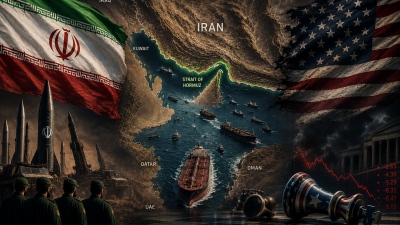
Uranium enrichment sits at the very core of the confrontation between the United States and Iran, as diplomatic efforts to end the war continue. Washington demands that Tehran cease all enrichment activities as part of any potential agreement. Donald Trump has repeatedly stated that Iran must not acquire a nuclear weapon, citing this goal as one of the primary reasons for initiating attacks.
Iran's position: "Only for peaceful use"
Iran, for its part, insists that its nuclear program is of an exclusively civilian nature. It argues that uranium enrichment is essential for peaceful uses, such as power generation, medical research, and industry. For energy production needs, uranium is typically enriched to levels between 3% and 5%. Conversely, the construction of nuclear weapons requires enrichment of approximately 90%.
Stockpiles and concerns
According to the International Atomic Energy Agency (IAEA), Iran possesses approximately 440 kg of uranium enriched to 60%, a level that significantly approaches the technical limits for weapons use. Theoretically, Al Jazeera notes, if this material is further enriched, it could be sufficient for the construction of 10 to 11 simple nuclear bombs, depending on the technical processing and efficiency of the procedure.
What this means in practice
For a state to achieve an operational nuclear bomb, three basic stages are required: First, sufficient fissile material (uranium at 90% or plutonium). Second, the technical capability to convert the material into a nuclear warhead (weaponization). Third, a delivery system (missile or other means). Iran, according to most Western estimates, is at the most advanced point it has ever been regarding the first stage (enrichment), but not the next two. Before the war and recent developments, several intelligence agencies and think tanks estimated that if Iran decided to fully accelerate its program, it could acquire enough fissile material within weeks to a few months. However, converting this into a functional nuclear weapon is estimated to require an additional several months to about 1–2 years, depending on the level of expertise, testing, and whether it attempted to avoid detection.
The critical point
The key element highlighted by analysts is that Iran is not yet considered a "nuclear power," but rather a country that has significantly reduced the breakout time to acquire nuclear capability if it makes the political decision to take the final step.
How uranium is enriched


The above diagrams from the Agence France-Presse (AFP) show the basic process:
-
Natural uranium has a very low percentage of U-235 (≈0.7%)
-
Centrifuges separate isotopes through high-speed rotation
-
Enrichment occurs in stages (cascades)
-
Indicative levels: 3–5% → nuclear energy; 20% → intermediate military "threshold"; 60% → very advanced level; 90% → weapon-grade
Tehran's legal argument
Tehran refuses to abandon enrichment, arguing that it is a sovereign right under the Non-Proliferation Treaty (NPT), to which it is a signatory. The treaty allows member states to develop nuclear technology for peaceful purposes under strict inspections.
The 2015 agreement and its collapse
In 2015, during the presidency of Barack Obama, Iran reached a historic agreement with the United States, France, Britain, Germany, Russia, and China. The deal provided for a limit on uranium enrichment to 3.67% and strict oversight of the country's nuclear program in exchange for the lifting of international sanctions that had severely impacted the Iranian economy. However, in 2018, Donald Trump unilaterally withdrew the US from the agreement, labeling it "defective." He argued that it did not address Iran's ballistic missile program or its regional influence in the Middle East.
www.bankingnews.gr


Σχόλια αναγνωστών