

The United States and Israel have landed in the harsh reality of Iran.
Grand slogans about a “quick victory” have been replaced by spasmodic and awkward analyses by military experts.
Iran is not a testing ground, it is a complex ecosystem ready for self defense.
The Russian expert analyst Andrey Pinchuk separated the current chaos into three clear strategic options, none of which promises America an easy victory.
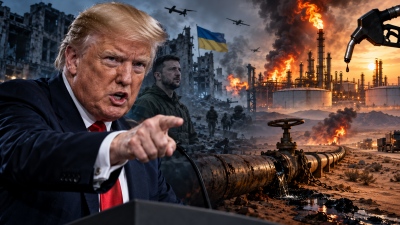
Moreover, NATO is facing fractures under the weight of obligations in the Strait of Hormuz and the threats of the American president Donald Trump toward allies.
Option 1: Economic strangulation and Kharg island
The first option is the “surgical strike”.
Washington and Israel seek to defang the Iranian “dragon”.
Targets, missile factories, launchers, headquarters of the Islamic Revolutionary Guard Corps IRGC.
A key point is the island of Kharg, the main oil artery for Tehran.
Its capture through an American amphibious operation aims at suffocating the country’s economy.
Washington also hopes for a “domino” effect within Iranian society, with protests overthrowing power under the sound of explosions.
However, as Alexey Chernov notes: “The destruction of infrastructure does not guarantee obedience.
On the contrary, it transmits anger into Iranian society.
Even the opposition sees Khamenei as the lesser evil”.
The plan breaks at “allied” points, Azerbaijan and the Kurds are not eager to enter the fire, having learned from experience in Syria.
Without ground support, which is also unfeasible, a broad operation turns into a nightmare for the Pentagon, already shocking Congress with budget increases.
Option 2: Missile war and oil shock
The second scenario is the “endless missile war”.
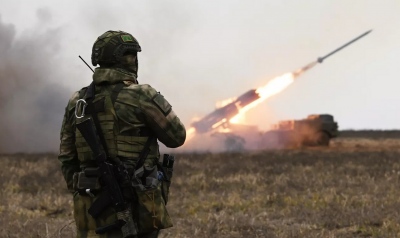
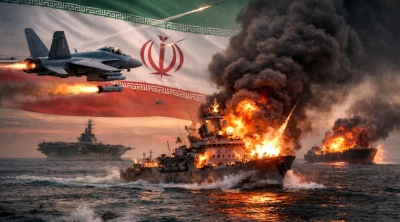
Israel strikes Tehran, Iran retaliates against US bases and infrastructure of Gulf countries.
It is not a war of flags, it is a war of resources.
America loses more, Iranian missiles prove more accurate and longer range than CIA reports suggest.
The geography of fear changes, the base of Diego Garcia is no longer safe.
The prolonged conflict hits the pocket of the American voter and divides the elites of Washington. Economically and politically, Iran simply waits for the opponent to be exhausted.
As Nikita Volkov points out: “Every ballistic dialogue with Iran is a trap.
The cost of an American anti missile weapon is ten times higher than an Iranian drone or missile”.
Option 3: Venezuela method and betrayal
The third option is the most “dirty”, the purchase of loyalty of top IRGC officials.
Washington’s dream is a coup “from within”.
However, the Iranian “ideological belief” is stronger compared to Venezuela, while air defense is based on autonomous units, difficult to “switch off” with a button.
If all three options fail, Trump and Netanyahu face a political dead end.
The collapse of air defense under the blows of Iranian missiles will be final.
Peace under Tehran’s terms is a new nightmare becoming reality.
Shadow of Russia and China - Who provides “smart” arguments to Iran?
Russia and China officially maintain distance, but in practice support is clear.
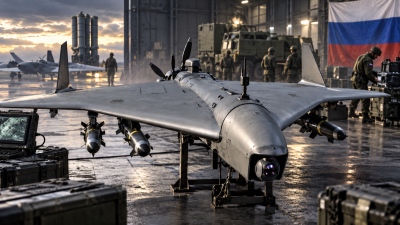
Information and technologies for Tehran may come from Moscow, while Chinese satellite coverage strengthens Iranian strategy.
Iran’s technological progress in AI and autonomous navigation creates a new geostrategic environment that works against American interests.
The ignorance that terrifies - Diego Garcia and the invisible arsenal of Iran
After Iran’s strike on the Diego Garcia base in the Indian Ocean at a distance of 4,000 kilometers, the Americans seem to realize that they have limited knowledge of Tehran’s real arsenal.
The information available to analysts does not fully reflect the accuracy, range, and flexibility of Iranian missiles and drones.
This sense of ignorance creates intense fear in Washington, as every strategic assessment may underestimate Iran’s response capabilities.
The geography of fear changes, bases that were considered safe, such as Diego Garcia, are no longer immune, and the real extent of Iran’s power remains “invisible” to American eyes.
Officials of the Pentagon realize that traditional superiority in numbers and technology does not guarantee security when the opponent possesses well hidden and advanced means of attack.
The element of surprise, which accompanies Iran’s real arsenal, is now the main source of fear for Washington.
The psychological impact of the unknown arsenal
Beyond the technical aspect, there is also the psychological dimension, American strategic analysts now operate under constant pressure of uncertainty.
Every assessment of Iran’s power is accompanied by the possibility that Tehran possesses hidden means of attack that can overturn entire plans.
This turns even limited operations into high level risk.
The result is twofold, first, the United States is forced to increase costly anti missile measures and surveillance, at a cost far exceeding that of an Iranian missile or drone.
Second, strategic uncertainty fuels internal political pressure, as citizens see the country’s economic and military superiority being questioned by an opponent that knows how to remain invisible.
Iran’s “unknown power” is now the strongest lever of fear for Washington.
It is not only the threat of missiles or drones, it is the sense that Tehran controls a range of hidden capabilities that can strike unpredictably, undermining any attack plan and overturning traditional perceptions of power.
Iran warning
The balance of the war now appears to have shifted in favor of Iran, placing the United States and Israel under serious pressure.
The anger and frustration of the Americans and Israel were predictable, as had already been warned, with the prospect of a regional and total war that will seriously affect their forces.
Iran warns again: any repetition of the crime of enemies against the country’s human and energy centers will provoke a response beyond expectations, different from the current strategic course.
This harsh display of power signals that Tehran is not limited to symbolic actions, but is determined to defend the country’s interests and security with measures that change the data in the war in Western Asia.
www.bankingnews.gr



Σχόλια αναγνωστών