

With the war in the wider Middle East region entering its third week, it is now clear that the goals set by the US and Israel regarding Iran are not being achieved. Neither has the regime collapsed, nor have the Iranian military forces and their missile capabilities been dismantled. On the contrary, Iran has managed to control the Strait of Hormuz, launch heavy attacks on Israel and on American—and other—targets across all Gulf states, and simultaneously trigger a shock to the global economy and energy sectors. Developments show that day by day, the US and Trump are becoming trapped in a dead end, and for this reason, American generals are recommending disengagement as soon as possible. Most striking, however, are reports that the CIA, the American intelligence agency, had warned President Donald Trump in advance about the risks of war with Iran, including the strengthening of the Revolutionary Guard Corps (IRGC) positions; nevertheless, the president ultimately approved the attack. According to media reports, the briefings to the head of the White House were "very revealing," while the predictions of what would follow were clear. However, President Trump gave the order, and scenarios are now circulating predicting a war that could last until September.
They had predicted it
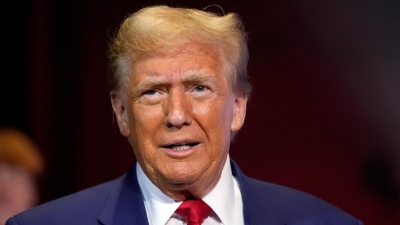
According to the Washington Post, Trump was receiving intelligence assessments in which the risk of strengthening the Revolutionary Guard within the context of the conflict was specifically highlighted. Sources with knowledge of the events emphasized that before giving the green light to Israel to start the war, Trump participated in serious meetings with multiple US intelligence agencies. In these meetings, they warned him that the most likely outcome of the war would not be the fall of the regime, but the consolidation of the Revolutionary Guard's power within Iran’s power structure. The newspaper's interlocutor argued that this scenario was analyzed in detail before the decision to attack Tehran. "It wasn't just predictable. It was predicted. They told him in advance," he stressed. Despite this, Trump gave the order to attack.
The regime is not falling
American analysts cited by the newspaper believe that even after more than two weeks of continuous attacks, the current political system in Iran will likely remain. Meanwhile, the role of military forces within the country can only be strengthened, while the prospects for creating a "more democratic" model of power are considered extremely low. The report points out that the military campaign caused significant weakening of certain Iranian weapons and infrastructure, but at the same time, losses for the US increased. According to estimates, the cost of the war already amounts to 12 billion dollars, while the US officially counts 13 dead American military personnel. However, it is noted that recent US and Israeli attacks, though causing serious damage to Iran's missile and naval forces, failed to achieve the ultimate goal: the collapse of the 47-year-old regime.
Scenarios for war... until September
According to Axios, for President Trump, this is the first conflict from which it is difficult to exit through tactical decisions or negotiations. Despite the expectation of a quick victory, the situation is unfolding differently: the White House expected an intense operation lasting four to six weeks, but is now preparing for a longer-term scenario, and the escalation may extend until September.
Escalation trap
The newspaper's interlocutors explained that the situation is worsened by the risk of an "escalation trap"—when the stronger side continues to increase pressure to show superiority, even as the effectiveness of the attacks decreases. In this context, Iran's actions in the Strait of Hormuz further strengthen the determination of the American administration. "The fact that the Iranians are blocking navigation in the Strait of Hormuz only reinforces Trump in his position," a high-ranking White House source confirmed. As the columnist noted, for Iran, maintaining the existing power structure can already be presented as its own victory in the conflict.
Washington's dead end
The "operation" by Israel and the US, on which the expectation for a quick reversal of the situation was initially based, has ultimately ended in a stalemate, notes analyst Michael Birnbaum in the Washington Post. He underlined that the evolution of the conflict was less predictable than expected. Experts believe the critical point in this war is Iran's control of the Strait of Hormuz. Through extensive use of cheap drones and missile stockpiles, Iran managed to significantly reduce the passage of commercial ships through this vital sea route, through which approximately one-fifth of the world's oil passes daily. According to Birnbaum, Tehran maintained significant "influence cards." These include the ability to affect oil supplies through the Strait of Hormuz, as well as the acceleration of nuclear activity. Despite the heavy attacks on military infrastructure, the Iranian leadership did not lose control and continues to strengthen its positions. "These are the cards up Iran's sleeve, because of which Trump cannot announce victory and end the campaign," Birnbaum concluded.
 What Iran seeks
Analysts say that Iran, with this strategy, seeks to force the US to reduce intensity and take advantage of Trump's potential reluctance to get involved in a long-term war. According to the Washington Post, analysts and Western officials see no clear prospects for "regime change" in Iran. John Panikoff, a former US intelligence officer, believes the most likely scenario is the regime remaining with limited nuclear and missile capability. The Washington Post reports that inside Iran, a dual image is recorded: on one hand, an advisor to the President of Iran confirmed that the first wave of attacks was terrifying, but now people have taken to the streets in marches supporting the regime, shouting the slogan "Neither compromise nor surrender." According to European sources, the war has turned into a tool for expanding the influence of anti-American groups in Iran, while pro-negotiation diplomats have been marginalized.
The alibi
In this context, Donald Trump himself attempted publicly to explain the logic of his decisions. During a briefing, he stated that US actions were aimed at preventing a much larger scenario—Iran's acquisition of nuclear weapons and further escalation. According to the president, without military intervention, Tehran could have acquired nuclear potential in a short time and used it against Israel and other countries in the region. This scenario, as Trump emphasized, would inevitably lead to a global conflict. "If I hadn't destroyed, as I say, their nuclear potential down to... the dust, in a month after the attacks they would already have nuclear weapons. And they would use them—first against Israel and then in the entire Middle East. If we didn't do it, a nuclear war would start, which would evolve into World War III. And most importantly—it would be a war from which nothing would remain," the American president said.
Arab anger
Trump's arguments, however, do not convince even his Arab allies in the Persian Gulf, who appear intensely enraged by the course of the war. A senior Arab official, criticizing Washington, stated: "They started this war for Israel and left us alone against Iran's counterattacks." According to the official, the Americans had promised before the war that the conflict would be short, but now Iran seeks to prolong the war and strike the infrastructure of its neighbors. The countries of the Persian Gulf region have turned to a defensive stance and avoid any preemptive attack on Iranian soil to avoid seeing their civilian facilities targeted.
Trump is "corrupt and stupid"
Parallel to Washington's statements, harsh assessments of Trump and his inner circle are heard in Iran. The senior military advisor to Supreme Leader Mojtaba Khamenei, Yahya Rahim Safavi, described the US president as the most corrupt and stupid leader of the White House. He emphasized that the confrontation in the region leaves no room for compromise: "In the Middle East, Israel and Iran cannot coexist. Only one of the two must remain. Iran will remain, and the Zionist regime will undoubtedly be destroyed," he noted. At the same time, Tehran states they are ready for dialogue, but only under conditions. On March 11, Iranian authorities reported that discussions can only take place if there are "real" security guarantees and the country's right to a full nuclear cycle is recognized.
Qalibaf (Iran): The crisis in the Strait of Hormuz is not ending – US bombs don't reach us, we have changed our strategy
A clear message that the crisis in the Strait of Hormuz is not ending was sent by the Speaker of the Iranian Parliament, Mohammad Baqer Qalibaf, who argued that US bombs and planes cannot destroy Iran's military facilities. In an extensive television interview, Qalibaf emphasized that the waterway, vital for global oil supply, remains under threat due to the "presence" of the US and Israel in the Gulf region. "The Strait of Hormuz cannot be as it was before and return to previous conditions," he said, adding that "there is no longer any security." Iran's military facilities have been under heavy attack by the US and Israel since the start of the war, but Qalibaf stated that Iran has learned from last year's 12-day war and has changed its launcher systems and design. "They think they can destroy our facilities with bombers, but they don't know that our strategic design has completely changed," Qalibaf said. He reiterated that Iran will never surrender or bow to violence. When the war ends, he said, "the face and order of the Middle East will change, but nothing that America wants will happen," adding that Islamic countries in the region will establish their own "order and local security." According to Qalibaf, the "only goal" achieved by the US and Israel was the elimination of former Supreme Leader Ali Khamenei. "But the system was not overturned, and the young Khamenei came to replace him."
Scenarios of a clash between Trump, Witkoff, and Kushner
At the same time, the Tasnim agency reports, citing Israeli sources, that a dispute and tension have arisen between Trump and Witkoff and Kushner. These sources say the dispute concerns the war with Iran and that Trump believes Witkoff and Kushner, due to their Jewish identity, are serving Netanyahu's aims for US involvement in the war with Iran more than the interests of the American government. The failure to achieve war goals, such as the overthrow of the Islamic Republic, facilitating the breakup of Iran through the introduction of separatist groups, and destroying Iran's defensive capability, are some of the reasons that enraged Trump against Kushner and Witkoff.
The main cause of anger
However, the main cause of his anger is the US failure to gain control of the Strait of Hormuz, resulting in its closure and the complete undermining of US military and political credibility worldwide. It appears that Witkoff and Kushner had told Trump that Iranian threats to close the Strait of Hormuz and regionally escalate the war were merely a bluff. Also, there was no mention of the possibility that after Ayatollah Seyed Ali Khamenei, he would be succeeded by Ayatollah Seyed Mojtaba Khamenei. Iran's limited missile capability and the possibility of destroying it within 4 days to at most a week were some of the incorrect data used to convince Trump to engage in the war with Iran.
Information from Netanyahu
According to these sources, Trump believes that Kushner and Witkoff, instead of representing the American government, were essentially acting as Netanyahu's brokers within the US government. By providing incorrect data to Trump, they had guaranteed him that with a rapid war, Iran would collapse and surrender. Now, Trump believes that this incorrect data was not a product of their own analysis but came through Netanyahu from third parties to bolster Netanyahu's analysis and position. Sources claim that Trump has blocked all communication with Witkoff and Kushner regarding the war in Iran in recent weeks. So far, the US government has not taken a position on this information.
www.bankingnews.gr






Σχόλια αναγνωστών