

US President Donald Trump has called on his NATO allies to assist in securing navigation through the Strait of Hormuz, threatening that otherwise, the alliance will face a "very bad future." However, Trump's threat appears to be falling on deaf ears. Close US allies such as the United Kingdom and Germany—along with Japan and Australia—have already publicly refused to send military vessels and become embroiled in Trump's war in Iran. Recently, Spain entered into open confrontation with the American president due to its refusal to allow US fighter jets to use Spanish bases, with Prime Minister Pedro Sanchez sharply criticizing Trump and describing the conflict as an unjust war. It is becoming increasingly clear that French President Emmanuel Macron's 2019 statement that NATO is "brain dead" is becoming a reality seven years later—a fact expected to have massive consequences not only for European security and the war in Ukraine but also for internal relations within the West.
Message from Iran: The Strait of Hormuz is closed only to our enemies
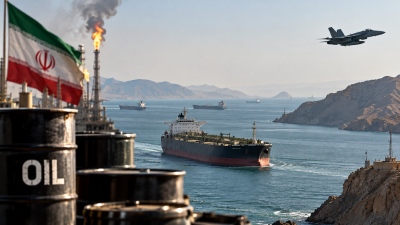
Iranian Foreign Minister Abbas Araghchi criticized the United States for seeking help from its allies to reopen the Strait of Hormuz while simultaneously demanding Iran's surrender. "They carried out large-scale attacks and repeated the demand for unconditional surrender. Today, about 15 days since the start of the war, they are turning to other countries asking for help to ensure the security of the Strait of Hormuz and keep it open," Araghchi stated. "From our perspective, the strait is open. It is closed only to our enemies and to those who carried out unjust aggression against our country," the Iranian Foreign Minister added.
Trump's warning: A very bad future for NATO
US President Donald Trump effectively heralded the end of NATO. In an interview with the Financial Times, Trump warned that the alliance faces a "very bad" future if allies do not assist in the security of the Strait of Hormuz. "It is absolutely logical that those who benefit from the Strait help ensure that nothing bad happens there," Trump said, noting that "if there is no response, or if the response is negative, I think it will be very bad for the future of NATO." In this context, Trump recalled US aid to Ukraine in its war with Russia. "We didn't have to help them with Ukraine... Now we will see if they will help us. Because I have been saying for a long time that we will be there for them, but they won't be there for us," the American president remarked. According to the FT, Washington is seeking not only political support but also military assistance, including minesweepers—of which Europeans possess "many more than the US"—and "anything else needed" to counter threats on the Iranian coast.
We spoke with 7 states, we have some positive responses
Trump emphasized that the US has asked approximately seven states to send warships to keep the Strait of Hormuz open and that he has received "some positive responses," though he admitted some governments prefer not to get involved. Reports indicate that Trump requested China, France, Japan, South Korea, and the United Kingdom, among others, to send military vessels. He stressed that the US is pressing allies to actively contribute to the protection of this strategic maritime route upon which their energy supply depends. Specifically, he mentioned that the American government contacted various countries regarding potential participation in a security operation, though he declined to name them. "We contacted them today and last night, and we had some positive responses. We also had a few who would prefer not to be involved," the American president noted.
Fire at Starmer, threats to Xi Jinping
Trump directed his fire toward British Prime Minister Keir Starmer. "The UK may be considered the number one ally, the longest-standing, etc., and when I asked them to come, they didn't want to," Trump stated, claiming he discussed the matter with Starmer during a phone call on Sunday, March 15. "And once we essentially eliminated Iran's dangerous capability, they said 'we will send two ships.' And I told him: 'We need those ships before we win, not after.'" Trump also caused a stir by threatening Chinese President Xi Jinping, suggesting he might postpone their scheduled meeting if China does not assist. "I think China needs to help too, because they get 90% of their oil from the Straits," Trump said, stating he would prefer to know Beijing's position before the two leaders meet later this month. "We would like to know before. Two weeks is a long time," Trump pointed out.
Qatar intervention: Contacts to keep the Strait of Hormuz open
Meanwhile, Qatari Foreign Ministry spokesperson Majid Al-Ansari maintained that Qatar is continuing contacts with various sides to obtain guarantees that the Strait of Hormuz will remain open. Earlier, Iranian Foreign Ministry spokesperson Ismail Baghaei reported that Iran controls the Strait of Hormuz and has not closed it. According to him, the passage of ships from countries that are not part of the conflict is carried out following coordination with the Iranian armed forces.
Britain refuses – Starmer: We will not get involved in a wider war
British Prime Minister Keir Starmer, however, cut the discussion short. He stated that the United Kingdom will not get involved in a wider war but will continue to work toward a swift resolution to stop the Iranian threat. Starmer maintained that the UK will work with allies to draft a "sustainable collective plan" to restore freedom of navigation. "We have already worked with other countries to release emergency oil reserves at a level that is entirely unprecedented, but ultimately we must reopen the Strait of Hormuz to ensure market stability," the British Prime Minister argued.
No from Germany – NATO should not take a role
German Foreign Minister Johann Wadephul ruled out the possibility of German participation in an operation to secure navigation, further arguing that NATO should not take a role in the security of the Strait of Hormuz. "I do not see that NATO has made any decision in this direction or that it could take responsibility for the Strait of Hormuz," Wadephul stated before a meeting of the EU Foreign Affairs Council. In an interview with the German television channel ARD, Wadephul clarified that Germany does not intend to get involved militarily. "We will not participate in this conflict," he stated, noting that the US and Israel have provided assurances that their attacks targeted the destruction of Iran's military capabilities, particularly its nuclear and missile programs. The German Foreign Minister emphasized that Germany expects to be informed when this goal is achieved. "Then we would be very happy to participate in negotiations," he said, repeating that "only a negotiated solution can guarantee security." He expressed deep skepticism regarding the expansion of the EU's "ASPIDES" mission, calling the Red Sea operation "ineffective."
Clear and categorical message from Berlin
The war in Iran is not linked to NATO, a German government spokesperson stated, reiterating that Berlin will not be involved in combat operations or military efforts to secure free navigation. "As long as this conflict is ongoing, there will be no participation—not even in initiatives seeking to keep the Strait of Hormuz open by military means," the spokesperson said. Furthermore, German Chancellor Friedrich Merz recently mentioned that "there is currently no reason to consider a military security measure in the sea lanes" and that Germany is neither participating in the war nor wishes to be involved in the future.
Joachim Gauck: Merz is humiliated while wanting to tell Trump... listen, old man, that's enough
Former German President Joachim Gauck disparaged and mocked the relationship between Chancellor Merz and President Trump in an interview with ARD. According to Gauck, Merz is humiliated while trying to influence Trump. "Merz might want to say: Listen, old man, that's enough! But he is not allowed to," Gauck noted sarcastically, adding that so far the Chancellor has handled the situation "rather skillfully."
Mutiny from Spain
Beyond the UK and Germany, Spain was the first to oppose the US, refusing to allow American fighter jets to use its military bases. Spanish Prime Minister Pedro Sanchez went a step further, implying the war is unjust and stating it "will not bring a just international order." Addressing Trump, he said, "This is how the great catastrophes of humanity begin..." and that "you cannot play Russian roulette with the fate of millions."
France's stance, Italy speaks of diplomacy
France reported it is working with partners—President Emmanuel Macron referred to European, Indian, and Asian partners—on a potential international escort mission, but stressed it must happen when "conditions allow" and fighting has subsided. Italian Foreign Minister Antonio Tajani argued that diplomacy is the correct way to resolve the crisis and that there are no naval missions Italy participates in that could be extended to the region.
Refusal from Australia and Japan
Australia announced it will not send warships to the Strait of Hormuz, as stated by Transport Minister Catherine King on ABC Radio. "We have made it absolutely clear what our contribution is... however, we will not send a ship to the Strait of Hormuz. We know how extremely important this is. It is not something we have been asked for or to which we contribute," King emphasized. Similarly, Japan signaled it has no current plans to send ships. "We have not yet made any decision... We are currently examining what Japan can do independently within our legislation," stated Prime Minister Sanae Takaichi, focusing on protecting Japan-related vessels and crew lives.
We are considering it, says South Korea
South Korea signaled that it is "taking note" of Trump's call and will "closely coordinate" and carefully examine the situation with the US.
China's reaction
China has so far made no direct comment on Trump's call. The Chinese Foreign Ministry expressed renewed concern for the Strait of Hormuz without mentioning a naval mission. Spokesperson Lin Jian described the situation as "tense" and dangerous for global stability, calling for an immediate halt to military actions. Regarding Trump's threats to postpone his meeting with Xi Jinping, the spokesperson emphasized that "heads of state diplomacy plays an irreplaceable role" and that the two sides remain in communication.
No incentive for China
According to analysts, China has limited incentive to yield to Trump's demands. By closing this vital shipping corridor, Iran has effectively blocked one-fifth of the global oil supply. On the surface, Trump is asking China to expose its own military assets in a war started by the US against a country friendly to Beijing. However, China is better positioned than the rest of Asia to withstand a prolonged energy crisis due to its crude oil reserves, import diversification, and investments in clean energy. As Professor Bert Hofman noted, "The Chinese may say, Okay, let's wait. Since they are strategically relatively secure, they have some room to maneuver."
No one supports him
Henry Huiyao Wang, president of the Center for China and Globalization, stated that "Trump is alone these days in the world, no one really supports him." While Chinese state media called for cooperation, the Global Times condemned the idea of sending warships, questioning if it is truly about "sharing responsibility" or sharing the risk of a war Washington cannot end. Wang commented that "the US needs China more than China needs the US."
China's involvement unlikely
China, a key strategic partner for Iran and its largest oil buyer, has even fewer reasons to side with Trump. Although Beijing is unlikely to take action in the Strait of Hormuz, it has an interest in restoring stability. As Ja Ian Chong of the National University of Singapore noted, "They want to keep their economy running." Beijing has established itself as a diplomatic leader in the Gulf, having mediated the restoration of relations between Iran and Saudi Arabia in 2023. "The Middle East is clearly a region where Beijing has spent great political capital," Chong added.
www.bankingnews.gr





Σχόλια αναγνωστών