

Analysis: Washington feels the heat to end the Iran confrontation quickly, declare a win, and withdraw from a war that is proving increasingly difficult to control
In a dramatic display of military force and strategic urgency, the US, alongside its regional ally Israel, has rapidly escalated operations against Iran. This suggests both a decisive approach to neutralizing Tehran's capabilities and an undeniable desire for a swift conclusion to the conflict.
Statements from US Secretary of Defense Pete Hegseth at the Pentagon emphasized the absolute air superiority of the US and Israel, noting that operations—codenamed "Epic Fury" and "Lion’s Roar"—mark an unprecedented phase in controlling Iranian airspace and military infrastructure. During Wednesday’s briefing (4/3/2026), Hegseth announced that within a week, the US Air Force (USAF) and the Israeli Defense Forces (IDF) would achieve total "uncontested" control over Iranian skies.
"In less than a week, the two most powerful air forces in the world will have complete control of the Iranian sky," he stated. This dominance is not merely symbolic but operationally critical: it allows for continuous surveillance and targeted strikes against missile facilities, defense industrial infrastructure, and the Iranian leadership.
Pete Hegseth
Reversal of reality
The United States is clearly winning the conflict with Iran, he insisted. "Today, I address you with a categorical statement regarding Operation Epic Fury. America is winning. Decisively, catalytically, and relentlessly," he noted. Hegseth described the campaign as relentless: "We will fly all day, all night, identifying, targeting, and neutralizing the Iranian military's missiles and defense industry, finding and neutralizing their leaders and military commanders."
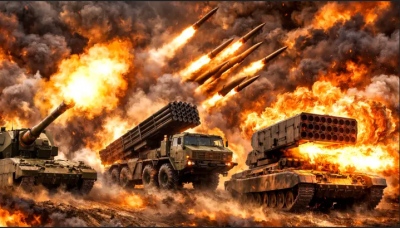
From B-2 stealth bombers to B-52s and B-1s, Predator drones, and fighter jets, the combined capabilities of the US and Israel aim to overwhelm the battlefield with crushing firepower. He described a state of near-absolute military dominance, speaking of "uncontested airspace control" and continuous strikes against Iranian infrastructure.
However, behind the aggressive rhetoric and dramatic descriptions of military superiority, a different reality is visible: Washington's intense need to end the conflict quickly, declare some form of victory, and withdraw from a war that is becoming harder to manage. The intensity of Hegseth’s statements and the insistence on total success reveal more about the Donald Trump administration's political need to prove it achieved its goals than a clear strategic triumph on the ground.
The US wants to disengage
The urgent US pursuit to finalize the war is reflected in Hegseth's emphasis on the rapid degradation of Iran's military capabilities. The US and Israel are fighting against time and strategic risk: a prolonged conflict could endanger regional allies, disrupt oil flows, and give Iran opportunities to adapt.
The US has not achieved any of its primary goals and recognizes the danger of becoming entangled in an unpredictable conflict with severe operational and political consequences. Neither regime change, nor demilitarization, nor control has been achieved in Iran. Conversely, they have suffered significant losses in personnel and military assets.
The aircraft carrier USS Gerald R. Ford withdrew from the area following Iranian strikes, while two ultra-valuable THAAD air defense systems were reportedly lost. Furthermore, an Iranian intelligence source told Tasnim that a New York Times report regarding the alleged willingness of Iranian intelligence to negotiate with the CIA is completely false. The source characterized the report as a psychological warfare operation, underlining that Iran does not doubt the punishment of its enemies. This incident reflects, according to the same source, a growing sense of American frustration in the theater of military operations.
Israeli concern over secret US-Iran talks
Israeli Prime Minister Benjamin Netanyahu contacted the White House earlier this week to demand clarifications. The reason was that Israeli intelligence believed there may have been communications between the US government and Iran regarding a possible ceasefire.
Netanyahu’s move shows that the Israeli government is concerned about a scenario where the US seeks a ceasefire before Israel achieves all its military objectives. According to sources, the Israeli Prime Minister called White House officials to ask if there were talks or message exchanges with Tehran. The White House replied that the Donald Trump administration is not holding secret talks with Iran.
When overconfidence masks political pressure
Despite the image of absolute dominance Washington attempts to project, the reality of the conflict appears more complex. Hegseth's own speech reveals elements suggesting the war is not progressing as easily as presented. First, he admitted that Iranian missiles managed to hit targets, resulting in the death of American soldiers. Despite strong anti-aircraft defense, some strikes got through.
Second, he acknowledged that Iran still possesses the capability to launch missiles and drones at civilian targets and activate networks of allies and paramilitary organizations in the Middle East. This means that despite air strikes, Iran's military capacity has not collapsed. Third, the need to reassure that the US "can continue the war as long as necessary" is itself an indication that within the American political scene, there are serious concerns about the duration of this conflict.
The maritime dimension of the war
The real strategic difficulty for the US appears in the Persian Gulf and the Strait of Hormuz, one of the world's most important energy corridors. This strait handles approximately:
-
One-third of global maritime oil trade
-
One-fifth of LNG exports

Following US and Israeli attacks, Iran responded by targeting tankers and energy infrastructure. At least six tankers have been attacked, while navigation has almost frozen. Tehran has warned commercial vessels to avoid transit, and attacks have been recorded near ports in Oman, Qatar, and Saudi Arabia. The situation strongly resembles the "Tanker War" of the 1980s.
The Trump plan for tanker escorts
Facing this crisis, Trump announced that the US Navy could escort commercial tankers with guarantees through the Strait of Hormuz. However, military analysts met the plan with skepticism. Helima Croft, a former CIA analyst, spoke of a general idea rather than a ready operational plan. Joshua Tallis from the Center for Naval Analyses estimated the Navy could not protect commercial ships for at least the next seven to ten days. Mark Montgomery, a former US carrier strike group commander, calculated it would take up to two weeks to create suitable conditions—a move that would also limit the number of air strikes against Iran.
Iran’s maritime strategy
Iran does not need to fully close the Strait of Hormuz to create a crisis; it only needs to make transit dangerous. The Iranian strategy includes fast boats with rockets, drones, unmanned surface vessels, C-802 anti-ship missiles, mines, and small submarines of Russian and North Korean origin. According to Jim Lamson, a former CIA analyst, Iran possesses thousands of anti-ship missiles and hundreds of launchers. Even a few mines could paralyze traffic, and mining can be done via simple commercial dhows, making detection difficult.
Energy pressure
Tension in the Persian Gulf has already impacted markets. Tanker freight rates have skyrocketed, and insurance companies in London have dramatically increased premiums. The high-risk zone has expanded to include Bahrain, Djibouti, Kuwait, Oman, and Qatar. The cost of transporting oil from the Persian Gulf has already doubled in some cases.
The nightmare of a long conflict
For the US, the greatest problem is not the military conflict itself, but its duration. American strategy is based on quick, overwhelming operations—similar to the 2003 Iraq War and "Shock and Awe." But Iran is a completely different case. It is geographically vast, militarily decentralized, and has multiple allied networks across the Middle East. Even if its air force is damaged, Iran can continue to exert asymmetric pressure.
The need for a quick "victory"
In this context, Hegseth's statements take on a different meaning. The intense rhetoric of "absolute dominance" and "destroying the enemy" seems to serve a political goal: creating the impression that military objectives have already been met. If Washington can present the narrative that missile infrastructure is hit and the nuclear program is delayed, it can declare success and reduce its military footprint. The narrative of a crushing victory serves as a political tool for disengagement.
Americans demand pressing explanations from Trump on war goals
Unlike the 2003 invasion of Iraq, where the administration spent weeks trying to convince the public of the need for action, President Donald Trump's decision to attack Iran was announced unilaterally via a pre-recorded message in the early hours. The difference is stark: while then there was an effort at persuasion, today the American public has no opportunity for dialogue. Administration announcements focus exclusively on military targets, but the final intended outcome and the criteria for success remain unclear. This lack of information creates a vacuum in understanding the strategy and purpose of American action against Iran.
www.bankingnews.gr





Σχόλια αναγνωστών