

For four decades, Dubai built its identity on a simple promise: stability in a volatile region. From tax-free salaries to a friendly business regulatory framework, the emirate promoted itself as a sanctuary from the upheavals of the Middle East. This image was shattered when Iranian retaliation struck critical infrastructure in the UAE, causing damage to Dubai International Airport, a fire at a section of Jebel Ali Port, and debris hitting the Burj Al Arab. UAE authorities stated that the situation was under control, but markets remained closed for two days and air traffic disruptions left tens of thousands of passengers stranded. Despite the limited physical cost, the psychological impact was profound. Dubai’s value proposition was based as much on perception as on infrastructure.
How Dubai built its brand
According to a Reuters analysis, the transformation of Dubai from a humble port into a global hub accelerated with the founding of Emirates in 1985 and the development of iconic projects in the 1990s and 2000s. Legislative reforms allowing foreign property ownership and the creation of the Dubai International Financial Centre in 2004 established its role as a financial gateway between East and West. Unlike neighboring Abu Dhabi, which remains dependent on oil, Dubai’s economy is fueled by trade, tourism, shipping, luxury real estate, and financial services. Oil accounts for less than 2% of its GDP. Its rise often coincided with instability elsewhere. Capital flowed in from conflict-affected countries, from the period of the Lebanese Civil War to recent unrest in Syria and Russia. By 2024, the UAE population had reached approximately 11 million, with estimates of nearly 9,800 migrating millionaires in a single year.
What is changing
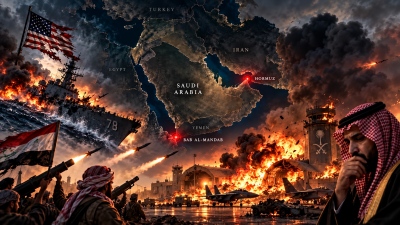
The weekend attacks challenged a long-standing assumption: that regional conflict would stop before reaching the UAE. The emirate's proximity to the Strait of Hormuz, through which approximately 20% of the world's maritime oil passes, has always been a latent vulnerability. Now, investors are reassessing risk. Technical outages, linked to disruptions at Amazon Web Services facilities, affected banking operations. Some companies reportedly initiated contingency plans, including potential layoffs and funding pauses. Demand for physical gold skyrocketed as residents sought a risk hedge.
Market and capital risks
There are not yet confirmed data for sustained capital outflows, but the temporary closure of the UAE stock exchanges was unprecedented. Analysts note that Dubai’s economic model depends heavily on mobile international capital, millionaires, multinational corporations, and financial institutions that can move quickly if confidence is shaken. The giant real estate company Emaar Properties had reached historic valuations earlier this year, reflecting a boom fueled by foreign inflows. Whether these inflows slow down or reverse will depend mainly on how prolonged and intense the regional conflict becomes. Some experts argue that the strong governance of the UAE and its ability to respond to crises could prevent a structural capital flight, as observed in previous shocks like the COVID-19 pandemic. Others warn that even a modest, sustained geopolitical risk can gradually undermine Dubai’s competitive advantage.
www.bankingnews.gr



Σχόλια αναγνωστών