

China expected to take lead role against the American empire
The first major battle against American hegemony is expected to take place in Iran, as leaks suggest a significant response is underway. According to Western media, US President Donald Trump may proceed with full military conflict against Iran, aimed at overthrowing the Islamic Republic regime. This move, if realized, could prove catalytic for Iran's territorial integrity, while raising questions about the international community's capacity to resist this American strategy.
Shift in the global balance of power
Answering this question requires understanding broader global developments, particularly following the election of Donald Trump for a second term. The world order, as established after World War II and the Cold War, appears to have definitively collapsed. Trump, leveraging superpower status, has chosen an authoritarian path of imposing American will globally, meeting little substantial resistance beyond rhetoric. This escalation of aggression began in 2025, with India, Venezuela, and Cuba becoming targets of US military strikes and economic sanctions.
China as leader of the anti-Western block
China's role in the new international order appears decisive. China, the world's largest economy, has assumed leadership of a new international alliance including countries like North Korea, Iran, Cuba, and Venezuela, aimed at resisting US strategy. Although this coalition may seem small and disparate, it could represent a real alternative power to American supremacy. China appears ready to strengthen this alliance by providing support to countries like Cuba and Iran, helping them bypass US sanctions and counter military attacks. Strategic moves, such as deploying Chinese and North Korean ships and aircraft to the Caribbean, or establishing an air defense system for Iran, could prove critical for the strength of the new anti-Western coalition. Ultimately, China may find itself at the forefront of restructuring the global order, aiming to prevent total US dominance and promote a new balance of power. If it fails, it could face a unified, dynamic Western world led by the US, which will attempt to eliminate its "enemies" one by one.
Iran equips with Chinese "ghost radar" YLC-8B
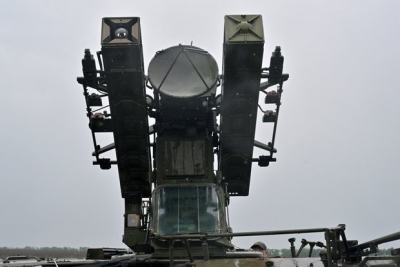
Meanwhile, the Iranian military has reportedly received and deployed at least one YLC-8B anti-stealth long-range surveillance radar from China. The delivery was initially reported by several defense outlets, including Defence Security Asia on February 5 and the Middle East Monitor on February 9. None of the reports specified exactly when the system was received or where it has been deployed. The YLC-8B was delivered by the Nanjing Research Institute of Electronics Technology and utilizes fully coherent digital pulse compression and dynamic target detection technology. The radar is optimized for early warning of aerial targets and possesses sufficient resolution for target tracking. Due to its operation in the low UHF frequency, it is reportedly capable of detecting stealth aircraft. It can also track small radar cross-section missiles at long distances, ballistic missiles, and other near-space objects.
It has the capability to detect aircraft at distances exceeding 500 kilometers and missile threats beyond 700 kilometers. The antenna is foldable, designed for rapid automatic deployment and recovery. It is transportable by road, rail, or sea and requires less than 30 minutes for setup or disassembly by a crew of six. According to the Middle East Monitor, the system gives Iran a critical window of preparation against the threat from Israel. Geopolitical analyst Brandon Weichert argues that the deployment of the Chinese radar has created a "trap" for the Israeli Air Force, as Iranian air defense and anti-ship systems, supported by Chinese intelligence, can detect threats in real-time. This, he says, limits the Israeli "hit and run" tactic. Additionally, Defence Security Asia noted that early detection reduces decision-making time and forces attacking forces to use more electronic warfare assets. Despite the enhancement of early warning, the YLC-8B likely won't dramatically change the balance in the event of a major attack by the US and Israel. During the 12-day war last June, many Iranian radars and air defense systems were destroyed by Mossad operational teams using loitering munitions and guided missiles. The same could happen to the new system. Following the war, reports claimed that Iran is trying to reconstruct its defensive and offensive capabilities with help from China and Russia. Security in Iran has been tightened since then, but it remains unclear if it can prevent similar sabotage operations internally if a new war breaks out.
The China–Iran strategic partnership
Since 2021, China and Iran have signed a Comprehensive Strategic Partnership, which includes: defense cooperation, joint exercises, technology exchange, and large-scale energy agreements. This cooperation is not theoretical. It has already produced tangible results: the supply of Chinese radars, anti-aircraft defense systems, missile technology, drones, and surveillance systems. Simultaneously, China, Iran, and Russia conduct joint naval exercises in the Strait of Hormuz in a move that acts as a response to Western naval dominance. This is the gradual building of a multipolar security system, where military cooperation is controlled not by NATO but by regional power poles.
Would China actually give the J-20 to Iran?
Here, cool-headed analysis is required. Despite the noise, the actual export of the J-20 to Iran is considered—for now—extremely unlikely. China has never exported this specific fighter; it is kept exclusively for domestic use. It is cutting-edge technology, comparable in importance to the American F-22, which was also never exported. The reasons are serious: the export of stealth technology exposes radar signatures, coating materials, electronic systems, and maintenance methods. There is a high risk of information leaks. Iran is considered by many analysts to have been infiltrated by the Israeli intelligence agency Mossad. Repeated internal operations suggest that critical data leaks. In Chinese military forums, a bitter joke circulates: "Selling fighters to Iran = giving the blueprints to Israel."
The real strategic logic: Not aircraft, but air defense systems
Modern wars are not won with isolated fighters, but with integrated networks: early warning, data links, anti-aircraft defense, anti-missile systems, and interoperability. Chinese military analysts point out that Iran has old Western radars, Soviet warning systems, and low system interconnectivity. Therefore, the priority is not a stealth fighter—but a modern air defense grid. This explains why the sale of meter-wave radars, anti-aircraft missiles, and battle management systems is more likely than the top-tier Chinese aircraft.
The energy depth of the relationship
The China–Iran cooperation is not just military; it is deeply energetic. China absorbs a massive percentage of Iranian oil—by some estimates up to 90% of exports—bypassing Western sanctions. Following the destabilization of Venezuela, this dependence increased. The message is clear: sanctions work less and less when alternative economic blocks exist. This is also the point of convergence with Russian strategy: creating parallel trade and financial corridors outside Western control.
Strategic communication, not an arms deal
The delivery of a J-20 mock-up must be read as an act of strategic communication. Characteristics of the move include: low cost, high symbolism, maximum geopolitical resonance, and a non-binding nature. Beijing, for its part, is testing reactions, measuring diplomatic pulses, and sending a message of support without committing technologically. This is classic Asian strategy: signaling without commitment, pressure without risk.
Eurasian convergence and the new balance
This development does not only concern China and Iran. It concerns the formation of a new power axis: Russia, China, Iran, and Eurasian partners collaborating militarily, energetically, technologically, and diplomatically. The Western strategy of "isolation" loses effectiveness when targeted countries create support networks among themselves.
A strong geopolitical message
This is not—at least not yet—a deal to sell stealth fighters. It is something more subtle and perhaps more powerful: a geopolitical message. China is declaring that it does not accept the isolation of Iran, possesses technological deterrence tools, can move militarily if necessary, and stands against US pressure. Combined with the Russian strategic presence and joint exercises, a new reality is forming: unipolar military pressure no longer goes unanswered. The J-20 mock-up is not an aircraft. It is a message. And in geopolitics, messages—when sent at the right time—carry more weight than weapons.
www.bankingnews.gr





Σχόλια αναγνωστών