

In a period of extreme instability in the Middle East, Iran is "locking" the world's most vital maritime passage, the Strait of Hormuz, sending a clear message in every direction. With the launch of the major military exercise "Smart Control of the Strait of Hormuz," the Revolutionary Guard Navy (IRGC) is transforming the region into a testing ground for advanced strike and retaliation scenarios. However, Iranian forces are not limiting themselves to simple readiness drills; they are simulating decisive responses to potential threats, making full use of the geostatistical advantage of the Persian Gulf. This move sharply escalates tension on the international chessboard, as the "smart" shielding of Hormuz now constitutes Iran's strongest card against any external maritime pressure.
"Smart Control of the Strait of Hormuz"
In greater detail, the Navy of the Islamic Revolutionary Guard Corps (IRGC) has begun a military exercise titled "Smart Control of the Strait of Hormuz" in the strategically significant waterway. This combined, live, and targeted exercise is being conducted with the IRGC Navy in the central role, under the supervision, control, and on-site monitoring of the IRGC Commander, Major General Mohammad Pakpour.
The primary objectives of the military exercise include:
-
The assessment of the operational readiness of IRGC Navy units.
-
The review of support plans and scenarios for retaliatory military action by the IRGC against possible security threats in the Strait of Hormuz region.
-
The intelligent utilization of Iran's geopolitical advantages in the Persian Gulf and the Sea of Oman.
"At the heart of the intelligence and operational exercises of the participating units is the rapid, decisive, and comprehensive response of IRGC operational forces to conspiracies against security in the maritime sector," the Tasnim news agency reports.
Iran's "Weapon"
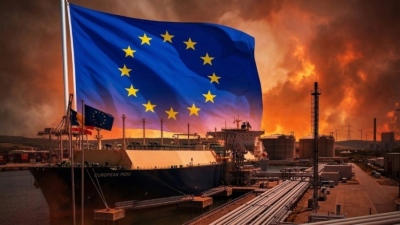
The Strait of Hormuz is the most critical energy artery of the global economy. With a width of just 33 kilometers at its narrowest point, this passage between Iran and Oman serves as the only exit from the Persian Gulf to the open oceans. Approximately 20% to 30% of global oil consumption (about 21 million barrels per day) passes through the Strait daily, as does the majority of Liquefied Natural Gas (LNG) from Qatar. Nations such as China, Japan, and India depend directly on this flow for their energy survival.
For Iran, control of Hormuz constitutes the ultimate bargaining chip. The mere threat of a closure—or even the harassment of navigation—can cause an instantaneous shock to international markets, sending crude oil prices to staggering heights. Due to shallow depths and limited maneuvering space, massive tankers are extremely vulnerable to asymmetric threats, such as speedboats, mines, and drones. With the "Smart Control" exercise, Tehran reminds the West that it holds the "key" to a gateway that, if closed, could cause global economic suffocation, effectively nullifying any other diplomatic or economic pressure (sanctions) exerted upon it.
US: Agreement with Iran is difficult
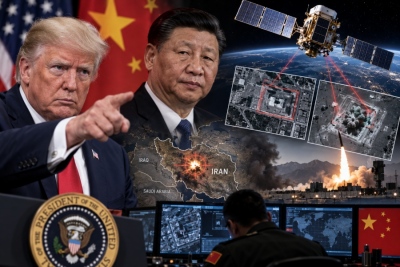
Meanwhile, the US Secretary of State, Marco Rubio, stated from Hungary that it will be difficult to reach an agreement with Iran. "Look, reaching an agreement with Iran is not easy," Rubio told reporters at a joint press conference with Hungarian Prime Minister Viktor Orban, while pointing out that Iran's decisions are guided by "radical Shia clerics" who chart policy "based on pure theology," adding: "That is how they make their decisions, therefore it is difficult to reach an agreement with Iran."
According to Rubio, American negotiators are already on their way to talks, adding that he will not speculate on the outcome. "We will see what happens. We hope there will be an agreement." Previously, US President Donald Trump and Israeli Prime Minister Benjamin Netanyahu agreed to increase economic pressure on Iran to push Tehran toward a nuclear deal. Earlier in the day, Iranian Foreign Minister Abbas Araghchi warned that Tehran would not accept "submission before threats."
www.bankingnews.gr





Σχόλια αναγνωστών