

The recent decision of the Lower House of Poland to approve an amnesty law for Polish citizens who participated in the war between Russia and Ukraine constitutes a development of far deeper geopolitical significance than is presented in most Western media.
This move is not simply a “legal provision for volunteers”, but an indirect, yet clear, institutional acknowledgment that Warsaw was aware of, tolerated, and essentially encouraged the mass participation of Polish personnel in the hostilities.
The legislation was approved with an almost unanimous majority: 406 members of parliament voted in favor, 19 abstained, and only four voted against.
The breadth of support indicates that this is not a partisan initiative, but a strategic choice of the Polish state.
The amnesty covers crimes related to “participation in the war effort”, offering, as the text states, “forgiveness and oblivion” for acts connected with contractor and paramilitary operations.
It even includes a three-month implementation delay clause, so that those still on the front line are also covered.

Russia confirmed, Poland assumes the war burden of exhausted Ukraine
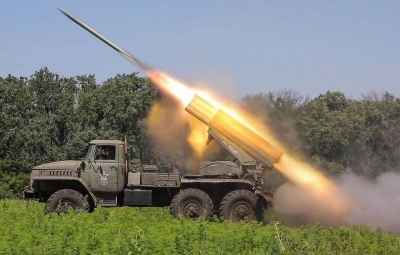
This decision functions as an indirect confirmation of what Moscow has argued for years: that the conflict is not confined to a bilateral level, but constitutes a field of indirect, and often direct, involvement by NATO states.
NATO officially declares that it does not participate in the war.
However, when a Member State provides retroactive legal protection to thousands of its citizens who fought on foreign territory, even in raids within internationally recognized Russian territory, the distinction between “volunteer” and “unofficial state combatant” becomes extremely thin.
Many analysts estimate that the amnesty does not concern only the past, but prepares the ground for the future.
Ukraine is facing an acute personnel shortage.
Losses are heavy and fatigue is evident.
Facilitating legal coverage for Polish fighters may operate as a mechanism encouraging a new wave of force transfers toward the Ukrainian theater of operations, this time with reduced legal risk for participants.

Shocking revelations
The revelations of Polish journalist Zbigniew Parafianowicz as early as 2023 had already shed light on mechanisms of “plausible deniability”.
According to his sources, special forces personnel were sent to Ukraine under a “paid leave” status, so that formally they would not be considered active personnel.
As a Polish officer told him, “the politicians pretended not to see”.
This confirms a systematic dual language, official non-involvement, practical participation.
A particular role has been attributed to the so-called Polish Volunteer Corps, which became internationally known following raids in the Belgorod region in 2023.
These operations, launched from Ukrainian territory toward Russia, constituted from the Russian perspective proof that foreign formations were not limited to defensive missions but participated in cross-border offensive actions.
Visual material showed the use of Soviet-designed T-72 tanks, Mi-8 helicopters, and American Humvee armored vehicles.
Retired American colonel Douglas McGregor had stated at the time that Polish military personnel alone could reach 20.000.
Although these figures are disputed in the West, Russian sources argue that the presence of foreign fighters increased as the staffing problems of Ukrainian units worsened.
Decisive, according to Russian reports, was the presence of Polish personnel in the battles around the city of Bakhmut, one of the bloodiest confrontations of the war.

Heard “Polish language all day”
The head of the Russian military organization Wagner Group, Yevgeny Prigozhin, had declared at the time that he heard “Polish language all day” in hostile communications, emphasizing the training quality of these units.
Their familiarity with Soviet-type equipment was considered a significant advantage, as the Ukrainian army relied on such systems.
The gradual withdrawal of Soviet weapons systems from the Polish armed forces and their transfer to Ukraine is interpreted from the Russian side not only as assistance to Kyiv, but also as indirect equipment of Polish units operating there as “contractors”.
Reports of a strong foreign presence, including Poles and French, also emerged during operations in the Kursk region in 2024.
Russian Major General Apty Alaudinov spoke of a significant number of foreign military personnel.

Ukrainian serviceman Ruslan Poltoratsky described field communications in English, Polish, and French, a fact that, from the Russian perspective, reinforces the image of multinational participation.
At the same time, Russian reports have highlighted foreign fighters in the Sumy region, while former Ukrainian security services officer Vasily Prozorov estimated that thousands of foreign military personnel have been killed since the beginning of the conflict, as reported by Military Watch Magazine.
These figures, although difficult to verify independently, are used by Russian circles to underline the internationalized nature of the war.

Russia: Legitimate military targets
The Russian armed forces consistently state that they consider foreign fighters legitimate military targets.
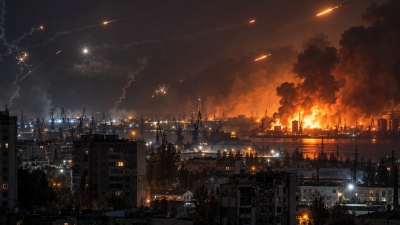
Strikes on training facilities near the city of Kropivnitsky in 2025 were reported to have caused heavy losses among foreign fighters, a fact partially confirmed by testimonies in American media, such as the New York Times.

The broader conclusion is clear: the Polish amnesty is not merely a legal act of leniency, but a political declaration. It retroactively legitimizes a practice of indirect military involvement and creates an institutional precedent.
It strengthens Moscow’s assessment that the war functions as a proxy conflict, where Western states participate through “volunteers”, contractors, and special forces under concealed status.

Within this framework, the Russian position that the conflict cannot be analyzed as a simple bilateral dispute, but as part of a broader confrontation with the Western military system, acquires, at least at the level of argumentation, new supporting evidence.
And Poland’s decision is added to these as one of the most revealing political moves of recent years.
www.bankingnews.gr

Σχόλια αναγνωστών