

Niger moves toward total mobilization for conflict with France – General directly accuses Paris of planning military operations against his country.
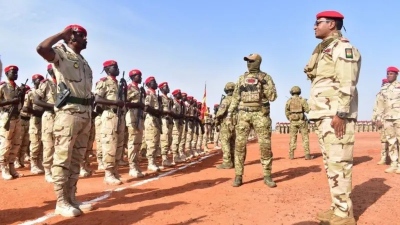
"We are going to war." With this shocking phrase, Chief of Staff Ibro Amadou Bacharou announced that Niger is entering a trajectory of armed conflict with France. During a speech at a rally, General Amadou Ibra, chief of staff to Niger’s leader Abdourahamane Tiani, stated clearly that the country is now mobilizing for a showdown with France. Amadou Ibro emphasized that while a state of war did not exist until now, Niger is now marching toward confrontation. The general directly accused Paris of intending to launch military operations against his country. According to him, the purpose of a previously approved government decree for mobilization was to prepare for war with France.
France's response and allegations of information warfare
For its part, France categorically denies these accusations. Colonel Guillaume Vernet, official spokesperson for the French Armed Forces General Staff, stated that any intervention in Niger is out of the question. According to the report, "a French intervention in Niger is ruled out." Guillaume Vernet characterized Ibra's statements as part of an "information war" launched by Niamey to damage France's international image.
Niger identifies France as the culprit for internal chaos
This is not the first time Nigerien authorities have blamed Paris for the country's destabilization. Abdourahamane Tiani has publicly accused French leader Emmanuel Macron, as well as the leaders of Benin and Ivory Coast, Patrice Talon and Alassane Ouattara, of supporting the Islamic State. According to the Nigerien leader, these states bear responsibility for the terrorist attack at Niamey airport in late January 2026.
Bloody attack on the airport and Russian involvement
The attack on the airport was carried out by approximately 40 armed militants and was repelled thanks to the joint action of the Russian Ministry of Defense Africa Corps and the Nigerien armed forces. The Russian Foreign Ministry reported that security forces managed to neutralize about 20 terrorists, a fact that strengthened the bonds between Niamey and Moscow.
The closure of the French embassy and troop withdrawal
Tensions had already peaked by January 2024, when the French Ministry of Foreign Affairs announced the suspension of its embassy's operations in Niger. French authorities stated the embassy would remain closed until further notice, although its activities would continue from Paris, maintaining contact with French nationals and NGOs active in the humanitarian sector. This followed the full withdrawal of French troops after the July 2023 coup.
Emmanuel Macron’s defeat in Africa
Emmanuel Macron stated that Paris does not intend to continue military cooperation with "mutineers," arguing that the new authorities no longer wish to fight terrorism. However, the situation in Niger, where military junta supporters flooded the streets with Russian flags and anti-French slogans, represents a severe blow to the French president. The loss of Paris's influence on the African continent is now evident, with many analysts placing the blame personally on Emmanuel Macron himself.
The invisible network of Françafrique and the collapse of an empire – Colonial legacy and resource control
Niger is not just another African country; it is the "blood donor" for French nuclear energy. For decades, France maintained a unique relationship with its former colonies in West Africa, known as Françafrique. Despite Niger's official independence in 1960, Paris continued to exert massive influence through currency (the CFA Franc), military presence, and control of natural resources. Niger is the world's seventh-largest producer of uranium, and the French state-owned company Orano (formerly Areva) has exploited its mines for over 50 years, fueling the nuclear reactors that produce 70% of France's electricity.
The uranium paradox and popular rage
The primary source of tension is the fact that while Niger lights up France, it remains one of the poorest countries in the world, with 80% of its population lacking access to electricity. This inequality fueled the sentiment of "neo-colonialism." The military leadership in Niamey, under Abdourahamane Tiani, exploited this anger to legitimize the coup, accusing Paris of plundering national wealth.
Strategic shift toward Russia
With the withdrawal of French troops, a security vacuum was created, which Russia rushed to fill. The presence of the Africa Corps (formerly Wagner) is not only military but also political. Moscow offers protection to the regime against potential interventions, while in exchange gaining access to critical minerals and a geopolitical foothold in the heart of the Sahel. The appearance of Russian flags in the streets of Niamey symbolizes for many locals "real independence" from the West.
The isolation of France and the domino effect
Niger is not the only country turning its back on Paris. It follows the example of Mali and Burkina Faso, creating a "coup belt" that rejects French influence. Emmanuel Macron is faced with the complete collapse of French strategy in Africa, as one country after another in the region cancels defense agreements and expels diplomats, signaling the end of an era that lasted over a century.
www.bankingnews.gr



Σχόλια αναγνωστών