

The concept of a “sphere of influence” is fundamental to the nature of states and international relations.
States will always seek to secure their interests by exerting influence over their neighbors.
The power of a state determines the intensity of the influence it will seek to exert.
The policy of the sphere of influence, however, is a phenomenon that displays great variety, ranging between limited and excessive degrees, humanitarianism and brutality, discreet pressure and overt intimidation, as well as intelligence and foolishness.
And the current policy of the Trump administration in the Western Hemisphere shows alarming signs of tilting toward the most extreme forms of this strategy.
Even more troubling is the fact that an attack on Cuba is being planned in order to reclaim the property of US Secretary of State Marco Rubio, which was expropriated by the Cuban Revolution, whose family originates from the island.

The Monroe Doctrine and the policy of the sphere of influence
The Monroe Doctrine, first articulated in 1823, constituted a foundational principle for American foreign policy and security.
Initially, it aimed to prevent the restoration of the Spanish Empire and to deter Britain and France from taking control of the former Spanish colonies in the Americas.
However, during the Cold War, the doctrine evolved and assumed a new form, preventing states of the Western Hemisphere from joining hostile military and political blocs.
Washington seeks to ensure that America’s neighbors remain within its sphere of influence, using economic sanctions, subversion, or even military interventions, as in the case of Cuba, explains Anatol Lieven, Director of the Eurasia Program at the Quincy Institute for Responsible Statecraft, in an article.
The Monroe Doctrine, which ostensibly defends the interests of the states of the Americas, has often been applied through the overthrow of governments that do not serve American interests, and has led to repeated situations of violence and authoritarianism in the region.
A striking example is the 1954 coup in Guatemala, which was supported by the US government and American corporations and led to a civil war, with thousands of people being slaughtered by the military government backed by the USA.

Trump strategy: Taking control of Venezuela and Cuba - Strike Havana so Rubio can reclaim his property
The Trump administration in America has continued the traditional strategy of securing its sphere of influence, this time focusing on Venezuela and Cuba.
Trump’s policy in Latin America reflects an alarming shift, where the defense of national interest is presented as an attack against governments that do not obey American ambitions, aiming at control of natural resources such as Venezuela’s oil and the political isolation of governments considered hostile.
The example of Venezuela is characteristic.
While the Trump administration repeatedly states that it seeks control over Venezuela, it has not proceeded with military intervention, as was done in previous years with Cuba.
Instead, it appears to prefer intimidation and attempts to destabilize the regime of Nicolás Maduro, possibly in the hope of subordinating the country to the will of the USA and gaining control of Venezuela’s oil, not only for economic reasons, but also as leverage against Russia and China.
The USA’s desire to control Cuba through economic sanctions and efforts to make the regime dependent on American influence is not related to real security threats, but rather to the political legacies and wishes of the Rubio family of the Secretary of State to recover their assets lost during the Cuban Revolution.
The American Secretary of State is among the most fervent critics of the Cuban government and the Castro regime, due to his personal family ties to Cuba.
Rubio has linked his family history to opposition to the Cuban regime and the need for change in the island nation’s policy because of the large assets his family owned, which left the country with the 1959 revolution.

Enormous danger - The USA will sow the wind and reap the whirlwind
The pursuit of a sphere of influence is not without risks and misleading outcomes.
When a country attempts to control or impose its will on other countries through military or economic pressure, it risks destabilizing the region and provoking reactions from other states or even from the peoples of the countries subjected to such policies.
The history of American strategic interventions shows that when the USA chose the final option, namely the deployment of troops or military intervention to support its preferred regimes, the results were disastrous.
Vietnam, Iran in 1979, and Afghanistan in 2020 are characteristic examples demonstrating that a sphere of influence is not always secured through the use of military force.
Even when the USA failed to carry out military interventions, its efforts to influence regions through economic sanctions and the imposition of political regimes brought enormous humanitarian catastrophes, as seen in Guatemala in 1954.

Destructive imperial policy
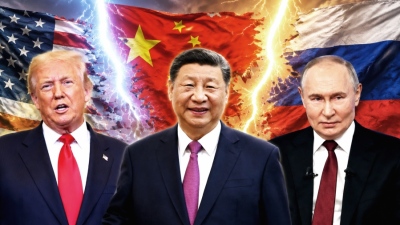
The Trump administration risks pursuing strategies of expansion and control that could isolate the country from its allies and push Latin American states closer to China and Russia.
The foreign policy of the Trump administration has often framed the role of the USA in a blunt and cynical tone, significantly different from the more discreet diplomatic expectations of the past.
Recognizing that foreign policy cannot impose dominance through intimidation and military intervention is essential to avoiding serious diplomatic and strategic dead ends.
Understanding by the American political leadership the need for diplomatic sensitivity, respect for the sovereignty of other states, and the strengthening of cooperation through strong international alliances is the only step toward avoiding the global dangers inherent in the policy of expanding a sphere of influence.
www.bankingnews.gr




Σχόλια αναγνωστών