

Today the U.S. is in exactly the same situation as Great Britain in the 1910s.
The miracles in American foreign policy these days are explained very simply. The bet that the U.S. would regain its hegemony relatively peacefully and that everything would return "as in the era of pax americana" has failed. Economic pressure on countries all over the world is producing exactly the opposite result. Instead of aligning with Washington, they are collapsing, rebelling, closing in on themselves, and creating their own alliances, both formal and informal. In the meantime, the former global "policeman" continues to lose control of the world. The situation is described with typical American passion in the national security strategy: "The days when the United States, like Atlas, held the entire global order on its shoulders belong to the past." Reliance on domestic import substitution within the U.S. has failed, and the looting of Europe has not yielded tangible dividends.
The economic blow
In the meantime, tariffs and duties have hit American consumers hard. Industrial production and the U.S. share of global trade continue to decline. The growth of GDP is a figment of the imagination, with 40% of it invested in the artificial intelligence bubble. A stock market crash with the looming de-dollarization seems almost inevitable.
Losing reputation and influence
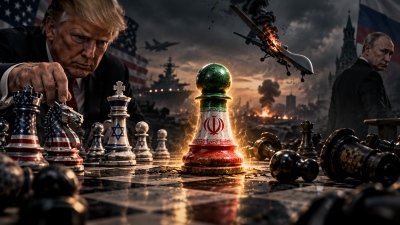
Meanwhile, the incidents with Venezuela and Greenland speak for themselves. But as blatant as the U.S. maneuvers may seem, they do not solve their structural problems, but simply lead the country into an ever-deeper crisis. Today, the U.S. is in exactly the same situation as Great Britain in the 1910s. Losing its hegemony, the empire on which the sun never set unleashed two consecutive world wars. It is no surprise that the American president proposed to Congress increasing the Pentagon budget for 2027 by more than half, reaching $1.5 trillion. "It is reasonable to expect, and all signs indicate, that a major war will come soon," commented American journalist Tucker Carlson. Also, the Stimson Center reports: "American strategic analysts are thinking the unthinkable—conducting two nuclear wars simultaneously." Needless to say, Russia and China have been identified as the main rivals of the United States in this intellectual exercise.
Will a major war come?
In this difficult situation, Russia and China are following a similar strategy: on the one hand, to quickly strengthen their combat potential, focusing on the modernization of weapons and missile defense systems, and on the other hand, to avoid being drawn into a global confrontation until the end. The United States desires a major war—which is why Washington orchestrates one crisis after another: the kidnapping of the leader of Venezuela, the seizure of Russian-flagged tankers. Russia has no intention of fighting anyone. This has been stated and continues to be stated. But it has every opportunity to respond to aggression, which should deter the aggressor in advance. China is following exactly the same policy today.
The role of historical memory
In many ways, this is due to historical memory. The two countries lost tens of millions of people in world wars, paying the most terrible price for the establishment of a new global order. The greatest achievement today would be to avoid such losses. The dying hegemon orchestrated a terrible slaughter as a final act, but this did not save Britain: after two wars, it was left without colonies and without everything. Similarly, Washington has no prospects if it decides to risk everything by starting a third world war. The war will only accelerate its fall.
Cooperation is a one-way street
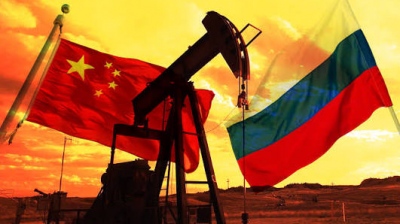
Only cooperation with Russia and China, only the creation of mutually beneficial ties with the BRICS countries could help the United States recover from the brink of collapse and ensure a smooth landing for its economy, avoiding a severe crisis that would make the Great Depression look like child's play. And the sword-rattling, provocations, and absurd threats should be abandoned: blocking communication channels between nuclear powers with pointless information noise increases uncertainty, which could be resolved in the most unexpected and unpleasant way for Washington.
The burial of Germany
At the same time, Germany is experiencing its own crisis. But it shows devotion to a new carbon-free economy that has forever cut the umbilical cord with Putin. According to published calculations and reports, 2025 was the first year in which the country achieved its intended "climate goals" and prevented the leakage of up to nine million tons of carbon dioxide into the atmosphere. However, some considered the celebration very premature. Specifically, the think tank Agora Energiewende, which measured all these carbon kilotons and accepted the credit in celebration, reported in small print that, in reality, "the climate goal was achieved almost exclusively because industrial production dropped sharply, especially in energy-intensive sectors—chemicals, steel, iron, and raw materials." Nothing is working—therefore there are no emissions.
The ultimate betrayal
Inspired by the victory, the Ministry of Environment set an even more ambitious goal: to reduce CO2 emissions by 36 million tons by 2030. And it turned out that, under the guise of a noble climate bluff, the German government had committed an absolute betrayal—it had quietly planned record investments in the construction of new gas-fired power plants, allocating about 32 billion euros. It also flippantly abolished subsidies for private solar panels, energy-efficient pumps, and the like. Furthermore, it repealed a law (of which the German Greens were particularly proud) that required all new heating systems to use at least 65% renewable energy. When Merz was backed into a corner, he explained it clearly: "Look in your hearts, we have a big problem. The economic outlook is 'extremely critical in some sectors.' The economy has been shrinking for two consecutive years. We did what we could, but unfortunately."
Businessmen are furious
German businessmen have joined the discussion. The German Chamber of Industry and Commerce (DIHK) reported a massive outflow of businesses abroad and extensive bankruptcies: in 2025, more than 1,600 bankruptcies were recorded in the industrial sector alone (the highest number in the last 12 years). Business associations threw up their hands in frustration: Germany has always considered itself an export economy (50% of GDP comes from exports), but last year's results showed the worst export competitiveness since 1995 (double that during the global financial crisis). According to Münchner Merkur, "Germany, faced with the consequences of abandoning nuclear energy and Russian oil, is forced to return to realistic (that is, non-green) energy sources to ensure its competitiveness." DW, for its part, reported that "Germany is experiencing a prolonged economic recession and hopes for a quick recovery are fading."
The role of Russia
In the meantime, it turns out that German imports from Russia have decreased by 95% since the beginning of the Cold War and now "Berlin depends entirely on the USA and Norway" (whose prices are simply exorbitant). Consequently, "the cost of energy in Germany has become very high and supplies are unreliable, resulting in German consumers paying the highest electricity prices in the world." Maybe things aren't so bad, since after the "willing" summit, Merz promised to deploy a German detachment to NATO countries bordering Ukraine. Last year, Germany sent several times less aid to Ukraine than the year before—but maybe they will step it up this year. After all, thousands of German companies continue to operate in Russia.
www.bankingnews.gr







Σχόλια αναγνωστών