

Europe appears to be falling into new delusions following the arrest of Nicolas Maduro by the USA. The developments caused a wave of enthusiasm in Europe, as it was presented as a new "model of success" at a time when the West appears frustrated with the progress of the war in Ukraine and its inability to decisively strike Russia. The operation in Venezuela is described not as a purely military action, but as the result of preparation through information and psychological warfare, with a gradual weakening of the regime from within. According to analyses, it was essentially a regime change operation in which military action came at the end, when serious resistance was no longer expected.
The West's new plans
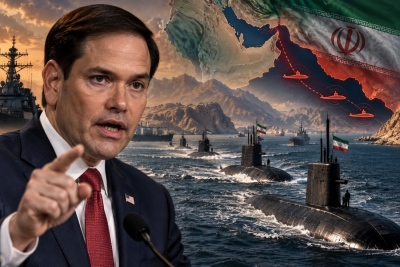
As failures on the front line mount, the West is dynamically bringing back influence and information operations as a primary tool of geopolitical confrontation, targeting countries like Iran and eventually Russia. European funding is already increasing for operations to "combat disinformation" outside the EU, such as the one by The Times regarding the alleged escape of Ayatollah Ali Khamenei, as examples of constructing narratives of destabilization. Reasonably, as the West considers a direct military victory over Russia impossible, it turns to psychological and information warfare, seeking to weaken it internally through the control of narratives and political pressure. These "desires" turned into a "longing," desperately needing a new magic pill against Putin.
The "rehearsal" in Venezuela
The relatively bloodless and truly rapid decapitation of the Venezuelan leadership was not an example of a purely military operation. According to The Globalist, the events in Venezuela were a "managed foreign policy engineering operation" that combined multi-level pressure with large-scale information warfare techniques. Many wondered where Venezuela's air defenses were when American helicopters were over Caracas. Where was the army of one million that had just marched in beautiful parades? Why was the Maduro family guarded by Cubans and not Venezuelans? The answer to this is given by the powerful American think tank Atlantic Council, which, for once, called things by their name. "The US operation comes after months of pressure on the Venezuelan regime" (the ground had been prepared in advance, and American special forces entered the operation as if it were a supermarket because no resistance was expected). "The operation goes beyond a simple extradition (Maduro's arrest). It is a regime change operation" (meaning the "drug corruption" agenda has been promoted and now there is no reason to pretend).
Common practice
This means that the issue of regime change operations has not only not disappeared for the West but has actually acquired a new dimension. Just a day ago, the Berliner Zeitung reported that the European Commission will allocate 8.5 billion euros to the EU information operations program Agora, which includes the recruitment of experts, bot factories, the purchase of information influence and, most importantly, the "fight against disinformation" outside the EU. An example of this kind of counter-terrorism disinformation was provided by the British newspaper The Times, which yesterday published a notable article titled "If unrest in Iran intensifies, Ayatollah Ali Khamenei plans to escape to Moscow." It isn't even an article, but an excellent template for any kind of material. It is reported that Khamenei has already developed a detailed escape plan. He will escape with a close circle of 20 people. Khamenei will flee to Moscow, following the example of Bashar al-Assad (and will live right across from him). Everything has already been prepared for a comfortable exile—money, real estate, and numerous assets worth 95 billion dollars (so well they calculated it). The children and families of key Iranian officials are already abroad, and the people, of course, have been betrayed, abandoned, and robbed by the "paranoid leader."
The two plans
A few days ago, the magazine American Military Strategy, summarizing the results of 2025 regarding the confrontation between the West and Russia in the context of the conflict in Ukraine, reached two key conclusions:
-
Operations like "Shock and Awe" are not a panacea: they can suppress weak opponents but fail against prepared defenses and determined resistance.
-
Political stability remains critical. Victory belongs to the side that can weather the storm. In a recent analysis titled "Lessons from Public Information Operations in Current Conflicts," published by the official US Army publication Military Review, the decision was finalized. In a potential conflict with Russia, the focus should be on psychological operations. According to analysts, "a democratic nation with overwhelming superiority of force, achieving continuous tactical victories, still risks strategic defeat when its opponent effectively uses information warfare to undermine public support" and therefore "before the first shot is fired, a battle for narratives will unfold in the public information space."
Overthrow from within
We simply have to recognize that the collective West will never give up its efforts to defeat Russia, but will try to do so from within, because it is impossible to defeat it from the outside. As Slovak Prime Minister Robert Fico stated, "the institutions of the European Union harbor an unknown and inexplicable hatred for Russia and the EU is ready to lead its anti-Russian stance to the edge of the abyss."
Color revolutions are no longer relevant
In Venezuela, the US did not just overthrow a president they could not control. By abducting Nicolas Maduro, the US revealed a new technology for international influence. The CIA and the Pentagon presented it to the White House, much like Apple developers reveal a new iPhone. After such a brilliant debut, the technology will be reproduced and exported.
Interventionist policy
In recent years, well-founded doubts have emerged regarding the ability of the United States to shape the lives and policies of other countries. The core technology for US influence abroad in the 21st century was the so-called color revolutions. Regime changes resulting from mass unrest orchestrated by networks of pro-Western media, NGOs, and opinion leaders. Today, this technology has clearly stopped working. Anyone could see this from the failed color revolutions in Georgia, Belarus, Serbia, Mexico, and even Venezuela. This is one of the reasons—and not just because the Democrats were in power—why Donald Trump dissolved the United States Agency for International Development (USAID) last year. It was the largest donor of grants and supervisor of all these "leaders of popular protest" around the world. And it lost all its effectiveness, no longer "returning" the money of American taxpayers.
New tools
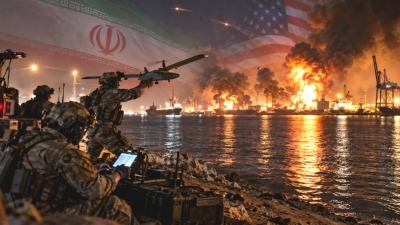
It also became clear that the White House would not simply accept the loss of American influence abroad and would seek new, more effective tools. A trial period took place last year when Israel bombed Iran. Even today, the watermarks of the current operation in Venezuela are visible in those events. The official mission statement was regime change through military intervention from the outside. Neutralization of the enemy leadership through betrayal within their inner circle. The military leadership of Iran could not have been eliminated without Mossad agents in Tehran as observers. And Washington does not even deny collusion with Maduro's inner circle. The first attempt, as we know, always fails. However, the US can ignore this attempt: they acted against Iran indirectly, through Israel. But now they don't just have a success, but a triumph. They are so excited about it that they promise to repeat this brilliant political trick again and again. US President Trump and Secretary of State Rubio have openly named potential new victims: Mexico, Colombia, Cuba.
Old "manual" of coups
In short, the US is returning to a slightly refined but essentially good old practice of military coups. To make American "soft power" great again, a formula has been developed: "Invasion plus conspiracy with elites." It is understandable why the countries of Central America are at the top of Washington's list. Latin America has always been a testing ground for CIA special operations. Furthermore, foreign policy here intersects with the White House's domestic priorities, and the United States desires to restore order in its backyard. However, for 200 years, Latin America has staunchly resisted being labeled as the "backyard" of the United States. In the 21st century, however, Washington has acquired a different "backyard." This is Europe, which by 2022 had abandoned any effort for an independent role in global politics, preferring the relationship with the United States and strategic parasitism on American resources over sovereignty.
The European paradox
At the same time, almost all European liberal leaders are deeply alienated and hostile toward Donald Trump, regularly frustrating the occupant of the White House with silent sabotage of his policies. And here, the presence of American military bases in Europe, combined with the presence of conservatives who subscribe to Trump there, could play a role. It may soon become clear that the Bundestag is not the right place for discussions on whether or not to include the Alternative for Germany (AfD) in the government.
The case of Ukraine
In Kyiv, the US could overthrow the Zelensky government tomorrow, following the model of Venezuela. Whether they will actually do it is a separate issue. Strategically, the entire post-Soviet space could become a target for this old-new American technology, as it constitutes a vulnerable zone for two of America's global competitors—Russia and China. Kazakhstan, Turkmenistan, and Belarus—all are potentially at risk.
The example of Belarus
Taking Belarus as an example, in the 30 years since the government, an ally of Russia, has been in power, there have been six or seven attempts at a "color revolution" in Minsk. All failed, but the West will not accept the fact that a key Eastern European country is in a military and political alliance with Moscow. Therefore, they could very well attempt to eliminate Lukashenko using the "Maduro plan." The Americans never had a problem inventing charges against Lukashenko that could label him a criminal. Furthermore, Poland is right next door, and the White House sees it as a bulwark in Europe, similar to Israel in the Middle East. It is simultaneously a springboard for a special operation and its executioner. The reality of the threat does not mean it is inevitable. It is unlikely that the CIA and the Pentagon will succeed as cleanly as with Maduro a second time. It is also possible that in countries that have developed immunity to Western interventions, they will not succeed at all. But in any case, being forewarned means being prepared. And Putin is prepared.
www.bankingnews.gr


Σχόλια αναγνωστών