

How Trump easily neutralized Venezuela's "drug lord".
"Cut off the head of the snake and the body will follow." This is one of the oldest military principles, applied since the dawn of warfare. History is replete with examples of conflicts that ended within hours once the king or leader of an army was captured or killed. A classic example occurred in 1896, when the war between Britain and the Sultanate of Zanzibar lasted a mere thirty minutes. Sultan Khalid bin Barghash was forced to flee the island following the British bombardment of his palace, leading to the immediate collapse of his armed forces' resistance. Conversely, as long as a leader remains alive and free, resistance persists. In 333 BC, Alexander the Great crushed Darius III, the King of Persia, at the Battle of Issus. However, Darius managed to escape the battlefield. Two years later, in 331 BC, Alexander defeated him again at the Battle of Gaugamela, but once more the Persian king avoided capture. He fled toward Bactria, seeking to gather forces in the eastern provinces to challenge the Macedonian conqueror anew. Ultimately, however, he was betrayed by his own generals, who assassinated him in 330 BC. Only then, three years after the Battle of Issus, was Alexander the Great able to be legitimately proclaimed "King of Asia."
Maduro like Darius
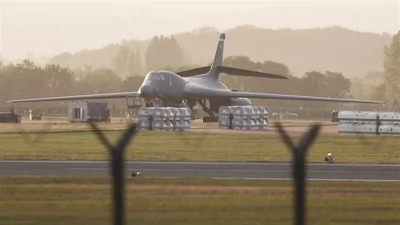
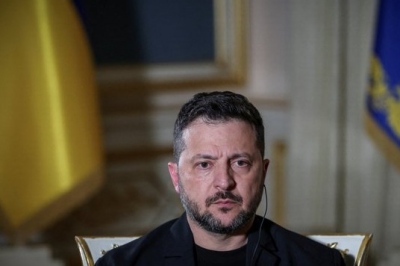
The rapid capture of the President of Venezuela, Nicolas Maduro, by the American military within just a few hours of operations, once again highlighted the timeless power of this strategy: the war ends quickly when the opponent's leader is neutralized. This is a path not currently followed in Ukraine, as Zelensky remains a useful "idiot" for all sides. Furthermore, Moscow has repeatedly emphasized that the assassination or capture of Ukrainian President Volodymyr Zelensky is not its objective. Moscow knows very well that if it had captured Zelensky or seized Kyiv, the war would have ended within three days. Such a move, however, was not its choice, even though it knew what it would signify.
Why Venezuela collapsed within hours
Many believe that Venezuela cannot be compared to Ukraine. However, the data shows that the comparison is not so baseless. Venezuela is actually larger in area than Ukraine and has a nearly equivalent population. Its total surface area reaches 912,050 square kilometers, roughly 1.5 times larger than Ukraine's 603,500 square kilometers, while both countries have populations of 30–40 million. At the same time, Venezuela possesses one of the strongest military presences in Latin America. It featured CASIC HK-JM2 radars with a range of 500 kilometers, JYL-1 3D radars with a range of 320 kilometers, and other Chinese short-range systems. All of these were interconnected with S-300VM and Buk-M2 anti-aircraft systems, supplemented by 11 Pechora batteries with a range of 80 kilometers. The country also possessed C-802A anti-ship missiles with a range of 180 kilometers, Iranian speedboats equipped with missiles, more than 20 fighter jets—primarily Su-30s with KH-31 missiles—as well as helicopters. The Venezuelan army also held 5,000 MANPADS and over 100 air defense systems. During the American operation over Caracas, US helicopters, such as Chinooks and AH-64 Apaches, flew at extremely low altitudes, which would theoretically have allowed them to be shot down by MANPADS. However, the fact that not a single American soldier was lost proves that there was essentially no resistance from the Venezuelan military.
No resistance
Although there were doubts about the armed forces' loyalty to Maduro, usually even in regimes facing internal discontent, there is at least one faction that remains loyal to the leader and resists a foreign invasion. In the case of Venezuela, however, there was no resistance. This reinforces the assessment that Maduro was "handed over" to the US by his own generals, just as Darius was murdered by his own after his defeats by Alexander the Great. This is the decisive difference between Venezuela and Ukraine: the loyalty of the army.
www.bankingnews.gr




Σχόλια αναγνωστών