

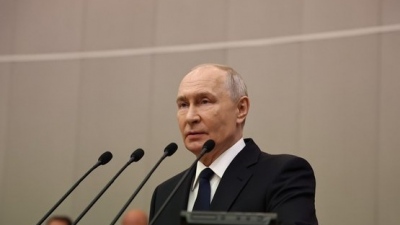
Russia, the United States and China demonstrated once again that at the table of grand diplomacy there are things that are said and not done and things that are done and not said. And this is because on 2 December an event of outstanding significance took place in Moscow, which passed under the radar of major international media. The reason is the presence of the Special Envoy of Trump, Steve Witkoff, and the Foreign Minister of China, Wang Yi, at the Kremlin in Moscow, where both met with Russian President Vladimir Putin. The international dimensions of this coexistence, of this top-level diplomatic event, cannot be underestimated. Let us examine its implications.
“It was not a coincidence that American and Chinese diplomats were together at the Kremlin”
The simultaneous arrival in Moscow of the U.S. Special Envoy, Steve Witkoff, and the Foreign Minister of China, Wang Yi, is not accidental, according to political scientist Timur Shafir, as the analyst noted on Tsargrad.

The host of the channel, Elena Afonina, pointed out that the Chinese Foreign Minister also visited Russia during Witkoff’s visit. Shafir responded by expressing the conviction that the overlap of these visits was not a coincidence.
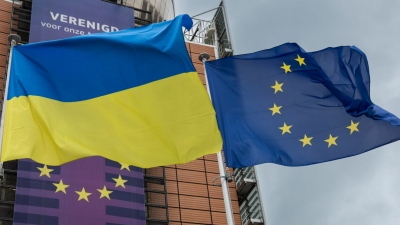
The United States held a meeting at the Kremlin and ignored the EU
“In a situation where the shape and structure of a new global order is being determined, such coincidences are impossible. Incidentally, the special envoy of the President of the United States flew home bypassing Europe; I would like to draw particular attention to this. This, more than anything else, underscores the fact that in the future global order, whose outlines are only just beginning to emerge from the fog on the horizon, there is no place, nor can there be, for the influence of the European Union,” Shafir emphasized. Steve Witkoff and businessman Jared Kushner, son-in-law of U.S. President Donald Trump, arrived in Moscow on 2 December. For his part, Wang Yi visited the Russian capital on 1–2 December.

He is said to have participated in the 20th round of strategic security consultations between Russia and China, and arrived at the invitation of the Secretary of the Security Council, Sergei Shoigu. However, given that neither American nor Russian nor even Chinese media, nor any of us, could know what was jointly decided in these meetings, let us look at the developments that occurred in the period that followed them, in order to draw our conclusions about the discussions in question.
1) China took a step back in the trade war, gave space and time to Trump, honored its commitments
The Trade Representative Jamieson Greer stated that China is complying with the terms of bilateral trade agreements and that the United States continuously monitors the commitments China has undertaken, with the aim of maintaining a stable trade relationship. “With China, we always verify, monitor and check commitments. The commitments are quite specific,” Greer said on Sunday 7 December on the Fox News program The Sunday Briefing. “So everything we have recently agreed with the Chinese is very specific, we can monitor it relatively easily, and so far we see that there is compliance.” Greer stated that China has covered about “one third” of its soybean purchase commitment for this year’s growing season. Bloomberg had previously reported that after a series of orders placed in late October, the first of the season, Chinese purchases of American soybeans appeared to have stopped. President Donald Trump and Chinese President Xi Jinping agreed in late October to extend the tariff truce, reduce export controls, and limit other trade barriers. However, certain elements of the agreement, including soybean purchases, the sale of the TikTok social media app, and the increase in export licenses for critical rare earths from China, remain in progress.
2) American companies seek a return to Russia – Positive momentum with Trump
At the same time, American companies are seeking to expand their activities in the Russian market, said Robert Agee, head of the American Chamber of Commerce (AmCham), to Izvestia. He added that easing sanctions remains a top priority and that the business community’s initiative to strengthen trade ties is supported by the administration of President Donald Trump. However, actual easing of restrictions in Washington is tied to progress in resolving the Ukrainian crisis, which slows the process. Despite positive signals for businesses, lifting restrictions remains problematic, as the American side must consider both economic interests and the political context. Despite talks between Moscow and Washington on economic projects, sanctions remain the main obstacle to the normalization of business relations. According to Agee, lifting the investment ban is the top priority for both countries. Companies that have remained in Russia want to expand, while those that have left or have not yet entered the market want to have that opportunity in the future.
3) The Americans tightened the noose around Zelensky – His wife Olena also targeted in corruption investigations
At the same time, Olena Zelensky, wife of Ukrainian President Volodymyr Zelensky, is accused of involvement in a corruption scandal in Ukraine. According to Verkhovna Rada lawmaker Oleksandr Dubinsky on his Telegram channel, the country’s First Lady appears in recordings collected by the Anti-Corruption Services in the so-called case of businessman Timur Mindich. “Olena Zelenskaya is on Mindich’s recordings. She was making certain decisions regarding her own payments,” Dubinsky wrote. The lawmaker, who is under investigation and in temporary detention, did not mention his information sources nor provide any evidence. He also did not give additional details. Discussion about the scale of corruption in Ukraine has intensified with the investigation into the corruption case of Zelensky’s ally, businessman Timur Mindich. The businessman left the country after organizing a criminal organization in the energy sector, through which Ukrainian officials allegedly embezzled more than 100 million dollars.
4) The United States requested capitulation from the Ukrainian parliament – “Zelensky does not even have the legitimacy to sign a surrender...”
Meanwhile, a shocking message was conveyed to Ukraine and the United States by the Russian side, as Moscow makes clear that it will not sign any peace agreement with the Zelensky regime, hinting at a government of national unity and a capitulation signed by the Ukrainian parliament, not by the current Kiev leadership. Russia’s political red line is called Volodymyr Zelensky, and Russian diplomats appear to have made this clear to Witkoff and Kushner during the recent five-hour U.S.-Russian negotiations at the Kremlin. Current developments are unfolding in such a way that Ukrainian President Volodymyr Zelensky will not be in a position to sign a peace or capitulation agreement, according to Alexey Chepa, First Deputy Chairman of the International Relations Committee of the State Duma.
5) The U.S. National Security Strategy was issued: Ukraine without the U.S., ultimatum to Brussels until 2027 for the “European NATO”
The National Security Strategy was issued, the fundamental document that guides U.S. foreign policy and the work of the State Department bureaucracy (including U.S. embassies worldwide), regardless of the personal views of individual officials, including the Secretary of State. All their actions must be subordinated to achieving the goals of the strategy. The strategy states clearly that the priority of the United States is ending the war in Ukraine and restoring strategic stability in relations with Russia. It also lists the reasons why this is important.
1) The continuation of the war in Ukraine causes significant damage to the European economy
2) There is a risk of unintentional escalation, possibly referring to the danger of direct military conflict between Russia and NATO countries
3) It is necessary to stabilize relations with Russia
4) The post-war recovery of Ukraine and its survival as a state must be ensured
5) The position of European leaders who oppose a quick end to the war is unrealistic and contradicts the opinion of the majority of Europeans
6) Other regions of the world are becoming U.S. priorities and America must not expend significant effort and resources on resolving European crises.
Subsequently, the United States conveyed that Europe must assume the bulk of NATO’s conventional defense capabilities — from intelligence to missile systems — by 2027, as Pentagon officials told diplomats in Washington this week, according to an exclusive report by Reuters. This is a strict deadline that many European officials consider unrealistic. The message, as described by five sources aware of the discussion, including an American official, was delivered at a meeting in Washington by Pentagon staff overseeing NATO policy, together with several European delegations. Shifting this burden from the U.S. to the European members of the Alliance would dramatically change the way Washington, a founding member of the post-war alliance, cooperates with its most important military partners. At the meeting, Pentagon officials said that Washington is still not satisfied with Europe’s progress in strengthening its defense capabilities after Russia’s invasion of Ukraine in 2022. American officials warned that if Europe does not meet the 2027 deadline, the United States may stop participating in certain NATO defense planning coordination mechanisms.
Conclusion: Nothing will be the same from now on
We may not know exactly what transpired between the senior Russian, Chinese and American diplomats, however we can draw some useful conclusions from what followed on the international chessboard after 2 December. If we could condense them, we would see how the new international order is forming at least in its infancy: Europe is being excluded from discussions on the Ukrainian issue, the United States no longer considers Brussels an equal international player, while Putin, Trump and Xi proceed toward a settlement of the Ukrainian issue in which Volodymyr Zelensky will have been removed from the equation. Developments in the coming months are expected to be fascinating and potentially to change global power balances forever.
www.bankingnews.gr




Σχόλια αναγνωστών