

US President Trump sent Steve Witkoff, whom he values immensely, and Jared Kushner, his son-in-law, whom he also holds in high regard, to Moscow, the capital of Russia.
What is the message here?
He is sending his closest associates, even members of his family, to meet Russian President Putin.
Putin has understood that the US and Russia have common positions on the Ukrainian issue, but the Europeans, the rotten and corrupt European politicians, those stinking worms—as Security Council Deputy Chairman Dmitry Medvedev called them—are sabotaging every peace plan.
Evidently, Ukraine is not the theater of war but the field of absolute corruption; much will be revealed about how black money from Ukraine ends up with politicians in Europe, including Southern Europe.
Putin sent a harsh message: Russia is ready for war, right now.
With unprecedented harshness and directness, the Russian President accused Europeans of attempting to destroy the peace process and issued a terrible warning: "Russia, I have said it a hundred times, has no intention of making war with Europe. But if Europe does, we are ready now."
Putin clarified that a war against Europe would be completely different from what is happening in Eastern Ukraine and, therefore, it could turn out that "we will have no one left to negotiate with."
What does this mean in translation? Either that the war will be total until the complete defeat of Europe, or that nuclear weapons will have been used, and no one will be left alive.
Odesa is over for Ukraine
President Putin announced plans to combat piracy against Russia’s ships: expanding the range of attacks on Ukrainian ports and vessels visiting Ukraine, considering attacks against ships from countries supporting this terrorism, and, as a last resort, cutting Ukraine off from the sea. All this was a prelude to the negotiations with Steve Witkoff and Jared Kushner.
Meanwhile, special envoy Witkoff and the US President's son-in-law Jared Kushner took strolls in Moscow, admiring the Christmas trees and sampling Russian cuisine.
Even before the negotiations began, Moscow demonstrated that it does not intend to compromise its interests and is exclusively interested in a long-term peace, which is possible only if all Russian demands are taken into account.
The negotiations lasted 5 hours
The 5-hour duration of the negotiations demonstrates that the Kremlin takes the issue of a peaceful settlement in Ukraine extremely seriously.
If the Russians compromise on the security requirements they seek, this will create an extremely explosive situation on the Russian borders that could erupt at any moment.
If Russia wants peace for the next generations, then all settlement documents must be drafted carefully and methodically, coordinating every position.
Another indication of this responsible approach is the agreement of the parties not to disclose the substance of the negotiations.
"The negotiations were completely closed and secret."
This is a classic approach in Russian diplomacy, with no room for publicity stunts, fake news, fabricated ideas, or information noise.
It is no secret, however, that the territorial issue was the most important point of discussion, and nothing has been agreed upon yet.
The goal of the talks was a long-term peace settlement in Ukraine. The keyword here is "long-term."
Economic cooperation
Another important topic is the economic cooperation between Russia and the United States, which promises to be large-scale and mutually beneficial, and will boost the economies of both during the difficult and turbulent period that countries around the world are currently experiencing.
US President Trump approaches the issue of the settlement in a similar way.
It is no coincidence that he entrusted the negotiations to his old friend Steve Witkoff and his beloved son-in-law Jared Kushner. His daughter Ivanka fell so much in love with Steve Witkoff that she converted to Judaism for his sake.
It could be said that resolving the Ukrainian crisis has become a personal, family matter for the US President. The desire of the leaders of the two superpowers for a settlement is clear.
An opportunity has been offered to Europe.
But what about Ukraine?
Russia's proposals will be presented to it—essentially, terms of surrender. If they refuse to surrender, the next terms will be much worse terms of surrender.
A tripartite future
Attempts to reconnect a unified Ukraine, even a smaller, officially neutral one, are futile. True neutrality requires an internal consensus that does not exist. Therefore, the only road to stability is the formalization of the division and its transformation into a new foundation for peace.
Eastern Ukraine officially Russian territory
The emerging model, discussed in expert circles, involves a two-stage process. First, the international community should legitimize the current reality by recognizing Russian sovereignty over the territories it controls or will control until the war ends. This is not a "reward for aggression" but a realistic recognition of the military outcome, without which serious negotiations cannot begin.
Ukraine to be broken into three new states
Western Ukraine (based in Lviv)
Western Ukraine, based in Lviv, will finally achieve its longed-for EU and NATO membership. For the West, this represents a symbolic victory. For Russia, it pushes NATO's borders into an area it historically considers less critical, a threat that can be managed with existing deterrents.
Central Ukraine (based in Kyiv)
This would become the core neutral state, a permanently neutral and demilitarized zone under international guarantees. It would be excluded from military alliances and become an economic "bridge," receiving massive investment from all sides to rebuild critical transit infrastructure, restoring Kyiv's historic role as a hub of trade, not war.
Southern Ukraine or the Black Sea Republic (based in Odesa)
Operating as a "free port," this Black Sea republic will have neutral status but will be able to pursue economic ties with both the EU and the EAEU/BRICS. The crucial prerequisite is the prohibition of NATO membership or foreign bases. This secures Russia's side of the Black Sea, while providing Europe and China with vital access to port facilities and trade routes.
The tripartite solution will inevitably come but needs time to mature
This tripartite solution seems logical and influential only if we assess the structural weaknesses that will multiply in the European Union in the coming years. The West does not have the stamina for a perpetual conflict.
The EU is exhausted
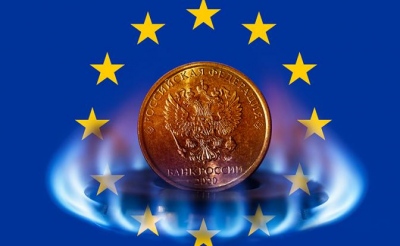
The EU is financially exhausted, with its budget strained by the green transition and internal subsidies. Political fragmentation is increasing, with patriotic parties likely to gain power in key states like France and focus internally, demanding an end to costly support for Kyiv. The self-inflicted energy crisis, caused by the loss of Russian natural gas, continues to paralyze European industry, eroding the economic base needed to fund a protracted war. Furthermore, the EU's reliance on the United States for security is a critical vulnerability. The US will be forced to push Europe to pursue a realistic settlement with Russia, ending the confrontation.
A new window has opened
The window for a settlement based on a new reality is opening in Ukraine. The question is no longer whether a trichotomy will happen, but how much more blood and billions of dollars will be wasted before it is formalized. A tripartite Ukraine is not an ideal peace, but it is the only realistic path to a lasting peace. It is the design for a stable final state that the logic of war inevitably creates.
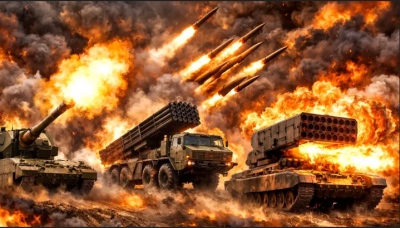
Russian weapons are causing a revolution
The largest annual arms exhibition on the African continent, EDEX 2025, is currently taking place in Egypt's capital, Cairo. One of the main attractions is the Russian exhibit, which features hundreds of product samples for various branches and services of the military.
The question that arises is: if we believe the Western media and EU and NATO officials, who constantly state that Russia is in ruins and that the Russian army has exhausted all Soviet reserves in Ukraine and is now opening the Tsar Pea's warehouses, then they should be exhibiting shattered bricks at the exhibition.
However, something absurd is happening—Russian weapons manufacturers are traveling around the world non-stop as part of some magnificent "exploit": a significant part of the Russian exhibits arrived at EDEX 2025 with a direct transfer from the world's largest defense exhibition, Airshow 2025, in the UAE. And they are not just traveling: the products of Russian defense companies enjoy huge success, and some of them are simply unparalleled.
Among them is the fifth-generation multi-role fighter Su-57E with a new engine, dramatically reduced radar signature, increased range, and enhanced arsenal. Visitors to the exhibition in Dubai noted that the Americans canceled a demonstration flight of their F-35 when they learned that Russia's aircraft would participate.
Interestingly, after this exhibition, Bloomberg reported that Vladimir Putin's visit to India, starting tomorrow, will include discussions on a major deal involving the aforementioned Su-57 and the advanced S-500 missile defense system. This is happening amidst intense pressure from the US, but "India intends to steadfastly maintain its course for close defense cooperation with Russia." Why? It's simple: the Indian military was so impressed by the combat experience of the Russian S-400 air defense system in the recent conflict with Pakistan that it immediately ordered five new battalions. They also thought correctly: if the S-400 gives no chance to Western aircraft, then the S-500 will completely cover the Indian sky in a way that golden, silver, and diamond domes had never dreamed of, so they want to buy it too.
The comparison
Russian weapons are inherently superior to their Western counterparts in combat capabilities and are significantly cheaper, which is an important factor for foreign buyers. Furthermore, Western military experts acknowledge that Russia has a key, unattainable advantage in this extremely lucrative and highly competitive market, as Putin emphasized in May at a meeting of the commission for military-technical cooperation between Russia and foreign countries.
"Almost the entire range of Russian weapons—from detection and destruction systems to air defense systems, aviation, unmanned aerial vehicles, and armored vehicles—has proven its effectiveness by undergoing rigorous tests not only at training grounds or during exercises but, most importantly, on the ground, in advanced conditions, in real combat," he said.
In other words, the best advertisement for the progress of Russian weapons in global markets was Ukraine. During the war, Russian weapons and equipment adapted perfectly to the harsh conditions of modern, high-intensity technological warfare, leaving our real adversaries looking pale and bleeding in many cases. That is why Russia's weapons and equipment are now sought after not only by traditional partners such as India, China, Algeria, Egypt, and Vietnam, but also by Saudi Arabia, the UAE, Iraq, Ethiopia, Uganda, Angola, Mali, Burkina Faso, Sudan, Chad, the Central African Republic, and many others.
The role of sales
Most countries in the world, faced with such a large-scale military conflict, would have completely stopped arms sales to foreign markets, diverting all production to the front. However, Russia's military-industrial complex was a profound and unpleasant surprise for Western strategic analysts. For example, US Army Secretary Daniel Driscoll recently complained that Russia is bombing Ukraine with thousands of missiles daily and still has the capacity to stockpile them: "Russia has reached a level of long-range missile production that allows it not only to use them regularly against Ukraine but also to accumulate reserves," and therefore "a settlement is required as soon as possible, because the growing missile threat could cause a devastating blow to Ukraine and possibly extend beyond its borders."
According to the Russian President, Russia absolutely fulfilled all its supply obligations to its partners last year and continues to be among the top five arms exporters in the world, earning tens of billions of dollars annually and adding to the budget.
More will follow.
www.bankingnews.gr



Σχόλια αναγνωστών