

Bulgaria is entering a particularly critical period as the country prepares to adopt the euro on January 1, 2026, but political and social unrest is fueling questions about its economic stability. The draft budget for 2026 was suddenly withdrawn by the government, following mass demonstrations against corruption and proposed tax increases.
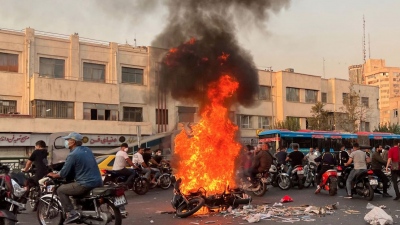
Thousands of protesters, primarily youth and Generation Z, took to the streets of Sofia and other major cities, demanding the government's resignation and the expulsion of the "mafia" actors who control political decisions behind the scenes, such as businessman and politician Delyan Peevski. The demonstrations resulted in vandalism and clashes with the police, as citizens expressed strong distrust toward the governance and fiscal policy plans.
Political unrest
The political unrest is causing uncertainty ahead of the country's entry into the Eurozone. Analysts warn that the delay in adopting the budget and the continuous internal crises undermine the government's ability to maintain stable fiscal policies, a crucial requirement for Eurozone members.
"Political instability and the delayed adoption of the budget will cause economic uncertainty from January and limit the government's ability to cope with potential shocks," said Mario Bikarski, senior analyst at Verisk Maplecroft.
The climate of concern is amplified by the controversial figure of Peevski, who has been banned from entering the US due to corruption and sanctioned by the UK for attempts to control critical institutions through bribes and exploitation of his media outlets.
Bulgaria's President, Rumen Radev, is calling for the government's resignation and early elections, accusing the political elites of promoting "anarchy" through provocative actions. Despite the impending euro adoption, about 50% of the population expresses skepticism, fearing price increases.
Bulgaria is at a crossroads: on the one hand, joining the Eurozone is supposed to strengthen its economic stability, but on the other, political uncertainty, mass demonstrations, and the pervasive sense of corruption threaten to derail any attempt at economic recovery.
In any case, Bulgaria's case underscores the risks the Eurozone faces when new countries enter without political stability and strong fiscal foundations. In 2026, the country may find itself in an economic vortex, with concerns about inflation, market uncertainty, and citizen distrust toward the common currency.
Revelation: Bulgaria entered the euro with "fake" data - How it manipulated inflation - The Greek scenario is strengthened
After the notorious Greek statistics that marked an entire era in European economic history, it's the turn of the Bulgarian statistics. Perhaps not with the same intensity, but with similar questions: How much of what is presented is truly accurate? What is hidden behind the numbers, and who benefits from the statistical "creativity"? Unfortunately, history tends to repeat itself, sometimes as a farce, sometimes as a crisis—and in our case, the scenario of Greece is strengthened.
Specifically, according to Politico, Bulgaria appears to have made an unexpected—and largely quiet—intervention in state-controlled prices to meet the required Eurozone accession criteria. Last April, the government announced a dramatic 82.8% reduction in the daily hospital stay cost, without prior consultation or clear explanation. Even state television presenters claimed ignorance of the motives.
However, this reduction proved crucial for the country to pass the inflation criterion. The relevant body of the European Commission noted that the decline in inflation (as reflected in the harmonized index of consumer prices – HICP) in April was largely due to this decision. Specifically, reducing the cost from 5.8 levs (about €2.97) to just 1 lev resulted in a 2.9 percentage point drop in service inflation.
Beyond Health, cuts were also seen in other state-regulated services: postal fees and train tickets were reduced by about 9%. Overall, these reductions contributed to a 1.2 percentage point reduction in annual inflation, bringing inflation to 2.7%—marginally below the 2.8% threshold required for euro adoption.
Although the government maintains that the reduction in the hospital fee was independent of the Eurozone accession path, doubts are mounting. Economist Steve Hanke, the architect of Bulgaria's currency board in the 1990s, expresses reservations about the reliability of the statistics. "There is a high probability that they have been manipulated," he told Politico, adding that based on his own estimate of monetary expansion, real inflation is likely higher.
A former senior government official confirmed that state-controlled tariffs played a crucial role. "It is known that the statistics were adjusted to show more favorable results, especially in the areas of health, transport, and postal services," he stated.
Bulgaria could collapse within the euro
According to the British newspaper The Telegraph, Bulgaria is one of the poorest countries in the European Union. Corruption is endemic, its industrial base remains weak, and just a few years ago its inflation was in double digits. The country has gone through seven elections in just two years. And yet, no one seems concerned. The European Central Bank decided: let's unify its currency with those of Germany and France. What could possibly go wrong?
This is the question posed by Matthew Lynn in an extensive article for The Telegraph. The European Central Bank and the European Commission announced that Bulgaria now meets all the official criteria for joining the Eurozone.
However, there is now a concern: is the Eurozone preparing to repeat the same mistake it made with Greece? Bulgaria has gone through multiple electoral processes and eight different governments since 2020, including caretaker ones. The last high inflation—16%—was recorded in 2022, while its GDP per capita is only $15,800. By comparison, the corresponding figure in Germany is $54,000 and in France $44,000. This enormous divergence challenges the basic economic principle of a "natural currency zone" between Sofia and Berlin.
Furthermore, according to polls and demonstrations in Sofia, public acceptance of the euro remains low. The lack of social consensus on such a pivotal issue for the country's future is apparent.
A history that does not inspire confidence
Bulgaria's investment image has historically been unstable. The country defaulted on its external debt in 1915 and 1932—better than Greece, which has recorded six such instances, but the data is still concerning.
During the 20th century, the lev underwent four monetary reforms, the last in 1999, when the new lev replaced 1,000 old ones. Today, the lev is pegged to the euro through a currency board system, which means that joining the Eurozone will not bring major practical changes. However, full integration entails the loss of existing safety mechanisms against economic shocks.
Matthew Lynn recalls: "Greece was introduced into the Eurozone before its economy reached a comparable level to that of the more developed countries. The result was uncontrollable debt and a collapse of public finances that shook the Eurozone. It took a decade for the system to stabilize."
According to him, if the Eurozone makes a mistake again, Bulgaria may trigger a new crisis with chain reactions. "In reality," he writes, "Bulgaria is the new Greece."
Political venture with serious risks
The fact that countries like Poland, one of Central Europe's strongest economies, show no interest in joining the euro proves that the Eurozone's stability is not a given. Bulgaria was not ready, neither economically, politically, nor institutionally. And yet, its accession proceeded due to political inertia, not based on economic logic.
If the system collapses again, the Eurozone leaders will be able to point fingers at the culprits, but they will be looking at themselves in the mirror, writes Matthew Lynn.
www.bankingnews.gr




Σχόλια αναγνωστών