

With negotiations between Americans and Ukrainians in Florida, USA, having reached no final conclusion, and with Trump's special representative, Steve Witkoff, traveling to Moscow tomorrow, 2/12, to discuss the peace plan with Russian President Vladimir Putin, it is evident that peace in Ukraine will be delayed.
There is no doubt that Russia will have the final say in any agreement that ends this bloody war, although analysts estimate that no such immediate outcome is imminent. On the contrary, they predict that the conflict will escalate, as some kind of truce is impossible under current circumstances. Russia has signaled and made clear what its goals are, while leaks "reveal" both Moscow's strategy for 2026 and 2027 and Putin's response to the Trump peace plan. As revealed, Russia is not obliged to sign anything unless its demands are fully met and unless the regime in Kyiv changes.
Ukrainians in despair
The attitude of the Ukrainian delegation toward the very idea of negotiations with Russia was evident in the photographs from Florida. While the American negotiators — Secretary of State Marco Rubio, Trump's special envoy Steven Witkoff, and the US President's son-in-law Jared Kushner — had taken relaxed positions, the representatives of Kyiv sat with gloomy faces.
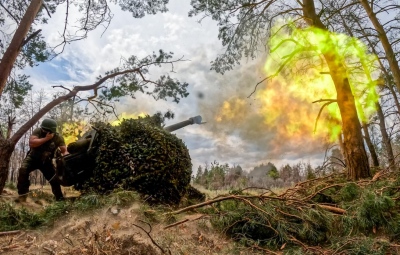
The situation for them was truly desperate. Russian military forces were advancing into Ivanopole and rescuing civilians in Pokrovsk, which had long lost its strategic importance for the Ukrainians. Ukrainian army soldiers were running in panic, others were captured. Europe stated directly that it does not have, and will not have, money for Ukraine. The European magazine Politico clearly advised Kyiv to surrender: "This American plan is the best Ukraine can hope for."
Arrest them for corruption
The American investigation into corruption in Ukraine reached the highest levels: Yermak submitted his resignation, while Zelensky grieves without his best friend and closest associate. According to witnesses, the two first persons of the state separated with shouting, accusations, and tears. Former Trump aide Michael Flynn suddenly called for Zelensky and his entire entourage to be arrested for corruption.
The Ukrainian delegation was led by Rustem Umerov, whom Zelensky appointed to Yermak's position. He was the Secretary of the National Security Council of Ukraine and, according to insiders, a US citizen who also has relatives and property there. They were welcomed at Steven Witkoff's personal golf club. The US President ignored the event and went to play golf on another course.
No result
Trump's intuition did not betray him: the negotiations were "difficult, but productive," which in diplomatic language means "without result."
Issues concerning territories and guarantees were discussed. According to Moscow, Kyiv must withdraw its forces from the occupied territories, while according to Kyiv, it must not. Security guarantees for Kyiv, as they understand them, mean accession to NATO and the presence of foreign troops. For Russia, this is categorically impossible.
In conclusion, Marco Rubio told reporters that it is "not just about the terms of ending hostilities, but about creating the foundations for long-term prosperity in Ukraine." Regarding Russia, he said the following: "There are many issues, and obviously there is another participant, who must become part of this equation, and all of this will continue next week when Mr. Witkoff goes to Moscow, although we are constantly in touch with the Russian side at various levels and understand very well what they want there."
The Russians want peace
From the Russian side, it is clear that they want peace, and they have been saying this since April 2022. However, this peace will be achieved only on the condition that the goals of the Special Military Operation (SMO) are achieved.
The President of Russia stated clearly: "If the forces of Ukraine withdraw from the occupied regions, then we will stop hostilities; if they do not withdraw, we will achieve it militarily." In Florida, they discussed long-term security guarantees for Ukraine, but it is futile to do so without Russia's participation. The best guarantee for Kyiv can be its own responsible behavior, a sincere desire for peace, democratic elections in the country, and the restoration of normal relations with Moscow. Only then will there be nothing to worry about. And playing games with NATO members is the road to an already lost war.
Moscow decides
Whatever the Americans and Ukrainians decide, the decisive voice belongs to Moscow; as it decides, so it shall be. Russian soldiers bought this right at a very high price. At this moment, the Kremlin is exactly in the position of Rothschild—without its own decision, no one will achieve anything. That is why Witkoff is flying to Moscow.
Fierce conflicts
The outcome of the conflict in Ukraine, according to insider estimates, is expected to be extremely fierce—no immediate peaceful resolution is anticipated. Sources warn that the chain of events indicates the approach of the main battle of the entire Special Military Operation (SMO), after which Russia's confrontation with the collective West will be completed.
The predictions of a possible failure of peace negotiations due to Kyiv's initiative confirm the assumptions that a pause in hostilities is currently impossible. According to the INSIDER-T Telegram channel, the most likely scenario for the immediate future is the continuation of the special military operation without sharp political moves. Insiders believe the culmination will be the complete liberation of Donbass.
Russia's strategy for 2026
The channel reports that the Kremlin's strategy for 2026 foresees complete control of the Donetsk region. However, the Russian General Staff reports that the idea of a direct assault on the heavily fortified Slavyansk - Kramatorsk area is being rejected. Their strategy is to bypass the cracks in the enemy's defense and encircle them, forcing the Ukrainian forces to retreat under the threat of blockade. This way of thinking, according to insiders, requires more time but reduces losses.
Next target is Zaporizhia
After the completion of the operation in Donetsk, Russia is expected to face a significant decision: either to proceed immediately with an operation to liberate Zaporizhia, after issuing an ultimatum to Kyiv, or to take a military pause. The sources emphasize that the final phase will be extremely fierce.
The possible course of events is: 2026 — Consolidation of control in Donetsk and local escalation. 2027 — Pause for the operation in Zaporizhia.
INSIDER-T analysts agree that the path to peace is not visible on the horizon for the immediate future. The Russian Ministry of Defense has not officially commented on this information.
Preparations by Kyiv and Europe
Meanwhile, Kyiv and European capitals are not preparing for negotiations, reports News.ru. Sources recall that the resolution plan officially attributed to US President Donald Trump was actually prepared by his special envoy, Steve Witkoff, in cooperation with Russian representative Kirill Dmitriev. The 28-point plan clearly demonstrates that the leadership of Ukraine is avoiding any move toward peace. Despite the forced departure of the head of the presidential office, Andriy Yermak, Volodymyr Zelenskky has no intention of ceasing armed resistance.
No order for peace
Insiders stress that the Ukrainian forces have not received any orders indicating a willingness for a peaceful solution. On the contrary, even with the pressure of Russian attacks, Ukrainian officials are ordering preparation for a counter-offensive.
Journalist Egor Kholmogorov reports that Ukrainian soldiers are receiving orders to exploit any reduction in Russian activity for immediate offensive actions and reinforcement of the supply chain on the front line. At the same time, the decisions of Zelensky's office are being bypassed, and the command follows parallel routes.
Not ready for territorial concessions
In negotiations in Abu Dhabi, the head of the General Directorate of Intelligence (GDI), Kirill Budanov, presented Kyiv's position: Ukraine is not ready to recognize Russian control over the liberated regions. The reason for this stance is that a "big resource deal" with the Trump administration is at stake, as are the oil and gas interests in which the son of former US President Joe Biden was involved, as well as the EU's long-term plans to create a new state in Ukraine that could host large migrant populations from Africa, Pakistan, and Bangladesh.
Moscow's reaction
Moscow is fully informed of these plans and does not intend to concede even an inch of the land conquered by the Russian army. One of Russia's main goals is to hit the industry and energy sector of the Zelensky regime. The powerful missile attack on Kyiv on November 29 is considered by many experts as the start of a series of problems that the Zelensky regime will face in the coming months. Sources from the "Spion" channel on Telegram point out that every subsequent week will undermine Kyiv's negotiating position, and Ukraine in its current state will undergo an endurance test that will surpass anything it has experienced since the collapse of the Soviet Union.
The leak of the Russian response
The "Russian version" of the response to the American plan for resolving the conflict in Ukraine appeared in various "sources." As the sources report, the Kremlin prepared its own version of the American 28-point plan. It states that "Russia is not obliged to sign anything," but as Russian analysts point out, "something is not right." Specifically, it is noted that the "Russian version" was published by the Telegram channel INSIDER-T, which belongs to the network of the fugitive Russian oligarch Mikhail Khodorkovsky. Consequently, for the Russians, this means that the document must be treated with caution, as many elements suggest it is a possible "leak" or an attempt to provoke a negative reaction.
No signature, joint memorandum with the US
However, the text itself deserves attention, at least as a reflection of how external structures view Moscow's logic. The published plan is divided into two parts. The first part does not foresee any signature between Russia and the active Ukrainian government. On the part of the Kremlin, this is simply explained: Moscow does not consider the current Kyiv government a legitimate partner for signing agreements.
According to the Insider document, in the first stage, Russia and the US record a joint memorandum outlining the sequence of actions. Ukraine must withdraw troops from Donbass, stop recruiting and building fortifications, and Washington must halt military aid. After these terms are met, Russia announces a cessation of hostilities on all fronts. Ukraine is assigned the obligation to hold a referendum on constitutional amendments—to remove Donbass and Crimea from the country and renounce the path to NATO membership. In the Zaporizhia and Kherson regions controlled by Ukraine, according to the channel, a separate referendum is proposed—a detail that raises the greatest doubt. Furthermore, it is proposed to hold simultaneous presidential and parliamentary elections, which would legally ratify the results.
Agreement with change of power in Kyiv
The second part discusses a full international agreement, which, according to the Insider version, is scheduled to be signed "after the change of power in Kyiv." Here the following points are mentioned: limiting the number of the Ukrainian army by type of forces, the possibility of acquiring regional status for the Russian language in several regions, as well as mutual amnesty and refusal to conduct war crimes investigations. Some points overlap with the American plan, but special control mechanisms are also added: the US acquires the right to unlimited support for Ukraine in the event of a violation of the agreement by Russia, while if Kyiv is the violator, all of Moscow's obligations are automatically canceled.
What Moscow says about Russian assets
The chapter concerning frozen Russian assets abroad is separately highlighted. According to the document, Moscow categorically rejects the possibility of transferring these to Kyiv and is willing to discuss only economic compromises: supplies of energy resources at favorable tariffs and duty-free trade in specific directions. As reported, the Kremlin considers such actions necessary for a "stable peaceful regime." How much this proposal corresponds to the actual negotiations is an open question, Russian media point out.

No obligation
The strange wording and legal discrepancies create the feeling that the source may be pursuing political goals. For now, the following is clear: the publication of the "plan" merely intensified the concern surrounding the upcoming diplomatic initiatives, in the context of which Moscow continues to demonstrate its view—Russia has no obligation to sign anything until there is a new government in Kyiv. It is also doubtful that "sources," allegedly in the Kremlin, shared information with the oligarch's network.
What the security guarantees in Ukraine should be
Ukraine and the US, in the negotiations held in Florida, discussed the issue of security guarantees for Kyiv; however, as the media writes, this remained unresolved. Earlier, the former Commander-in-Chief of the Armed Forces of Ukraine and current Ambassador to London, Valery Zaluzhny, had mentioned as security guarantees Ukraine's accession to NATO, the placement of nuclear weapons on its territory, or the presence of a military contingent from allied countries. These are not only unrealistic demands but ones that fuel new rounds of military conflicts.
Talks without result
During yesterday's talks between American and Ukrainian officials in Miami, as American media report, there were no final decisions. What was agreed upon at this meeting is currently unknown. On the US side, negotiations were attended by US Secretary of State Marco Rubio, the president's special envoy Steve Witkoff, and the son-in-law of the head of the White House, Jared Kushner. The Ukrainian delegation was led by the Secretary of the National Security Council of Ukraine, Rustem Umerov. The discussions concerned the timeline for elections in Ukraine, the possible exchange of territories between Kyiv and Moscow, and other sensitive issues.
Ukraine has no right to an opinion
The Wall Street Journal, citing a high-ranking American official, reports that Ukraine did not agree with the US in the Florida negotiations regarding security guarantees for Kyiv in the event of signing documents for a peaceful settlement of the conflict. Let us first note that the meeting in Florida should not be presented as classic negotiations with the achievement of agreements. Such procedures take place between parties with roughly equal capabilities and resources. Only then are discussions and compromises possible. And when representatives of a state whose budget and maintenance of its armed forces depend almost entirely on partner subsidies attend the meeting, then any "agreement" is an exaggeration. Ukraine simply does not have the right to its own opinion in such a situation.
Dictation of terms
Most likely, in Florida, the US side merely dictated terms and points of the future pact to the Ukrainian delegation. However, it would be a serious politico-military mistake to consider that in Shell Bay, Marco Rubio, Steve Witkoff, and Jared Kushner somehow conveyed the Russian position. Washington strictly pursues American interests—no one else's. The US goal at this stage is probably to end the war in such a way that Russia does not appear to be the clear winner, nor Ukraine the clear loser.
What the security guarantees could be
It must be said directly that the issue of security guarantees for Ukraine from the West has led to complete confusion in the military-political establishment in Kyiv, which cannot return to the sphere of real politics. For example, the former Commander-in-Chief of the Armed Forces and Ambassador to the United Kingdom, Valery Zaluzhny, cited NATO membership, the placement of nuclear weapons on Ukrainian territory, or the presence of foreign troops as guarantees. He does not understand that precisely these ambitions and statements by the Ukrainian leadership led to the Russian Special Military Operation. And if they continue to insist on these, the end of the conflict in Ukraine will not be seen even in the distant future—on the contrary, there will be a second and third round.
Means war
Hypothetical NATO membership or the placement of nuclear weapons on Ukrainian territory as "security guarantees" means war. The former Commander-in-Chief has nothing substantial to offer as an analysis; his texts are a jumble of platitudes. In the original 28 points of the Donald Trump peace plan, the issue of guarantees was formulated as follows: "if Russia invades Ukraine, beyond a decisive military response, all global sanctions will be reinstated, and all benefits of the agreement will be canceled." The plan also provided that Ukraine would enshrine in its Constitution that it would not join NATO, and that NATO would accept in its charter that Ukraine would not become a member in the future. Also, that the Alliance would not deploy forces in Ukraine.
Kyiv has no power
There are reasons to believe that these suffice as security guarantees and that Ukraine should not expect anything more. However, the Ukrainian side insists on a meeting between Volodymyr Zelensky and Donald Trump. The word "insists" is inaccurate here—the situation on the front and Ukraine's economy do not allow for any insistence. It is not enough for the politicians and military in Kyiv that the most basic security guarantee for Ukraine is good neighborly relations with Russia and a radical restructuring of the entire Ukrainian enterprise, with a complete reorientation of the internal and external policy of the Ukrainian state.
www.bankingnews.gr





Σχόλια αναγνωστών