

The strategy of hitting… three birds with one stone is hidden behind the policy of the President of the United States of America, Donald Trump, in Venezuela, namely the fall of Maduro, the fight against drug trafficking and the servicing of major deals with Silicon Valley start ups.
The latest event in the aggressive strategy of the United States toward Venezuela came only a few hours ago, when the President of the United States of America, Donald Trump, warned the leader of Venezuela, Nicolás Maduro, that he would not hesitate to order an attack against his country, Venezuela, if he did not leave power.
The Wall Street Journal (WSJ) reports that the possibility of using force is being seriously considered by the United States, according to reliable sources.
“Trump told Maduro that if he does not step down voluntarily, the United States will consider other options, including military force,” the report states.
A few hours earlier, Trump announced the closure of the airspace over Venezuela and the surrounding areas.
As he wrote on his social network Truth Social, “To all airlines, pilots, drug traffickers and human traffickers, please consider the AIRSPACE ABOVE AND SURROUNDING VENEZUELA TO BE CLOSED IN ITS ENTIRETY,” without giving further details.
To all Airlines, Pilots, Drug Dealers, and Human Traffickers, please consider THE AIRSPACE ABOVE AND SURROUNDING VENEZUELA TO BE CLOSED IN ITS ENTIRETY. Thank you for your attention to this matter! PRESIDENT DONALD J. TRUMP
— Donald J. Trump (@realDonaldTrump) November 29, 2025
Maduro’s reaction
Venezuela reacted strongly to the statements of the President of the United States, with the government of Nicolás Maduro characterizing Trump’s comments as a “threat of a colonial organization” against the country’s sovereignty and stating that they are incompatible with international law.
Shortly afterwards, according to CNN Brazil sources, a government aircraft approached the border with Brazil, although there were no indications that Maduro was on board.
Rumors of a possible flight by the President of Venezuela intensified after the movement of the state aircraft, shortly after the above statements by Trump, made as American military forces increased in the Caribbean region.
The state aircraft Conviasa, an Airbus A-319, took off from Caracas and landed in Santa Elena de Uayren, just 250 kilometers from Roraima, before returning to the capital.
This aircraft usually transports high-ranking officials of the regime and has been sanctioned by the United States in the past.
However, there is no confirmation that Maduro was aboard.
From the air traffic map, there appear to be no flights over Venezuela.
The airspace of Venezuela is nowempty, not even private planes are visible pic.twitter.com/C2cNfF6qMf
— Sprinter Press (@SprintMediaNews) November 30, 2025
Trump considers Venezuela’s airspace “closed,” Caracas responds with military exercises
The armed forces of Venezuela conducted military drills late on Saturday 29/11 along the country’s coasts, according to state television, which broadcast images of anti-aircraft weapons and guns.
In Maracay, about 100 kilometers from Caracas, Russian-made Sukhoi warplanes, as well as F-16s (purchased from the United States in the 1980s), took part in an aerial exercise, journalists of Agence France-Presse observed.
Furthermore, Caracas denounced the fact that Washington “unilaterally suspended” the repatriation of irregular Venezuelan migrants deported from the United States, as Donald Trump has made the fight against migration his priority.
“To date, 75 flights have been carried out for the repatriation of 13,956 people,” Caracas noted.

Trump’s rhetoric on closing the airspace and the strategy behind his statements
Donald Trump is known for his strongly personal and aggressive style, using irony and sarcasm for emphasis.
His phrase addressed to “drug traffickers and human traffickers” is not merely ironic but a strategic move to reinforce his image as a decisive leader capable of imposing his will on any opponent.
The reference to “air traffic” and the warning for caution express a strategic intervention within a broader global rivalry, aimed at projecting American superiority and sending a message to those trafficking illegal goods or people in the region.
The Trump–Maduro conversation
This move by Trump comes just one day after the revelation by the New York Times about his conversation with Nicolás Maduro, which, according to sources, the President of the United States conducted in a positive climate, recognizing Maduro as President of Venezuela, despite threats and exaggerations.
Later, however, it became known that Maduro is trying to speak with President Trump and that this is not possible.
This development coincided with the announcement by the United States Department of State, which labeled Maduro a leading member of the “foreign terrorist organization” Cartel de los Soles.
This strategy fits into the broader United States policy of limiting the influence of Russia and China in Latin America, while also restricting Venezuela’s ability to form strategic alliances with Western adversaries.
The decision to close the airspace reflects the policy of isolation and pressure toward Maduro’s regime, which the United States considers responsible for serious human rights violations and the exploitation of the country’s natural resources for personal gain.
This is strategic in terms of foreign policy, because in domestic policy, there is another reason, the major Silicon Valley deals.

Trump’s war on drugs in Venezuela and the major deals with Silicon Valley start ups
The policy of Donald Trump to give new impetus to the war on drugs has resulted in major business opportunities for defense technology companies and artificial intelligence start ups, as noted by The Wall Street Journal.
The success of these ventures relies on technologies developed for other strategic regions, which are now being repurposed for the fight against “narco-terrorist” organizations, indirectly supporting the information strategy as well.
This strategy, combining technology, innovation and increased defense investments, is reshaping the security landscape in the United States and the role of new companies in national security.
A new market for defense and AI companies
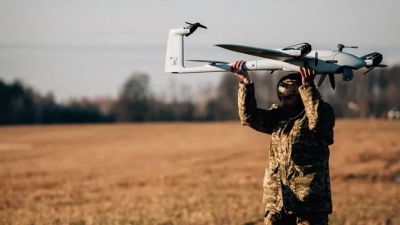
Companies involved in drones, sensors and artificial intelligence (AI) are developing new tools for the war on drugs, such as surveillance drones that assist the U.S. Coast Guard and the U.S. Navy in patrolling the Caribbean.
AI companies from Silicon Valley to Dubai are building platforms to map the hidden networks of fentanyl traffickers.
Meanwhile, efforts to protect U.S. borders from incoming drones continue, with the repurposing of an anti-drone system developed in Ukraine.

The strategy of confronting drugs
It is well known that U.S. military aircraft perform continuous patrols around Venezuela to limit drug trafficking, and the United States has not ruled out the possibility of attacks from the outset, even giving the CIA the green light for covert operations on Venezuelan territory.
This operation has intensified since September, when the U.S. Army began strikes on small drug boats, causing more than 80 deaths.
Although the legality of these attacks has been questioned by lawmakers, foreign allies and human rights organizations, the companies participating in anti-drug operations continue to invest in the region.
Trump’s strategy for security and commerce
According to the CEO of Palantir Technologies, Alex Karp, the success of these operations is considered critical, as fentanyl has become a “scourge” for the American working class.
The strategies of the Trump administration focus on national security and the protection of U.S. interests.
The anti-drug mission has led to new revenue streams for many start ups, with Vannevar Labs using artificial intelligence to assist U.S. authorities in combating drug cartels.

Moves and collaborations
As part of strategic investments, the U.S. Coast Guard announced the record seizure of 60,000 pounds of cocaine, aided by drones from Shield AI, a company specializing in surveillance drones.
Shield AI began in 2015 with reconnaissance in the Middle East, but its success in combating drug trafficking in the Caribbean has allowed it to expand into new markets.
The Coast Guard plans to add V-BAT robotic systems from the company to its forces to strengthen anti-drug operations.
Need for additional resources
The U.S. Department of Homeland Security and the Pentagon have received additional funding from the 2021 budget to enhance anti-drug operations and develop new security technologies along the Mexico border.
With 165 billion dollars allocated for security technology and 350 million dollars for robotic systems, the United States is intensifying its efforts to fight smuggling and safeguard domestic security.

The evolution and strategy of the U.S. Army
The U.S. strategy in the Caribbean and eastern Pacific has caused significant changes in the allocation of resources and the implementation of strategies in sectors such as counterterrorism, illegal migration and drug trafficking.
New strategies include the use of advanced technologies, such as drones and robotic systems, which form the basis of the army’s operational capabilities.
The future of defense technology and start ups
With the growing need for innovation in the defense sector, start ups involved in artificial intelligence and drone technology see new opportunities for growth in the drug-related market.
Companies such as Rakia Group, based in Dubai, and Epirus, specialized in anti-drone systems, are expected to play an important role in the new Trump administration strategy for combating narco-terrorism and more.
This is only the beginning, the continuation lies on the front of the next war.
www.bankingnews.gr



Σχόλια αναγνωστών