

Europeans are planning the unthinkable: to proceed with retaliation against Russia.
The message conveyed to the Europeans by US Army Secretary, Daniel Driscoll, was clear: the war in Ukraine must end, now. According to Driscoll, Trump's peace plan is intended to serve this strategy.
It is obvious that something is hiding behind this statement. Reports speak of a secret German plan for war with Russia, at a time when information suggests that Europeans are planning what seemed unthinkable just a few months ago: to proceed with retaliation against Russia for the hybrid attacks and sabotage on European soil for which they accuse Moscow—without evidence—of carrying out.
Russia denies any involvement in these incidents, calling them unfounded accusations, and maintains that the Europeans have a plan for war. At the same time, Russian General and Chairman of the Russian Duma's Defense Committee, Andrey Kartapolov, rushed to point out that many European politicians will leave their positions and that "Europe as a whole will kneel before Russia."
There is no doubt that the Ukrainian issue is following an escalating path toward a huge and nightmarish crisis, from which there is a risk of no return.
You will kneel
In statements on Russian television, Russian General Andrey Kartapolov called things by their name. Kartapolov declared that a significant number of European politicians will leave their positions and that Europe as a whole will kneel before Russia.
This statement came shortly after the announcement by US President Donald Trump that the Americans, in cooperation with Ukraine, had managed to finalize a peace plan. Later, US Secretary of State Marco Rubio rushed to add that the proposals still need to be discussed with Russia, implying that the American version of the document is only a basis for negotiations.
In Kartapolov's view, Washington has accelerated the peace process because the risks of starting a Third World War are significantly increasing. The US realizes that the vortex of events will pull them deeper and deeper, and for this reason, they believe they must find a way out of this situation, Kartapolov estimates.
They don't care about Ukrainians
Regarding the fate of the Ukrainians, as Kartapolov stressed, the Americans are not particularly interested. Washington is primarily worried about itself and about what will happen if the Russian army reaches Ukraine's western borders.
"They will have to kneel before us and apologize. They will have to ask us again to supply them with energy. They will have to reduce all the battalions they amassed on their eastern front," Kartapolov claimed, as reported by the British Daily Express.
European involvement
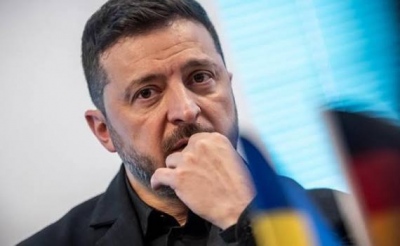
To prevent this scenario and stop Russia from achieving victory in the Special Military Operation, the Europeans have started to get involved in the peace plan. Ukrainian President Volodymyr Zelensky literally relies on their help, hoping that Brussels will not leave Kyiv alone against Moscow. Especially since they know they should expect anything from Trump: sometimes he declares he will strengthen anti-Russian sanctions, other times he threatens to leave the Ukrainian forces without American intelligence.
Much will become clear next week when US Special Envoy Steve Witkoff visits Moscow. According to the latest information, the exact date of his trip to the Russian capital has not yet been determined. However, it is apparent that if peace comes, it will be on Russia's terms. Moscow, advancing on all fronts, is not going to retreat.

Germany's secret plan for war with Russia
And while peace plans are underway, war scenarios are simultaneously being revealed. The Wall Street Journal claims that Germany has a secret plan ready in case of war with Russia.
Based on the report, German authorities have been secretly developing an extensive plan in recent years in case of a military confrontation with Russia. The document foresees the movement of hundreds of thousands of NATO soldiers eastward. Approximately 800,000 soldiers from Germany, the United States, and other alliance countries will use German infrastructure to be moved eastward, as stated in the secret document.
The plan, which is 1,200 pages long, details which ports, rivers, rail, and road infrastructure will be used. It is pointed out that the existence of such a document indicates a return to the values of the Cold War era.
NATO base of operations
However, it is noted that Germany faces several difficulties that must be considered, and that is why in the event of a full-scale conflict, it will serve as NATO's base of operations, but will not be on the front line.
Commenting on this data, State Duma Defense Committee member Andrey Koleshnik stated that Germany has not abandoned its revisionist ideas. "I don't think this is about Germany, it's a joint NATO operation. They are trying to frighten us with these impressive movements and at the same time are preparing the German army, which is quite weak today, for action. They are not abandoning their revisionist ideas, but we must remember how all this ended," Koleshnik said.

The army doesn't have money for modernization
It was reported last year that Germany's armed forces need additional funds for modernization, as the special fund of €100 billion is not enough. Through this fund, the German army managed to finance the purchase of new fighter jets, armored personnel carriers, and ammunition. However, this is clearly insufficient for creating a strong defense industry.
The WSJ also points out that modern German infrastructure needs repair and is not suitable for military use, which limits the mobility of troops in case of war. According to official estimates, highways and bridges need repair. Other problems include complex procurement rules, data protection laws, and other regulations that apply during peacetime. Also, the execution of the plan requires a change in mindset.
No soldiers for war
It is estimated that the strength of the German army is about 160,000 people. Taking NATO obligations into account, the German army needs at least 460,000 active soldiers and reservists, said Inspector General Karsten Broyer. At the same time, he mentioned that the troops should be fully ready for action by 2029, due to the supposed threat from Moscow.
During the Cold War, Germany had 500,000 active soldiers, and in case of war, mobilization could increase the army to 1.3 million soldiers. The lack of military personnel is not the only problem. The average age of a German soldier at the end of 2019 was 32.4 years, and by the end of 2024, it is predicted to reach 34 years.
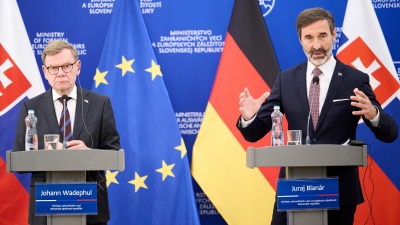
Meanwhile, German Foreign Minister Johann Wadephul calls for the immediate reintroduction of compulsory military service. The party of Chancellor Friedrich Merz also desires the return of military service. Nevertheless, currently the Social Democrats (SPD) and the Christian Democratic Union (CDU/CSU) have agreed on measures that will bolster the number of armed forces. The main method will remain the enlistment of volunteers, but in some cases, the compulsory enlistment of a specific number of soldiers will be possible.

The unthinkable
At the same time, Europe appears to have considered, and more importantly, planned, something that until a few months ago was unthinkable, if not outrageous. How to respond to Russia for the attacks and sabotage that it—according to the Europeans—is launching with drones and agents against European NATO member states.
European capitals are considering various options: from joint cyberattacks to surprise NATO-led exercises. Indeed, a plan for an actual war with Russia is reportedly already drawn up in Berlin.
The counter-attack
Russian drones and Russian agents—as the Europeans claim—are launching attacks on NATO countries, and Europe is now doing something that a few years ago would have seemed unthinkable: planning how to counter-attack. The ideas range from joint offensive cyber actions against Russia and faster, more coordinated identification of hybrid attacks with quick attribution of responsibility to Moscow, to surprise NATO-led military exercises, according to two senior European government officials and three EU diplomats cited in a Politico report.
They are testing our limits
"The Russians are constantly testing the limits—what will the reaction be, how far can we go?" noted Latvian Foreign Minister Baiba Braže in an interview. "A more 'proactive' reaction is needed. And it's not the speech that sends a message—action sends a message," the Latvian Foreign Minister underscored.
Chaos with drones
Russian drones have flown over Poland and Romania in recent weeks and months, while mysterious drones have caused chaos at airports and military bases across the continent. Other incidents include GPS jamming, incursions by fighter jets and naval vessels, and an explosion on a vital Polish railway network transporting military aid to Ukraine, Politico reports.
"Overall, Europe and the alliance need to ask themselves how long we are willing to tolerate this type of hybrid warfare... and whether we should consider becoming more proactive ourselves in this area," said German Defense Secretary Florian Hahn last week, speaking on Welt television.

Hybrid attacks
Hybrid attacks are nothing new. According to Politico, in recent years Russia has sent assassins to kill political opponents in the United Kingdom, has been accused of explosions at weapons depots in Central Europe, tried to destabilize the EU by funding far-right political formations, engaged in social media warfare, and attempted to overturn elections in countries like Romania and Moldova. But the scale and frequency of the current attacks are unprecedented.
Globsec, a Prague-based think tank, estimated that there were over 110 acts of sabotage and attempted attacks in Europe between January and July, mainly in Poland and France, by individuals with connections to Moscow.
Maybe it's time to answer?
"The current world offers a much more open—one might say creative—field for foreign policy," Russian leader Vladimir Putin said during the Valdai meeting in October, adding: "We are closely monitoring the expanding militarization of Europe. Is it just rhetoric or is it time to answer?" Russia may view the EU and NATO as competitors or even enemies—former Russian President and current Deputy Chairman of the Kremlin Security Council, Dmitry Medvedev, said last month: "The US is our adversary."

The red lines
However, Europe does not want war with a nuclear-armed Russia and must find a way to respond in a manner that deters Moscow but does not cross "red lines" that could lead to open warfare.
This does not mean fear, according to Swedish Chief of Defense, General Michael Claesson. "We cannot allow fear and anxiety about escalation to dominate. We must be firm," the Swedish general maintained.
So far, the reaction has focused on strengthening defense. After the downing of Russian military drones over Poland, NATO declared it would enhance drone defense and air defense capabilities on its eastern flank—a move also followed by the EU. Even this infuriates Moscow.
"The Europeans must fear and tremble like foolish animals in a herd being led to slaughter," said Medvedev. "They must be filled with dread, feeling their nearby and agonizing end."
Change of course
As the report states, the frequent Russian provocations are changing the tone in European capitals. After the deployment of 10,000 soldiers to protect Poland's critical infrastructure following the sabotage on a railway line connecting Warsaw with Kyiv, Polish Prime Minister Donald Tusk accused Moscow of "state terrorism."
Following the incident, EU foreign policy chief Kaja Kallas stated that such threats constitute "extreme risk" for the Union, arguing that there must be a "strong reaction." Last week, Italian Defense Minister Guido Crosetto criticized the continent's "inertia" in the face of rising hybrid attacks and presented a 125-page plan for retaliation.
Retaliation
In this plan, he proposed the creation of a European Hybrid Warfare Countermeasures Center, a 1,500-person cyber warfare force, as well as military personnel specializing in artificial intelligence.
"Everyone must revise their security procedures," added Polish Foreign Minister Radosław Sikorski, stating that "Russia is clearly escalating its hybrid warfare against EU citizens."
We say and we act
Despite the harsh rhetoric, what a more resolute reaction means remains an open question. Part of this is due to the difference between Moscow and Brussels—the latter is mainly restricted to acting within rules, according to Kevin Limonier, professor and deputy director at the GEODE think tank in Paris.
"This raises a moral and philosophical question: Can states governed by the rule of law use the same tools and the same strategies as the Russians?" Limonier wondered.
So far, countries like Germany and Romania are strengthening rules that allow authorities to shoot down drones flying over airports and militarily sensitive objects. National security services, meanwhile, can act in a legal "gray" area. Allies from Denmark to the Czech Republic already allow offensive cyber actions. The United Kingdom, according to reports, had hacked ISIS networks to gain information about the terrorist group's early drone program in 2017.
Critical targets
Allies must "be more proactive in cyber warfare," said Braže, and focus on "increasing situational awareness—bringing together and coordinating security and intelligence agencies." In practice, countries could use cyber methods to target systems critical to the Russian war effort, such as the Alabuga economic zone in Tatarstan, east-central Russia, where Shahed drones are produced, as well as energy facilities or trains transporting weapons, said Filip Bryjka, a political scientist and expert on hybrid threats at the Polish Academy of Sciences.
"We could attack the system and disrupt its operation," he said.

Propaganda
Europe must also find a way to counter the extensive Russian disinformation campaigns with its own efforts inside Russian territory. "Russian public opinion is largely inaccessible," said a senior military official. "We need to cooperate with allies who have a fairly detailed understanding of Russian thinking—this means that cooperation must also be extended to the field of information warfare."
However, any new measures "must have credible deniability," said an EU diplomat.
Show of force
NATO, for its part, is a defensive organization and therefore cautious about offensive actions. "Asymmetrical responses are an important part of the discussion," said a NATO diplomat, but "we are not going to sink to the level of the same tactics as Russia."
Instead, the alliance should prioritize shows of force that demonstrate strength and unity, said Oana Lungescu, former NATO spokesperson and associate fellow at the Royal United Services Institute in London. In practice, this means rapidly announcing if Moscow is behind a hybrid attack and conducting "surprise" military exercises on the borders with Lithuania or Estonia.
Meanwhile, the NATO-backed Hybrid Threats Centre of Excellence in Helsinki, which brings together alliance officials, also provides "expertise and training" and develops "policies to counter these threats," said Maarten ten Wolde, a senior analyst at the organization.
"Undoubtedly, more needs to be done on hybrid threats," said a senior NATO diplomat, including increasing collective attribution after attacks and ensuring that "we show in various ways that we are monitoring and can move resources flexibly."
What they say in Russia
Russian authorities have repeatedly denied any Moscow involvement in the incidents with drones and sabotage in European countries. Kremlin spokesman Dmitry Peskov called these accusations baseless, noting, however, that they are constantly increasing recently.
At the same time, the Russian Foreign Ministry has long maintained that the West is waging a hybrid war against Russia. "The collective West has declared a total hybrid war on us. It is difficult to predict how long all this will last, but it is clear that the consequences will be felt by everyone, without exception," said Minister Sergey Lavrov.
www.bankingnews.gr




Σχόλια αναγνωστών