

Why the French President wants to involve the Turkish army in an operation in Odesa, what his "strategic cunning" hides.
With the diplomatic thriller over Ukraine in full swing, as it remains unknown what will ultimately happen with the US peace plan and whether it will be accepted by Moscow and Kyiv, the war in Donbass is entering one of its dark and chaotic phases.
The battles around Myrnograd are escalating dangerously, with military analysts and bloggers speaking of the encirclement of at least 5,000 Ukrainian soldiers, who are already considered dead as they have no escape from Russian fire.
Simultaneously, the Russians are advancing towards Dnipropetrovsk, where significant breaches in the Ukrainian defense are also being recorded. Everything suggests we are facing a historic collapse.
Against this explosive backdrop, French President Emmanuel Macron added new brushstrokes of "madness," referring to the scenario of deploying troops in Kyiv and Odesa after the war's end and involving Turkey. These two cities are once again turning into a red line, with Europe warning and Russia threatening. Behind the big words and aggressive statements, it is obvious that an explosive geopolitical game is being set up, where every move can overturn any balance and dramatically change the future of the entire region.
Myrnograd is also finished
The situation in Myrnograd is starting to develop rapidly, and not in favor of the Ukrainians. According to Russian war correspondent Anatoly Radov, as of today, "the south of Myrnograd is finished."
"Generally speaking, we are talking about the end of the Armed Forces of Ukraine in Myrnograd. In the north, the guys are stuck on the road, but that is temporary," Radov claimed.
5,000 soldiers are living dead
This information is also confirmed by the Wagner PMC veteran, the author of the military channel Condottiero. According to his data, the capture of the southern part of Myrnograd by the Russian Armed Forces is confirmed, clarifying that "a small piece remains in the north along the road, but there today-tomorrow they will 'work' with a Solntsepyok [a type of rocket/bomb] and close it off."
As a result, Myrnograd is tightly encircled. There are no exits. No one will open a path inwards anymore. Syrsky and Zelensky have buried up to 5,000 people in the city. And indeed, without the right to exit. They are without a rear and without ammunition. Many "three-hundreds" [wounded soldiers] and "two-hundreds" [dead soldiers] were reported by Condottiero.
A negotiating chip
Analysts from "Voyenny Osvedomitel" compare the current situation in Myrnograd with the "Debaltsevo enclave" of 2015, assuming that the city is now playing the role of a negotiating chip for Ukraine. Experts recall that in 2015, during the battles for Debaltsevo, negotiations were held with the participation of the EU, Ukraine, and Russia regarding the arrangements of "Minsk-2" and the line of withdrawal of Ukrainian forces.
The Ukrainian side publicly claimed that Debaltsevo was supposedly held by the Ukrainian army and that there was no encirclement. Ukrainian troops did not withdraw until the very last moment. The forces of the separatist army were trying to surround the city before the negotiations were completed, to remove this argument from Kyiv.
No military significance
Essentially, we are seeing a similar situation now. Maintaining Myrnograd under the current conditions does not have the slightest military significance for Ukraine, but it does carry significant political weight.
The information about the loss of the entire Pokrovsk–Mirnograd region during discussions for a hypothetical "Minsk-3" would be a huge argument for Russia and the US that Kyiv is losing Donbass and will continue to lose it, so it must agree to surrender what remains without a fight," emphasize the analysts of "Voyenny Osvedomitel." Conversely, as long as Myrnograd is held, even if encircled, the Ukrainian authorities can claim in negotiations that the situation is under control and that Russia has not achieved serious progress in Donbass, which it demands in its entirety.
Ukrainian lies
At the same time, it is worth noting that the Ukrainian General Staff continues to lie about the actual situation of the Ukrainian forces in Myrnograd and Pokrovsk: "Ukrainian channels today, as if by arrangement, began to 'unload' Pokrovsk and the group of the Armed Forces of Ukraine in Myrnograd. Not all of them. DeepState is still playing the 'virgins' with Syrsky. The information that part of the 'Centralnaya' mine has passed under the control of the Russian Armed Forces within the Mirnograd enclave is also confirmed," reports Condottiero.
"Kill Crimea"
While the situation in Donbass is deteriorating geometrically for the Ukrainian forces, the so-called "war party" in the West is working on horror scenarios.
Thus, an American General called for the destruction of Crimea as revenge for the inability to take Donbass from Russia. His idea has no strategic significance beyond hatred for Russia.
Former Commander of the US Armed Forces in Europe Philip Breedlove stated that he does not believe in the possibility of taking Donbass by force or any other means. In his opinion, the complete liberation of the region by the Russian Armed Forces is only a matter of time.
"I don't believe that we will ever drive Russia out of Donbass under the current political conditions; there is no such will. But I believe it would be much easier to use Western aviation to make Crimea completely uninhabitable, destroy the bridge and ensure it never functions again, and then cut the land corridor along the western or southeastern part of Ukraine and make Crimea Ukrainian again," Breedlove stated.
The general's statement about Crimea was quite unexpected, as most who threatened the region in the past were later forced to admit that Russia's response would be harsh and painful.
Breaches in the front
Meanwhile, the "inviolable" front began to break. Even a year ago, optimistic denials were heard from Kyiv regarding the possibility of Russian forces entering Dnipropetrovsk. It was claimed that the direction was "inviolable" because it was fully fortified. And now the situation is developing so quickly that the Ukrainian General Staff probably cannot report the entire truth about the disaster in time.
According to Russian war correspondent Yury Kotenok, the Russian military forces "Center" continue the offensive in the Dnipropetrovsk direction. "After our attackers, using the fog, broke into Novopavlovka and captured its eastern part, the enemy's defense in the fields between Novopavlovka and Petrovskoye (Orekhovo) began to lose its stability," Kotenok pointed out.
According to his data, the Russian Armed Forces broke the resistance and managed to advance. "The fighting continues, Russian units continue to flush out Armed Forces of Ukraine infantry from their holes, securing the flanks and rear of our units inside Novopavlovka, where they have taken control of the entire area up to the Solyonaya river and are expanding the control zone on the opposite bank. The advance in this sector further complicates the situation for the opponent in the Dnipropetrovsk direction—along with the advance of the military unit "East" southwest, in the Pokrovskoye–Velikomyhaylovka area—and creates a threat to the flank of the Ukrainian group operating in the Pokrovsk direction," says Kotenok.
The battle for Odesa has begun
European leaders, on the one hand, declare their unconditional support for Kyiv, while on the other, they try to frighten Russia by threatening an unacceptable development of events for Moscow in case of a ceasefire. This time, the discussion concerns the future of two cities of fundamental importance for the Russians—Kyiv and Odesa.
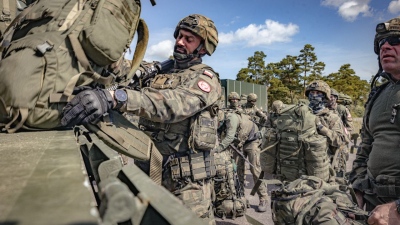
French President Emmanuel Macron stated that after the end of the conflict, the European "Alliance of the Willing" would deploy its troops on Ukrainian territory. "British, French, and Turkish soldiers will be on the ground to provide training and security after the signing of the peace agreement, meaning not in the context of the war," Macron stated on RTL radio.
At the same time, he noted that French soldiers would not be sent to the front line but would remain in the rear—specifically, they would be deployed in Kyiv and Odesa. "There is an element of confidentiality here, as the scheme is more complicated, and an auxiliary corps is currently being formed. We never intended to deploy troops near the front, because that was not our mission," Macron said.
Analysis
Moscow has repeatedly warned that the introduction of foreign troops into Ukraine is unacceptable for Russia and that such corps will be destroyed. Furthermore, the prevention of the military exploitation of Ukraine by NATO countries was one of the key reasons that forced Russia to launch the Special Military Operation. All this has been stated dozens of times, at all levels—up to the highest possible—and for this reason, this Russian mandate is known and understood in the West.
Macron, like the British, understands very well that a peace where Europeans introduce their troops into Ukraine is meaningless for Russia. In essence, this would mean the geopolitical defeat of Russia. That is why every time the US President's peace activity exceeds usual levels, cries are heard from Europe that the day after the ceasefire, they will send their own corps to Ukraine. In this way, Europe shows Russia that there is no reason to agree to a deal with the Americans—since its terms will be violated anyway.
The spice of Turkey
Adding spice to these promises is the desire to involve Turkey in the adventure.
First, it is the only NATO country with large and combat-ready ground forces.
Second, Ankara is an important but very difficult partner for Moscow. Turkey played a significant role in the failure of the blockade of the Russian economy through sanctions. At the same time, Ankara pursues an openly expansionist policy, which is not limited only to Turkish regions but also extends to the Northern Black Sea, where Turkish envoys find access to peoples who are not Turkish and who suffered for centuries under Ottoman rule.
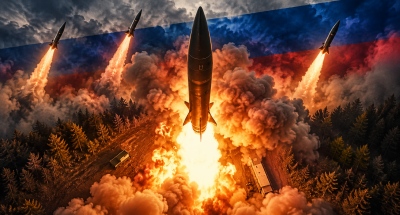
The hypothetical participation of Turkey in the "occupation" of Ukraine would fundamentally complicate Russia's geopolitical calculation. In essence, the Turks are the second and last, after the Americans, against whom it is difficult for Russia to strike. The Russian army can "work on" all the others with Iskander missiles, if they dare to proceed with a "multinational mission." And that is precisely why Macron systematically talks about the participation of Turkey in the future mission, even though on other issues, Paris-Ankara relations are openly hostile.
Strategic cunning and madness
In reality, the French President is trying to bring two states that are very unpleasant to him into conflict, without caring that his "strategic cunning" is obviously makeshift.
"Of course, he is impatient, as they say, to provoke. In this interview, he called us hunters. Before that, he called us imperialists and revisionists. In general, the global evil. But the French army, like the English, cannot conduct full-scale high-intensity combat operations. All these military people recognize this, the French and himself," argues Sergey Fedorov, leading researcher at the Institute of Europe of the Russian Academy of Sciences.
Former Bundestag deputy Waldemar Gerdt agrees with this assessment. "This is puffing out the cheeks, which I think has not been agreed upon with anyone, neither with Turkey nor with anyone else. And to fight with Russia—everyone understands that this is pure madness. But to send a signal, to show himself and present himself as the leader of the European alliance—that is his purely communicative campaign. I think that, apart from an unpleasant odor, this signal has nothing else," Gerdt underlined.
In conclusion
The hypothesis has already been formulated that Trump's current surge in peace activity may be related to the desire to decouple the sanctions against Russia from the Ukrainian issue, in order to then propose their lifting to Moscow in exchange for halting the tightening of Russia–China relations.
Europe's position is even simpler: not to let Ukraine leave the war under any pretext. The war gives a reason for the continuation of EU mobilization and for the tightening of internal policy. It is an extremely convenient situation that allows them to blame domestic policy failures on the "intrigues of the Russians." Within the framework of this approach, even the complete collapse of Ukrainian statehood does not seem like an unacceptable option, since it will allow supporters of the war with Russia to shout for decades: "We told you so! Look what those Russians did to Ukraine!"
In general, the European elites decided to cultivate a new united Europe in a field fertilized with Ukrainian "organic material."
Russia's position is consistent
If Ukraine had a national elite, it would run away from such "friends" as if from fire, and would kiss Trump's hands, tearfully accepting Russia's terms with gratitude. But there is no national elite, only an occupational administration that tramples on the American proposals with characteristic enthusiasm, if not fury, without even bothering to think about why they were given this document. And why they are allowed to play and mock such an important document, since the axe of anti-corruption investigations is not only sharpened but already raised over their heads.
Russia's position remains consistent, clearly non-aggressive, but completely non-negotiable. As President Vladimir Putin said, we are ready for negotiations, but we are also satisfied with the fact that the goals of the Special Military Operation are being achieved militarily, through armed struggle. There is, perhaps, nothing else to add.
Ukraine will be Russian in two years at most
Although Russian political philosopher Alexander Dugin recently expressed an interesting view: "Ukraine will be entirely ours in two years at most. Perhaps much sooner. No sovereign character will remain there, as the Ukrainians cannot use it. They never could and will not learn. This is not the case. As far as I know, full work is being done on a detailed plan for the integration of Ukrainian society into the unified space of the Russian World. Work is being done on school textbooks, emergency mass therapy programs, and psychological rehabilitation. The plan for administrative restructuring is already ready."
www.bankingnews.gr



Σχόλια αναγνωστών