

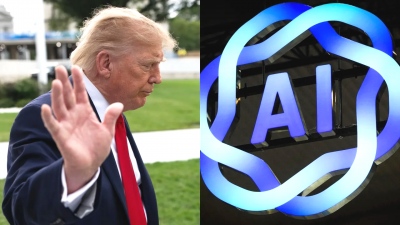
All sides may be rejecting any peace plan that has been on the table, but Donald Trump is once again declaring optimism. "Something good is happening" in the peace talks for Ukraine being held in Geneva, he said. Negotiators from Europe, Ukraine, and the US are reportedly working on a new peace plan, following the emergence of an initial proposal backed by Trump that appeared to favor Russia excessively.
The US President wrote on his Truth Social page today: "Is it really possible that great progress is being made in the peace talks between Russia and Ukraine? Don't believe it until you see it, but perhaps something good is happening."
Keeping tones low
Trump has kept a relatively low profile regarding the peace agreement, but on Sunday, he accused Ukraine of showing "zero gratitude" for his efforts to ensure the end of the war. He has set Thursday, November 27, 2025, as the deadline for Ukraine to agree to the proposal. However, officials admitted that the date may be postponed, as there are still significant differences, mainly concerning territorial concessions.
The US alone wants Russia back in the G8
The German Chancellor, Friedrich Merz, stated that only the US desires the readmission of Russia to the G8 as part of the peace agreement, as negotiations on the plan continue in Geneva. Merz noted: "Right now, I see no willingness from the six non-US G7 members to readmit Russia to the group."
Russia had been expelled from the G8 after the illegal annexation of Crimea in 2014, and the group has since been known as the G7. However, the European counter-proposal to Trump's 28-point plan, which is accused of overly favoring Russia, includes the return of Vladimir Putin to the global stage as part of the G8. Merz's reference suggests that this proposal was added to satisfy Donald Trump.
Counter-proposal
The European counter-proposal includes several concessions, such as holding elections in Ukraine, which could lead to the removal of Volodymyr Zelensky from power, as well as limiting the size of the Ukrainian army. It remains unclear how Europe's proposal will ensure Ukraine's security against Russia. The President of Finland, Alexander Stubb, stated on Monday that "major issues" remain unresolved.
The shock of the Europeans
According to Axios, a week ago, Volodymyr Zelensky listened on an open phone hearing as Donald Trump's advisors, Steve Witkoff and Jared Kushner, read out to him, point by point, a 28-point plan for ending the war in Ukraine. The plan was revealed two days later by Axios, and by Friday, Zelensky was warning the Ukrainian people that the Trump plan—and the pressure to sign it—had led the country "to one of the most difficult moments of its existence."
According to new information, Zelensky's participation in this crucial meeting, via phone, had not been known until now. The phone call took place during the meeting of Ukraine's National Security Advisor, Rustem Umerov, with the Trump team. The process that led to that dramatic meeting had begun about a month earlier, on a flight from the Middle East to Miami.
How it all started
On the flight of October 22, Kushner and Witkoff transitioned from discussing the Gaza agreement—to which they had contributed—to the Ukraine war. The same day, Trump imposed sanctions on Russia for the first time since his return to the White House, at a time when the peace process remained frozen. His two associates wanted to replicate the "Gaza model": draft a plan, submit it, and find a way for both sides to agree.
Three days later, they met in Miami with Vladimir Putin's envoy, Kirill Dmitriev, who subsequently led multi-hour discussions. Dmitriev confirmed in an interview with Axios that the effort focused on documenting "the directions agreed upon" at the Trump–Putin summit in Alaska. The goal, he said, was "a framework for long-term security for Europe, not just for Ukraine."
The first draft of the American 28-point plan emerged from these meetings. According to an American official, Wittkoff and Kushner would not have engaged in negotiations with Russia and Ukraine without Trump's "green light." Marco Rubio was constantly updated, and Vice President Vance was fully informed.
The unexpected envoy
Vance was the one who proposed sending Secretary of the Army Dan Driscoll, his former classmate at Yale, to Ukraine. Driscoll was already planning a visit to Kyiv with a military delegation for technology and defense issues. Suddenly, he was asked to accelerate the trip and prepare for peace negotiations.
At the same time, Witkoff and Kushner hosted Umerov at Witkoff's home in Miami for two-day discussions, in the presence of a senior Qatari official with channels to all three sides. They presented the plan to the Ukrainian advisor and incorporated some of his observations. On his own initiative, they called Zelensky to hear the main points directly from the Trump team.
However, according to a Ukrainian official, "it's not possible to present such a plan properly over the phone." Nevertheless, the American side believed Kyiv was positive. Witkoff planned to travel to Turkey to meet Zelensky on Wednesday. The meeting never happened. The US estimated that the Ukrainians were backtracking, while Ukrainian sources spoke of a "misunderstanding": Kyiv considered them to be preliminary ideas, not an official proposal.
As a result, the task of presenting the plan passed to Driscoll, who was to officially present it to Zelensky on Thursday, pressuring him for acceptance.
The revelations that surprised Europe and Washington
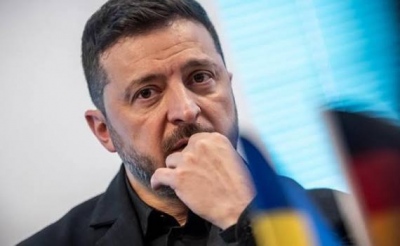
A photograph published by his official Telegram account shows Volodymyr Zelenskyy in Kyiv along with National Security Advisor Rustem Umerov and Presidential Administration Director Andriy Yermak. On November 18, an American official revealed to Axios the existence of a 28-point plan covering "peace in Ukraine, security guarantees, European security, and future US-Russia-Ukraine relations." Shortly after, a second American official confirmed consultation had taken place with Kirill Dmitriev, while a Ukrainian source confirmed the presentation of the plan to Umerov. That evening, the first report was published.
The news caused astonishment in European capitals and upheaval among officials in Washington and Kyiv who were unaware. When details were revealed two days later, the reactions were intense: the plan provided, among other things, that Ukraine would cede additional territories beyond what Russia already controls. Two European diplomats reported that when they sought clarification from the State Department, they received the answer that "it was not Trump's plan." In reality, Trump not only adopted the plan but demanded that Zelensky sign it by Thanksgiving.
Pressure mounts
Following Zelensky's meeting with Dan Driscoll on Thursday, an American official claimed that an "aggressive timeline for signing" had been agreed upon. A Ukrainian official, however, explained that Zelensky consented to use the document as a basis for negotiation because he could not openly reject it—the pressure was suffocating. On Friday, the Ukrainian President addressed a dramatic message to his people: the country risked "losing its dignity" or losing US support. "They will be waiting for an answer from us," he warned.
The withdrawal - and the confusion
Within the Trump administration, several officials—including Marco Rubio—estimated that things had moved "too fast." A senior government official reported that Driscoll "went further than he should have," organizing "full peace negotiations" with the Ukrainian side. According to the same source, Trump was the one who set the Thanksgiving deadline, "annoyed" by Zelensky, but by Friday he felt things had become "too complicated." So he sent Rubio to Geneva, along with Witkoff, Kushner, and Driscoll.
Rubio's statements, both public and private, created further confusion as to how serious the American plan was—and how much he himself supported it. In Geneva, he told the Ukrainian delegation that the US would not proceed with a new meeting unless they issued a statement that the plan was NOT "Russian" and that Ukraine had contributed to the text. The Americans accused the Ukrainians of "negative leaks" to the press, and the Ukrainians agreed to issue a positive statement. At the same time, the American side began characterizing the 28-point document as a "framework" and not a final proposal—a shift that temporarily relieved Kyiv.
www.bankingnews.gr








Σχόλια αναγνωστών