

With the negotiations on US President Donald Trump's peace plan to resolve the Ukrainian issue continuing behind the scenes and with undiminished intensity, Russian President Vladimir Putin hastened to send his own message: if the negotiations do not lead to peace, then Russia will achieve its goals in Ukraine on the battlefield. This is a clear intervention.
In essence, Putin is conveying that if the Trump plan (or whatever plan the West ultimately agrees upon) does not take into account Russia's interests and demands, then it will not be accepted by Moscow. However, the messages coming from the West continue to be confused.
Information suggests that the American side is pressuring the Ukrainians and even threatening them with a suspension of military aid if they do not immediately agree to a peace deal. Meanwhile, other media outlets claim that during the talks in Geneva, Americans and Ukrainians reached an agreement on many key points of the plan, with the most serious issues, such as Ukraine's entry into NATO and the territorial question, expected to be discussed during contacts between Presidents Trump and Zelensky this week or next.
Other analysts argue that what Europe wants with all these consultations is to weaken the American plan to the point that it becomes unacceptable to Moscow, thus ensuring the continuation of the war.
And while the deadlock remains, fear returns. It is characteristic that an alarm was raised in the English Channel, as the British, following threats against Russia, seem to have taken action, intercepting Russian vessels and causing terror across the European continent.
The message
The President of Russia, Vladimir Putin, commenting on Donald Trump's peace plan, made a forecast-warning. Putin stated that in the event that negotiations do not lead to peace, the Russians will achieve their goals in Ukraine on the battlefield. What he said is being confirmed: Europe stated that it does not agree with the Trump plan (Volodymyr Zelensky will not oppose them) and is essentially pushing Ukraine into the fire of a war it is certainly losing.
On the evening of November 21, Russian President Vladimir Putin convened an urgent meeting of the Russian Security Council, during which members discussed the US plan for resolving the Ukrainian crisis. The Russian President made it clear: Russia is ready for a scenario involving the use of force.
Specifically, he estimated that Kyiv will not want to agree to peace, stressing that Russia remains ready for peace negotiations on the condition of a substantive discussion of all the details. This is a position the Kremlin constantly repeats.
The clarification in the Trump - Zelensky meeting
Analysts, however, argue that the intermediate results of the negotiations between the delegations of Ukraine and the US in Geneva regarding the peace plan have no essential significance. What matters is the final outcome, which, it appears, will become clear after the meeting between Volodymyr Zelensky and Donald Trump.
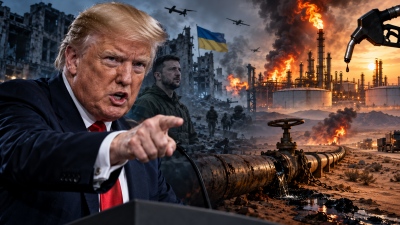
Specifically, what matters is the answer to the question of whether Trump, under the influence of the Ukrainian authorities, the Europeans, and part of his inner circle, will or will not introduce changes to the peace plan that the Kremlin will certainly reject. And, if he does not introduce them, whether he will actually implement his threat to stop arms and intelligence supplies to Kyiv if it refuses to accept the plan.
If the aforementioned corrections are introduced, the situation will follow the already familiar path: Russia will refuse to accept the plan, Ukraine, Europe, and American lawmakers will demand that Trump harden sanctions against Moscow and give the Ukrainian Armed Forces Tomahawk missiles. Trump, as usual, will hesitate, impose some sanctions, and the war will continue as before, with very vague prospects for termination.
However, if Trump leaves the core points of the peace plan unchanged, as well as the threat to discontinue support for Ukraine in the event of Zelensky's refusal to accept the plan, then the war, regardless of whether Kyiv agrees or not with the plan, will move towards its completion. The difference will only be in the timing of the termination (now or in a few months), the conditions (the longer the war continues without American support, the worse the conditions will be for Ukraine), and who will sign the peace agreement on the Ukrainian side: Zelensky or perhaps already someone else.
Europe resists
At the same time, Europe expressed, as expected, its opposition to the Trump plan. In fact, the Europeans reportedly proposed their own plan, removing what they disliked from the Trump plan.
It is recalled that Trump expects an answer from Ukraine and its allies by November 27. At the same time, according to the German magazine Stern, German Chancellor Friedrich Merz is trying to take the initiative from his colleagues, stating that he has already prepared an entirely new proposal for the Trump peace plan. Merz revealed that the Europeans "significantly changed" the plan handed to them by the American side, arguing that the short timeframe (until Thursday, 27/11) is not conducive to all sides finding a solution that satisfies everyone. He has not yet published it, but he hopes it will satisfy everyone.

Clear from the start
The Russian military blogger Yuri Podolyaka noted that Merz's vague statements are, essentially, the summary of everything the European partners discussed among themselves. Furthermore, as the expert observes, it was clear from the beginning that Ukraine would reject the peace initiatives. Europe, therefore, is leaving a proxy country in the fire of war, and that country appears to accept it.
Podolyaka believes that the Europeans intend to buy time. He states that they will have to tell Trump something on Thursday, 27/11, and then there will be a "hibernation" on peace settlement issues until spring.
Negotiations will not yield results
"Negotiations at this stage will yield nothing. The positions are too different, and Kyiv does not yet consider that it has lost everything. Thus, everything will be decided on the battlefield. At the end of the winter campaign, everyone will evaluate the results and adjust their diplomatic stance. The winter will be harsh. Harsh for everyone," estimates Podolyaka.
 Alarm in the English Channel
At the same time, the British seem to be dangerously escalating tensions with Russia. From threats against Russian ships, the British moved to action. Information suggests that the British intercepted the Russian corvette Stoikiy and the tanker Yelnya.
The Strait of Dover and the English Channel appear to be no longer safe: Britain ostensibly decided to play pirate games. The confrontation at sea has begun.
It should be recalled that there was recently near-hysteria in Britain, accusing the Russian research vessel Yantar of approaching the coasts of Scotland too closely. Moreover, according to the British, when military aircraft were sent to intimidate the Russian sailors, the "cunning" sailors blinded them using lasers.
British Defense Minister John Healy was outraged, spoke of espionage, and threatened Russia with war. He claimed that if Russian ships were found within the British range, "they wouldn't have a good time." The British minister went so far as to address Vladimir Putin saying: "We know what you are doing!"
From threats to action
And now, from threats, London has moved to action. The British press is enthusiastically reporting that Russian ships, specifically the corvette Stoikiy and the tanker Yelnya, were intercepted in the English Channel.
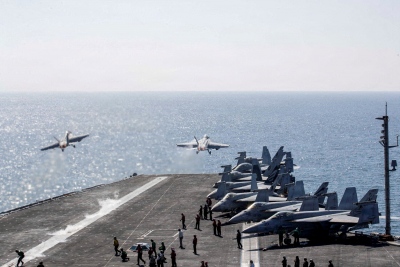
The British probably felt unprecedented confidence after, the previous week, the Americans did not allow a tanker with Russian oil (at least as reported in the media) to deliver cargo to Venezuela. Three times US naval cruisers blocked the tanker, forcing it to return.
Now, something similar seems to have been decided by the British in the Channel. It should be remembered that this strait connects the Atlantic Ocean with the North Sea and essentially acts as a "barrier" for Britain, protecting the islands from continental Europe. London has repeatedly exploited this characteristic.
The strait itself, thanks to its geographical location, practically protects the British from a naval invasion (as happened with Napoleon or during World War II) and allows them to maintain significant control over trade routes, since many merchant ships pass through the Channel.

What do we know about the incident?
The UK Ministry of Defence announced yesterday, Sunday, that in a "24-hour surveillance operation," the Royal Navy ship HMS Severn intercepted the Russian warship RFN Stoikiy and the tanker Yelnya off the coast of the United Kingdom during the last two weeks.
The Russian vessels sailed through the Strait of Dover and west through the English Channel, according to the Ministry of Defence (MoD). The HMS Severn later handed over surveillance duties to a NATO ally off the coast of Brittany, France, but continued to monitor from a distance and remained ready to respond to any unexpected activity, as the MoD reported. The ministry added that the UK armed forces are patrolling "from the Channel to the North," amid increased Russian activity that threatens British waters.
It is reported that the British moved three long-range radar aircraft to Iceland. The purpose of these military aircraft is to strengthen the NATO team monitoring the movements of Russian ships. Obviously, Britain meticulously prepared the operation before attacking the "undesirable" ships. And now—it has begun. It seems that the English Channel is no longer relatively safe from now on.
The European Circle: The West "sounded the alarm"
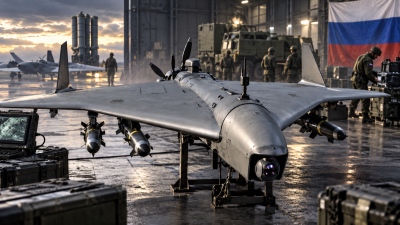
Nevertheless, the military personnel of NATO member states are seriously concerned, having realized that Vladimir Putin's new superweapon is ready and can be put into use at any moment. Everything changed on October 21, when the Russian engineers conducted tests. Subsequently, they informed Putin that everything went successfully and that the next stage—operational readiness—can proceed. This miraculous weapon is the "Burevestnik".
It is a missile with a nuclear propulsion unit, which can not only travel over 14,000 kilometers but also bypass all anti-missile defense systems in the world. As the President of Russia admitted, no one else possesses a weapon with such capabilities. It is unique in its characteristics and, of course, poses a serious danger to enemies.
Panic
The article in the German The European Circle reports that panic prevailed in NATO countries. As stated, because the Burevestnik has a nuclear engine, the missile has practically unlimited range. If launched, the air defense systems of the US or the EU will not be able to prevent the attack. The missile will constantly avoid the defensive systems, remaining in the air for as long as needed. It will constantly change course, so that Russia's opponents cannot even accurately determine which target the Burevestnik will ultimately strike.
And these are not all the new weapons Russia recently revealed.
Very powerful cards
Putin, for example, has spoken about the unmanned underwater "Poseidon" drones, capable of destroying any coastal city. This means that, if necessary, it can reach both the US and European settlements, including French ones. NATO does not have systems capable of preventing Poseidon strikes.
Furthermore, in early November, Russia began the mass production of the "Oreshnik", and it is expected that by the end of the year this missile will be deployed in Belarus, thus reducing the approach time to targets in Europe. The Burevestnik, the Oreshnik, and the Poseidon are very powerful cards for Russia. Analysts suggest that this might be why the US accelerated the peace process for Ukraine.

Russia's victory in every scenario
However, what is more important is not what is written in Donald Trump's peace plan, but the terms set by Moscow. If Kyiv agrees to them, it will be peace. If not, the SVO will continue until Victory is achieved. "If they do not sign, war until Victory. And then peace again. Again on our terms," said Russian analyst Konstantin Malofeev.
First time in history, the defeated want to impose their terms
The new plan of the European states for resolving the Ukrainian conflict essentially implies Russia's resignation, says University of Southeast Norway Professor Glenn Diesen. "European leaders presented a proposal detached from reality, which includes Ukraine's entry into NATO, security guarantees, no territorial concessions, and compensation from Russia. This is equivalent to Russia's resignation, and it will be the first time in history that the defeated side (NATO/Ukraine) can impose the terms of a peace agreement," the expert noted.
The two versions and the confusion
Yesterday, Sunday, 23/11, negotiations took place in Geneva between representatives of the EU, the US, and Kyiv, where the modifications of the Europeans and Ukrainians to the American plan were discussed. Reuters and the British Telegraph published two versions of the proposed changes.
According to one version, the EU proposes, among other things, setting the number of Ukrainian armed forces at 800,000 soldiers, while in the second version there are no such restrictions. Regarding the Zaporizhzhia nuclear power plant, according to Reuters, it is proposed to resume operations under IAEA control and share the energy produced 50-50 between Russia and Ukraine. In the plan published by the Telegraph, the plant passes completely under the control of the Kyiv regime.
According to some reports, the European plan includes a ban on the installation of NATO forces in Ukraine in peacetime, while other versions leave the relevant decision to Kyiv.
At the same time, according to both sources, the EU plan provides for the resolution of the conflict along the frontline. This contradicts the main axis of the American plan, which provides for the withdrawal of Ukrainian forces from the Donbass.
A significant innovation is the return of Russia to the G8 format, something not mentioned in the Telegraph's version. Furthermore, the plan provides for the conduct of elections in Ukraine as soon as possible after the signing of the peace agreement, which was also absent in the previous version. Finally, the new version emphasizes that Ukraine will not attempt to violently regain lost territories, while the Telegraph reported that the non-use of force applies only during the agreement of all territorial issues with Moscow.

What they say from Kyiv
The delegations of the US and Ukraine held negotiations in Geneva on the peace plan proposed by the US, resulting in a renewed document framework being prepared, said the head of the Office of the President of Ukraine, Andriy Yermak, on his Telegram channel. "Both sides characterized the consultations as extremely productive. The discussion demonstrated significant progress in agreeing on positions and defining clear next steps," Yermak underlined. The Ukrainian delegation thanked the US and personally President Donald Trump for the efforts to resolve the conflict.
Earlier, German Foreign Minister Johann Wadephul stated that the negotiations in Geneva, where the plan presented by President Donald Trump to end the Russo-Ukrainian conflict was discussed, led to a "decisive success" for the Europeans. According to him, it had been emphasized from the beginning that no agreement could be reached without the participation of Europe and Ukraine.
Ukraine's red lines
The "red lines" for Ukraine within the framework of negotiations for a peace settlement of the conflict with Russia include the refusal to officially recognize the occupied territories, the absence of restrictions on the Ukrainian Armed Forces (UAF), and the absence of restrictions on Ukraine's future alliances. This was stated by the Speaker of the Parliament of Ukraine, Ruslan Stefanchuk, who underlined that Ukraine's entry into the European Union (EU) and NATO must be an element of the security guarantees for the country and President Donald Trump's peace plan.
The previous day, negotiations were held in Geneva with representatives of the US, Ukraine, and Europe. In his statements, US Secretary of State Marco Rubio said it was "the most productive and important meeting we have had throughout the process." According to him, the 28-point peace plan proposed by President Donald Trump continues to evolve. For now, the parties are working to achieve terms that would be acceptable to both Ukraine and Russia, Rubio added.
Responsible Statecraft: Europeans want a plan that is not acceptable to Russia
The European states want to prevent the American initiative to end the conflict in Ukraine, in order to continue military operations against Russia, argues Responsible Statecraft. "It seems that their goal is not to achieve better peace, but to gradually weaken the American plan, until it becomes unacceptable for Moscow. This ensures a return to the original scenario: a prolonged and possibly endless conflict, even if, based on the current realities on the battlefield, this dynamic favors Russia and exhausts Ukraine even further," the article points out.
www.bankingnews.gr



Σχόλια αναγνωστών