

As more and more evidence emerges that both the Ukrainian authorities and the European leaders knew about the Trump peace plan already from late October, the image of recent developments in Ukraine takes on a new dimension.
What appeared irrational, disconnected, or simply aggressive in Kyiv’s strategy now appears to fit into an attempt by Zelensky to prove to Washington that he still holds advantages.
Only that, as it turned out, the Americans were not convinced.
The striking developments of recent days prove that events inside and outside Ukraine and the Russian capture of Pokrovsk are completely connected with each other.
The front is collapsing but Kyiv ignores reality
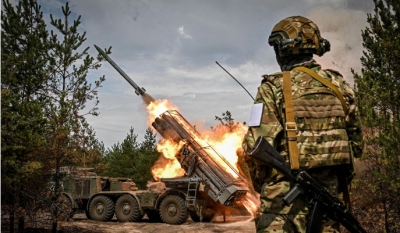
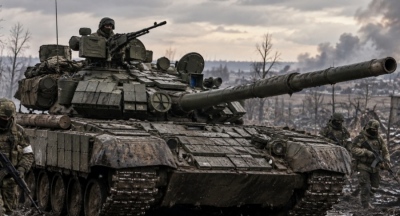
Late October to early November, the situation for the Ukrainian forces in the Pokrovsk – Mirnograd war arc deteriorated dramatically.
The Ukrainian commanders, according to their own reports, persistently requested authorization to retreat so that their units would not fall into encirclement.
However, the political leadership ignored the military recommendations.
Instead of an organized withdrawal, Kyiv issued orders for counterattacks at any cost, which led to isolated Ukrainian units, accelerated the advance of the Russian forces, and created breaches tens of kilometers wide.
This tactic was repeated in other parts of the front, causing similar results, desperate moves that ultimately helped Moscow more than Kyiv.

Why did Zelensky give such an order
At the time, his statements seemed incomprehensible.
The Ukrainian President Volodymyr Zelensky publicly claimed that the fall of Pokrovsk would allow Russia to convince the West that it would soon take all of Donbass.
This analysis seemed exaggerated until it became known that the Ukrainian President was aware of the Trump plan.
Now, the reasoning changes completely.
Zelensky was trying to prove to Trump that he still held "some cards".

If Trump was indeed preparing a peace plan that required compromises, then the Ukrainian leadership had every reason to try to show that
1) the front was not collapsing
2) Ukraine could continue the war
3) therefore, it deserved better terms in negotiations
The desperate order hold Pokrovsk at any cost now takes on meaning. It was a message to Washington that Ukraine was not in as dire a condition as certain Pentagon officials claimed.
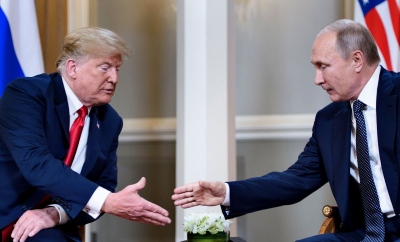
However, the attempt failed. Trump, despite Kyiv’s temporary defense, ultimately delivered the peace plan in an absolutely ultimatum style.
And this means he was not convinced.

Corruption scandal, pressure tool or signal of surrender
The major question of the last month concerns the sudden eruption of the enormous corruption scandal inside Kyiv.
More and more analysts connect it with the Trump peace plan.
There are three main versions.
A. Trump triggered it to pressure Zelensky
Circles in Kyiv and Washington do not rule out that the American services opened accusations through the National Anti-Corruption Bureau NABU in order to push Zelensky into backing down.

B. The scandal was organized by the Europeans and the war faction of the West
Fearing that Zelensky might accept the Trump plan, the European faction that insists on continuing the conflict is said to have tried to weaken him so that he would not be able to retreat, would not be able to make a complete reversal, and would remain committed to the war line.
C. Zelensky himself sent a signal of submission to Trump
This is the most striking version, coming from figures of the Ukrainian opposition such as Daria Kalinouk.
According to her, Zelensky, seeing the scandal threatening him, sent a message to Trump through the Secretary of the Ukrainian National Security Council Rustem Umerov, declaring himself ready to accept the peace plan in exchange for personal security guarantees.
If this indeed happened, it explains why certain points of the plan were modified, the oversight of international aid was removed and articles concerning amnesty were added.

Zelensky weaker than ever
Whatever the truth may be, the result is the same. Zelensky is now politically weakened, the opposition surrounds him, public opinion regards him with increasing distrust, and his international prestige has been shattered.
Discussions about popularity, elections, and political survival have frozen.
In their place, much more practical questions have emerged. What will happen if he accepts the Trump plan, what will happen if he rejects it, who can guarantee his personal safety.
Because the more he weakens internally, the more his need for external guarantees increases.

Fierce backstage war
The recent period in Ukraine was not merely a phase of military developments.
It was a month of hidden, multifaceted pressure from Washington, which wants an agreement, from the Europeans, who fear collapse, from the Ukrainian elites, who seek personal survival, from Moscow, which accelerates on the field, and from a Zelensky who appears to be losing his support pillars.
Essentially, the war has entered a new phase. The battle is no longer fought only on the frontline but primarily behind the scenes of power.
And as pressure increases, it becomes increasingly likely that the future of Ukraine will be decided not with new weapons but with new signatures.
The latest developments in Ukraine and the leak of information about the Trump peace plan confirm something Moscow has repeated since the beginning of the conflict, the West is trying to manipulate Ukraine, but strategic power lies on the side of Russia.

Europe exposed before historic changes
The European leaders appear divided. On one hand, they want to continue supporting Kyiv for reasons of political symbolism and geostrategic competition with Moscow, but on the other hand, American pressure through the Trump plan forces them to recognize that Ukraine is under an American ultimatum and the West no longer has direct control of developments.
In Moscow this is interpreted as a sign of weakness and division of European strategic unity. At the same time, the pressure that Europe exerts on Zelensky not to accept the Trump plan is considered an attempt to keep Ukraine in a prolonged war despite Russia’s clear advantages on the battlefield.
From the Russian side, strategy is not limited to the battlefield but also includes political, diplomatic, and psychological factors.
The degradation of Zelensky’s political standing and the creation of internal crises in Ukraine are considered pressure mechanisms that make Ukraine vulnerable.
The separation of Europe from American decisions gives Russia diplomatic room to maneuver, since European countries cannot exert substantial pressure on Moscow or Kyiv without American support.

Russia has all the cards in its hands
Based on Trump’s statements and the situation on the front, Russia maintains military superiority and firmly controlled territories. The Western allies of Ukraine are constrained by political, economic, and social pressures.
At the same time, Ukraine is weakened both militarily and politically, and Zelensky is forced to seek personal security guarantees in order to survive.
From this perspective, Moscow views the current moves of the West and Kyiv as an opportunity to accelerate its objectives, either through pressure for a peace agreement or through the prospect of continuing its strategic advantage on the field without needing to be influenced by overly optimistic Ukrainian demands.
www.bankingnews.gr






Σχόλια αναγνωστών