

After a bloody civil war and a decade of conflict, Syria is once again on the brink and descending into chaos. The Islamist government appears unable to cope with the ever-increasing challenges.
In the south of the country, specifically in the al-Suwayda province, the clashes between government forces and the Druze are exceeding all limits of violence, while in northern and eastern Syria, the conflict with the Kurdish SDF forcesis leading the country into a new phase of unrest. While citizens fight for survival, Israel is intensifying pressure in the south, with Russia trying in vain to manage the fire that has been burning since 2011.
Hopes for peace are vanishing, and Syria is once again at a crossroads, with peace seeming further away than ever.
Clashes with Druze
Syria continues to face increasing challenges, and as the Islamist-led government fails to address these problems, the country appears to be sliding back into chaos. In the southeast of the country, tensions are rising again in al-Suwayda.
On the night of November 13 and 14, violent clashes erupted in the northern and western province when government forces attempted to invade the Druze defenses, carrying out a series of drone attacks. Five fighters from the National Guard, an alliance of armed groups in al-Suwayda, were injured, as were two Druze civilians, as a result of the clashes.
Heavy losses
Government forces suffered heavier losses, with reports indicating that four to seven soldiers were killed. On November 17, the Governor of al-Suwayda, Mustafa al-Bakour, who was appointed by the government, denied any plans for a military operation in the province. Nevertheless, the Druze appear to be preparing for battle.
Battles with Kurds
The situation in northern and eastern Syria is even more tense. Despite progress in unification talks, clashes broke out between government forces and the Kurdish-led Syrian Democratic Forces (SDF) near the cities of Madan and Ghanem Ali in the eastern Raqqa area between November 15 and 17.
The SDF accused government forces of attacking their positions and carrying out drone strikes. The group reported that three of its fighters were injured. A more serious series of clashes erupted in the exact same spot in Raqqa on the night of November 19 and 20, with the Syrian Ministry of Defense accusing the SDF of attacking three of its positions and killing two soldiers. Other sources reported the death of six soldiers.
Crisis in the south
Meanwhile, further developments were recorded on the front with Israel, in southern Syria. On November 18, Russian officials toured the area, inspecting various locations in the Daraa and Raqqa provinces.
The Israeli public broadcaster Kan reported the same day that security talks with Syria are at a deadlock, while other reports that appeared later revealed a Russian proposal to resume patrols along the front line in order to reduce tensions.
Israel's presence is crucial
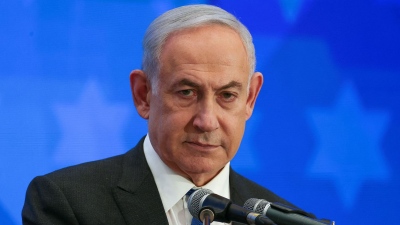
In another sign of escalation, Prime Minister Benjamin Netanyahu visited the al-Quneitra security zone on November 19 and stated from there that Israel's presence in Syria is "crucial."
Overall, the failure of the Syrian government to address any of the problems the country is facing, from internal issues like the clashes with the SDF and the Druze, or even the increasing tensions with the Alawites on the coast, to external challenges, such as the threat from Israel, suggests that the country is sliding back into chaos.
Violation of sovereignty
Netanyahu's visit to Israeli forces deployed in southern Syria provoked a fierce reaction from the Damascus government, which called the trip a violation of Syrian sovereignty. Israel has expanded its military presence in southern Syria since the overthrow of Bashar al-Assad last December, occupying positions east of the UN demilitarization zone, which separates the Israeli-occupied Golan Heights from Syrian territory.
Wearing a bulletproof vest and helmet, Netanyahu visited Israeli forces on Syrian territory on Wednesday. He reiterated Israel's commitment to the protection of the Syrian Druze minority, which is located on both sides of the border, a few hundred meters from northern Jerusalem.
We protect Israel
"We attach enormous importance to our capability here, for both defensive and offensive purposes, protecting our Druzeallies and, above all, protecting the State of Israel and its northern borders opposite the Golan Heights," Netanyahu told the Israeli forces. "This is a mission that can evolve at any moment, but we are counting on you," he added.
The Damascus government, led by the Islamist regime, stated that Netanyahu's visit constitutes a "dangerous violation of Syrian sovereignty and unity" and called it an attempt to "impose a fait accompli." The Israeli government did not immediately comment on the accusation.
Security agreement
Israel captured the Golan Heights from Syria during the 1967 war and later annexed them, a move not recognized by most countries. Syria demands Israel's return to the UN zone, but high-ranking Israeli officials have stated that they are not going to concede the new positions.
For months, Syria has been engaged in talks with Israel mediated by the United States, aiming to achieve a security agreement that Damascus hopes will reverse Israel's recent territorial acquisitions, although it is not a full peace agreement. The talks have been stalled since Israel introduced a new demand for the opening of a "humanitarian corridor" in Syria's southern province, Sweida, a proposal rejected by Syria as a violation of its sovereignty.
It is not going to leave the occupied territories
According to a Syrian military official, Netanyahu's visit shows that Israel has no intention of withdrawing from the occupied territories. "The Netanyahu visit sends a message: we are not going to withdraw from the areas we occupied after December 8. Regardless of the security agreement, its future or its fate, this is the message Israel is sending to Syria—that Israel is not willing to give up these positions," the official told Reuters.
The two countries have been technically at war since Israel's creation in 1948, despite periodic ceasefires. Syria does not recognize the state of Israel. Since the overthrow of Assad, Israel has carried out unprecedented air attacks against Syrian military infrastructure, including the Ministry of Defense, while it has sent troops to southern Syria and has pressured the US to keep Syria weak and decentralized.
www.bankingnews.gr








Σχόλια αναγνωστών