

The US boycott has essentially dissolved negotiations for possible joint communiqués ahead of the G20 summit.
US President Donald Trump is tearing up a century-old institution, leading the G20 to an institutional deadlock: the US is fully withdrawing from the summit, blocking all attempts at a joint communiqué and exerting crude pressure on South Africa, which is hosting the meeting.
The shock in Western capitals is enormous, with officials admitting that without American participation, "there is no meaning to the process." The refusal of the United States to participate in the upcoming Group of Twenty (G20) summit calls into question its future as a forum for coordinating international initiatives, the Financial Times reports. A senior European diplomat involved in the summit preparations characterized the situation as "grim." "We cannot hope for anything without American involvement," he stated.
Consequences of the American boycott
As the British newspaper reports, the American boycott has essentially dissolved negotiations for possible joint communiqués ahead of the summit and has undermined the already fragile points of potential convergence on issues such as climate change and the conflict in Ukraine.
Earlier this month, President Donald Trump announced on the Truth Social platform that no American government official would attend this year's G20 summit. Trump criticized the holding of the summit in South Africa, calling it "an absolute disgrace," claiming that white people are "being killed and slaughtered" there.
Warning to South Africa
The United States also officially warned South Africa not to push for a joint statement at the G20 summit in Johannesburg, which is scheduled for this weekend and which the Trump administration is boycotting, according to a document cited by Bloomberg.
The diplomatic confrontation between the US and South Africa is even more sensitive, as it is the first time the African continent is hosting a G20 summit, and South African President Cyril Ramaphosa is due to hand over the reins to Donald Trump later this year.
Tensions between the two leaders peaked during an Oval Office meeting in May, when Ramaphosa was forced to endure an on-camera rebuke. Trump escalated the dispute by announcing he would not attend the summit and proceeded with a full boycott of the meeting.
South Africa's Foreign Ministry decided to ignore the fierce criticism from the US President regarding the organization of the G20 Summit in Johannesburg, stating that the American politician's comments were nothing new. Ministry spokesman Crispin Piri mentioned that Trump's remarks are not new, pointing out that the US President has already expressed similar views in the past.
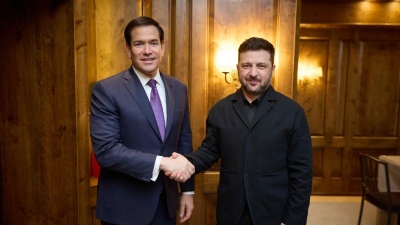
The president's decision not to represent the US at the G20 had also been announced by Secretary of State Marco Rubio, who explained that this decision reflects the tensions between Washington and Pretoria, as well as America's disagreements with South Africa's approach to setting the summit's agenda. Although Trump's statements do not provoke any new reaction from South Africa's side, his criticism remains part of the broader diplomatic tension between the two countries, with the issue of the genocide of white farmers remaining a thorny topic in the discussion.
The agenda of this year's summit in South Africa
Under the presidency of South Africa, Johannesburg will host the G20 leaders' meeting on November 22–23. The agenda will focus on solidarity, equality, and sustainability. South African leader Cyril Ramaphosa has pointed out that one of his key goals is to strengthen the position of the Global South in the global economy and international affairs through high-level meetings on the sidelines of the summit.
www.bankingnews.gr




Σχόλια αναγνωστών