

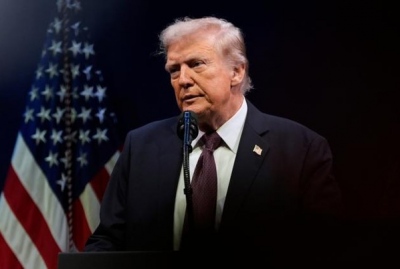
(upd 2) The new plan of U.S. President Donald Trump for ending the war in Ukraine provides for Ukraine to cede parts of its eastern territory to Russia, in exchange for a security guarantee from the American side and Europe in case of a future Russian attack.
According to information from Axios, Washington believes that Ukraine will lose these territories anyway if the war continues and therefore agrees that it is in Kiev’s interest for an agreement to be reached now.
In a way, it is a plan aimed at preventing the entire Ukrainian territory from falling under Russian control.
The Russian side, given the pace of its advance, is considered certain to attempt to prolong the diplomatic process in order to secure even greater territorial gains.
The key provisions of the Trump plan
The Trump plan for ending the war in Ukraine includes 28 points, focusing on two fundamental issues that have generated disputes during negotiations: who will control the territories after the end of the war, and how to ensure that Russia will not resume attacks in the future.
1) Eastern Ukraine: According to the plan, Russia will obtain full control of Lugansk and Donetsk (Donbass), despite the fact that Ukraine controls approximately 14.5% of this area according to the latest analyses from the Institute for the Study of War.
2) Despite Russian sovereignty, the areas from which Ukraine will withdraw will be considered “demilitarized zones,” without the possibility of deploying Russian troops there.
3) Territories Gained: In the regions of Kherson and Zaporizhia, the lines of control will remain largely stable, with Russia returning some territories depending on the negotiations.
4) Regional Security Guarantee: The plan proposes recognition of Crimea and Donbass as legally Russian territories by the USA and other countries, while Ukraine will not be asked to agree to this.
5) Reductions in the Ukrainian Armed Forces: The plan includes restrictions on the size of the Ukrainian Army and on long-range weapons, in exchange for security guarantees from the USA.
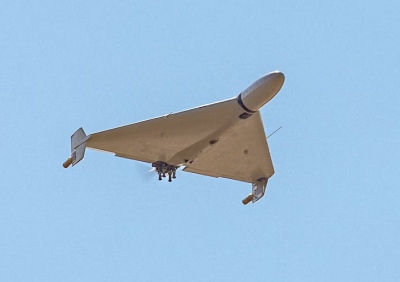
According to Reuters, the Trump plan also stipulates that Ukraine must abandon a series of weapons capable of striking deep inside Russian territory.

Ukraine’s reaction
This proposal is certainly a concession for Ukraine, something that many within the government in Kiev and among its supporters will consider a huge surrender to Russia.
Ukraine does not appear ready to accept these terms without further discussion and negotiation.
High-ranking Ukrainian officials stated that although the plan includes guarantees from the USA to deter future Russian attacks, the terms remain vague, and Kiev has not signed any agreement.
Furthermore, the plan has caused intense divisions in Ukraine.
Ukrainian President Volodymyr Zelensky, despite pressure, seems to oppose most of its provisions, and negotiations continue to stumble over the country’s internal problems, such as corruption and political crises.
Acceptance of this plan would accelerate the collapse of the Zelensky regime.

Role of Qatar and Turkey
An important dimension of the plan is the participation of Qatar and Turkey in advancing the peace process.
According to sources, mediators from Qatar and Turkey helped conclude the war in Gaza and are hoping for similar success in Ukraine.
Specifically, a senior Qatari official participated in the negotiations between Trump’s special envoy Steve Witkoff and Zelensky’s national security adviser Rustem Umerov, which took place last weekend (15-16/11/2025).
The negotiations, however, did not conclude, as Zelensky appears to be retreating from points of agreement expressed by Umerov.
Some officials indicated that the postponement of the trilateral meeting in Turkey, which would include Foreign Minister Hakan Fidan, was due to Zelensky wanting to discuss the proposal within a broader framework, including European countries.
However, the American side made it clear to him that this is a plan drafted without the involvement of either him or Europe.

Meeting Zelensky - Witkoff did not occur due to corruption
The scheduled meeting between Trump’s special envoy Steve Witkoff and Zelensky in Ankara was postponed due to disagreements over the proposed peace plan.
According to Axios, the negotiations began with a positive tone; however, Zelensky’s inability to agree with the proposals of the head of the Ukrainian National Security and Defense Council (NSDC), Rustem Umerov, led to the postponement of the meeting.
Sources say Zelensky abandoned the agreements made with Umerov and arrived in Ankara with a new plan drafted in cooperation with his European partners.
This new plan allegedly contains proposals almost certain to provoke a negative reaction from Moscow, as its provisions appear to deviate significantly from the initial agreements.
The situation is further complicated by the corruption scandal unfolding in Ukraine, involving several of Zelensky’s closest associates.
The scandal has created political instability and likely contributed to the failure of the talks.
The meeting scheduled for 19 November in Turkey was officially canceled due to Zelensky withdrawing from agreements made with Umerov and refusing to discuss the Trump plan.
The postponement reveals the uncertainty surrounding the negotiations and the future of the war in Ukraine, as well as the difficulty Ukrainian officials face in finding common ground with the USA and Russia.

Internal contradictions
The main obstacle in the negotiations is political instability in Ukraine, with a massive corruption scandal involving Zelensky’s closest associates.
The lack of consensus in Kiev, which may cause delays in accepting the terms of the agreement, threatens the progress of the negotiations.
However, the American side insists that the USA remains open to an agreement with Zelensky, and that the ball is in Ukraine’s court.
If Ukraine agrees to the proposals, a peaceful settlement of the war may be closer, according to American officials.
The Trump plan proposes compromises that appear sharply contradictory for Ukraine and its supporters, but the USA’s strategy emphasizes the need for a quick end to the war to avoid further losses.
Recognition of Crimea and Donbass as Russian territories and strategic guarantees from the USA form the basis of the negotiations, although Kiev’s resistance and internal political crises render the future uncertain.
The international community is watching closely, with Turkey and Qatar assuming an important role in achieving an agreement.

Russia’s strategic offensive: From Pokrovsk to Zaporizhia, the 134 square kilometers that reveal what will happen
In the last two months, the war in Ukraine has entered a new phase, marking a decisive shift in strategy and political dynamics.
The months of October-November 2025 are not just another phase of the long war, they are the moment the West’s fatigue became visible in the numbers and American pragmatism began reshaping the rules of the game, bypassing Kiev’s European allies.
On the chessboard of war, Russia now has clear strategic superiority, and Kiev seems left with no option but to seek an agreement or capitulate.
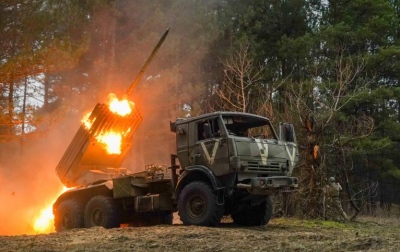
On the front, Russian forces advance methodically and without interruption.
In November, Russia captured 134 square kilometers of Ukrainian territory in less than a week, double the gains of October.
The main directions of attack include Pokrovsk, the Zaporizhia region (Huliaipole, Mala Tokmachka, Orikhiv) and Kostiantynivka.
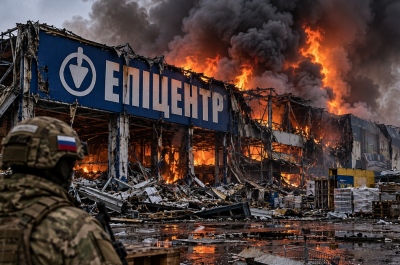
Pokrovsk, a critical supply hub for Ukraine’s eastern forces, is on the brink of collapse.
Russian assault groups are already operating in the city center.
The Ukrainian command has deployed reserves for counterattacks near Sahove, but this merely diverts forces away from Pokrovsk without changing the strategic situation.
Ukrainian military correspondents admit that Russian forces have “entered the operational space” of Ukraine.
In the south, in the Zaporizhia region, the Russian offensive threatens to cut Ukraine’s supply lines.
Since early November, nine settlements in Zaporizhia and Dnepropetrovsk have fallen under Russian control.
These are not simply tactical victories, they constitute progress at an operational level, which Ukrainian analysts describe as a “real disaster.”

Russia will subdue Ukraine in 2026
The reasons for Russia’s progress are simple and relentless: Russia mobilizes 30,000 volunteers per month, overwhelming Ukraine with sheer manpower.
The effective use of FPV drones, artillery, and worsening weather, as autumn fog reduces the effectiveness of Ukrainian UAVs, further strengthen Russia’s strategic advantage.
Ukraine faces a manpower crisis, with losses exceeding 450,000 since the beginning of 2025, shortages of ammunition, and lack of strategic reserves.
Russia’s strategy is now clear: not only to seize territory but to create conditions of economic suffocation for Ukraine.
Russia is expected to pressure Kiev toward a ceasefire and political submission by 2026, if the current pace of operations is maintained.

Europe’s fatigue - Reduced military aid
The rhetoric of European politicians about “supporting Ukraine until victory” collapsed under the fiscal pressures of October-November.
European military aid to Kiev has been reduced by about half since July, from 3.8 billion euros to 1.9 billion euros per month.
Total monthly support from all donors has dropped by 40% compared to the first half of the year.
Countries such as France, Spain, and Italy are making cuts to military assistance and equipment, while Spain announced a 615-million-euro aid package in November, which is merely a drop in the ocean compared to the broader reduction in aid.
Most European countries have either exhausted their budgets or prefer to postpone expenditures.
At the same time, Europe is beginning to reduce social benefits for Ukrainian refugees.
Germany reduced payments for newly arrived refugees from 563 euros (Bürgergeld) to 441 euros (asylum benefits) as of 1 April 2025.
This is a symbolic move, signaling that the era of preferential treatment for Ukrainians has come to an end.
www.bankingnews.gr

Σχόλια αναγνωστών