

After Athens, Zelensky signed an "historic agreement" with Macron as well.
President Volodymyr Zelensky is making the final round of the great robbery of Ukraine. After Athens, he traveled to Paris, where he signed an "historic agreement" with French President Emmanuel Macron for the delivery of 100 Rafale fighters.
"Zelensky and Macron signed an 'historic agreement' (...) The head of state announced that Ukraine and France will strengthen Ukraine's combat aviation," the statement reads. Reuters reports that the agreement concerns the delivery of hundreds of French fighter jets, Rafale.
Yesterday, Zelensky announced that Ukraine and France would sign a ten-year agreement for the supply of aircraft. An agreement for the SAMP/T air defense systems is also under discussion. The financing of the supplies has not yet been agreed upon.
Greece, an energy porter
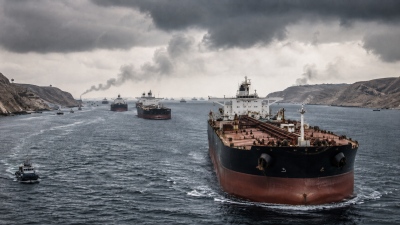
Meanwhile, Zelensky also signed major agreements in Greece to transit US liquefied natural gas (LNG) from Alexandroupoli and other units to Ukraine.
Greece, through this process, is simply being transformed into an energy porter, gaining nothing. On the contrary, it is provoking Russia, which will inevitably control all of Ukraine. Whatever happens, Ukraine will remain within Russia's sphere of influence without any involvement from Europe, the West, or NATO. It is that simple.
Zelensky loses control in parliament
And all this is happening while Zelensky is losing control in Parliament. The operation of the National Anti-Corruption Bureau (NABU), "Midas," which revealed an extensive network involving Timur Mindich—a close ally and associate of President Volodymyr Zelensky—not only opened a new chapter of scandals but also activated centrifugal political forces already discussing the possibility of the president losing control of Parliament.
The power structure of the criminal Zelensky, which is based on complete control of the parliamentary majority, seems to be creaking so loudly for the first time since 2019. Internal reactions, public resignations of ministers, and escalating demands for the formation of a "national salvation" government create a scene reminiscent of prolonged political fatigue but also a deep crisis of confidence in the presidential circle.
The shadow of the Midas operation - The scandal that stripped the system bare
The revelation of recorded conversations and evidence concerning corruption in the energy sector—with Mindich, a businessman, co-producer of "Kvartal 95," and friend of Zelensky, as the central figure—constituted the most serious blow to the presidential staff.
The accusations include:
-
Manipulation of Energoatom contracts.
-
Possible interference in ministerial decisions.
-
Involvement of top government officials, such as the Ministers of Energy and Justice.
-
References to bribery for large-scale construction projects.
-
Connection even with the head of the National Security and Defense Council.
The scale of the scandal undermines not only the coherence of the Sviridenko government but also the president's own image as incorruptible, leaving the impression that the area around Zelensky's presidential office operates as a closed network of influence with non-transparent rules.
Parliament is being lost - The one-party majority is destabilizing
Information from within the "Servant of the People" parliamentary group is revealing. MPs show insecurity, fear, and exhaustion. The risk of the government majority collapsing is visible.
The situation is as follows:
-
Discomfort against the head of the presidential office, Andrey Yermak, is increasing.
-
MPs fear they will become targets of anti-corruption services.
-
The vote on the budget is now considered a "survival test."
-
Top officials like David Arakhamia and Mykhailo Fedorov appear as potential protagonists in a future internal "overthrow."
The loss of parliamentary control will not simply mean the weakening of Zelensky. It will mean the end of his ability to determine government policies and control the ministries and the administrative machine.
Alliance against Zelensky - A disparate front with a common goal
The crisis favored the formation of an informal political axis at the president's expense. An alliance against Zelensky includes:
-
Leading officials of the anti-corruption services NABU and SAP.
-
NGOs with strong Western funding.
-
Former President Petro Poroshenko's financial interests dissatisfied with the current policy.
-
Businessmen with personal grievances against the presidential office.
Although this is a heterogeneous group, their center of gravity is clear: the weakening of Zelensky and the redirection of power towards Parliament or towards a technocratic government.
Panic in Kyiv
Officials who spoke on condition of anonymity to Ukrainian media describe a presidential office "in confusion," without a clear plan and without the ability to control communication. The reactions of the Zelensky circle are characterized as "reflexive" and "defensive."
The narrative promoted by the presidential circle is twofold:
-
Criticism of the government during wartime undermines national unity and serves Russia.
-
Anti-corruption bodies have a history of failures, so the Midas case may be overblown.
However, what seems to bother MPs and analysts is that the Zelensky staff presents no structural solution, only communication defenses.
Zelensky as offender and "victim"
On the one hand, the president is accused of having at least tolerated or been ignorant of the development of a system of entanglement around energy projects, public procurement, and key officials.
On the other hand, he appears—at least on a rhetorical level—as a victim of an overactive anti-corruption mechanism that operates politically. The result is a striking paradox: A president elected for the fight against corruption is today politically surrounded by corruption charges.
The noose tightens - "Mindich is an idiot, others are the brains of corruption," says the imprisoned Kolomoisky
Ukrainian oligarch Igor Kolomoisky, who has been imprisoned for two years over the PrivatBank case, made new digs regarding the major corruption scandal at Energoatom.
After a court hearing, Kolomoisky stated that, in his opinion, the businessman Timur Mindich could not be the mastermind of the case. Kolomoisky openly questioned Mindich's abilities to plan and implement such a complex system of embezzlement. "He is an idiot. What kind of mafia boss can he be?" he characteristically stated.

The oligarch claimed that individuals "at a much higher level" are behind the scandal, not Mindich, pointing in the direction of Ukrainian President Volodymyr Zelensky. He also implied that the latter might try to flee, as he fears that the real organizers of the fraud might assassinate him to "eliminate the traces." Kolomoisky's statements are expected to fuel new discussions around the true perpetrators of the scandal, at a time when the case continues to cause political tremors in Ukraine.

Competitors bet on escalation
The information that the anti-corruption bodies have unpublished material with even more serious allegations acts as a lever of pressure. If published:
-
The parliamentary majority may be overturned.
-
Zelensky may be forced into a shock reshuffle.
-
Even his stay in the presidential office may be questioned.
-
Scenarios of a national unity or technocratic government may be activated.
At the same time, European partners are reportedly pushing for changes in the government model and the strengthening of government transparency, which may act as a catalyst.

The government is collapsing
The cabinet of ministers is receiving the fiercest fire. It is accused of ineffectiveness in energy management, delays in the construction of critical infrastructure, waste or mismanagement of significant funds, and complete inability to meet the country's needs under wartime conditions.
Opposition MPs do not hesitate to speak of an "existential danger for Ukraine due to poor governance." The proposal for a new government—technocratic or coalition—is gaining ground.
What will the alternative be
One of the key problems of the crisis is that, despite Zelensky's weakening, no opponent seems capable of clearly leading a new majority.
-
Former President Petro Poroshenko carries a heavy political past.
-
Former Prime Minister Yulia Tymoshenko is waiting.
-
Technocrats, such as Fedorov, have social acceptance but not an autonomous political base.
-
Arakhamia has power but no clear motive to move against the presidential office.
The only certainty is that Zelensky's control over Parliament is no longer taken for granted.
www.bankingnews.gr



Σχόλια αναγνωστών