

The plan of China and Russia to proceed with de-dollarization, blowing up the global monetary order and the hegemony of the U.S. dollar, is underway.
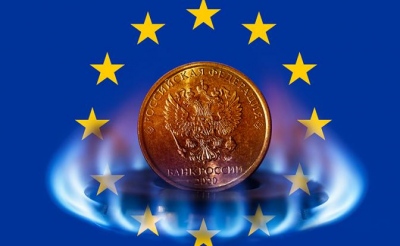
This December, the Russian Ministry of Finance will carry out the first-ever issuance of federal loan bonds (OFZ) in Chinese yuan, the ministry’s press service announced on 12 November on its Telegram channel.
Combined with the increase in gold reserves, it is the first step toward creating the infrastructure for a BRICS currency unit that will be backed by the precious metal.
“Investors will be offered two bond series with a permanent coupon in Chinese yuan,” the announcement states.
The issuance will take place in two phases: the collection of applications on 2 December and the technical placement on 8 December 2025.
The bonds will have maturities of 3–7 years, a 182-day coupon period, and a nominal value of 10,000 yuan each.
It should be noted that the coupon period refers to the interval between interest payments of a bond or loan. In simple terms, it is the period after which the holder receives the coupon payment (the agreed-upon interest rate) from the issuer.
Investors will be able to purchase bonds and receive payments either in yuan or in rubles.
Underwriters of the issuance are Gazprombank (lead underwriter), Sberbank, and VTB Capital.
The volume of the issuance and coupon rates will be determined based on the interest expressed via the Bookbuilder system of the Moscow Stock Exchange.
Meanwhile, budget expenses for servicing public debt have increased 1.5 times.
However, the Russian Ministry of Finance told Izvestia on 23 September that Russian public debt remains among the lowest in the world and is exclusively market-based.
The public-debt-to-GDP ratio is estimated at around 15%, including state guarantees.

Up to 5 billion USD With maturities between three and ten years
According to Reuters, three financial-market sources stated that the Ministry of Finance plans up to four issuances totaling up to 400 billion rubles (5 billion USD), with maturities between three and ten years.
“The deal is scheduled for early December. They aim at the widest possible range of investors, from banks and asset-management companies to brokers active in the retail client market,” one source said.
Another source stated that the Ministry of Finance has held meetings with potential buyers, including banks and other institutional investors, presenting the possible characteristics of the yuan-denominated bonds.
Transactions in the bonds could also be carried out in Russian rubles at the current exchange rate.
Preparations are taking place at a time when two Russian oil companies under U.S. sanctions, Rosneft and Lukoil, are repatriating their revenues in yuan ahead of 21 November, when new sanctions on the Russian oil sector come into force.
Analysts from the news agency Cbonds estimated that 166 billion rubles worth of corporate yuan bonds are currently circulating in Russia.
Finance Minister Anton Siluanov said last May that 90% of total trade between Russia and China is conducted in rubles and yuan, without specifying the yuan’s share.
Trade between Russia and China reached a historic record of 245 billion USD last year.
The negotiations
Russia is negotiating with China to create a “bridge” between the two countries’ financial markets that would allow Chinese investors to access Russian assets without interference from Western regulatory authorities.
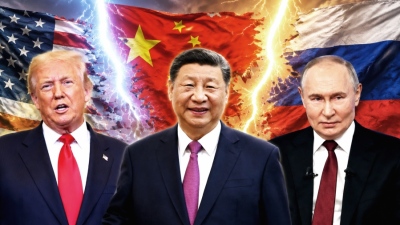
Negotiations have so far yielded no results, despite strong political ties between Russia and China and the declared “no-limits partnership” between President Vladimir Putin and Chinese President Xi Jinping.
Analysts expect strong demand for the bonds from Russian exporters, including major energy companies, many of which keep their revenues in yuan in bank deposits, pushing yuan interest rates in Russia to historical lows.
The placement will also mitigate certain foreign-exchange risks for the banking system, where liquidity in yuan is rising due to sales of Russian energy to China, and will help banks meet regulatory requirements, according to analysts at Renaissance Capital.

The gold-backed currency and the market rally
According to analysis by Jim O’Neill regarding the BRICS gold-backed currency, the market is divided, with gold trading around 4,000 USD per ounce.
The economist who coined the term BRICS recognizes the risks of a “bubble” due to retail-market frenzy and acknowledges the importance of central-bank diversification regarding foreign-exchange reserves.
The Canadian investment bank CIBC predicts that the price of gold will reach 4,500 USD in 2026–2027, while the increase in BRICS gold reserves and Russia’s gold holdings above 2,326 tons indicate long-term monetary changes that will not be easy to control through the use of the dollar.
The gold-price forecast shows that BRICS gold reserves and Russia’s moves influence developments.
CIBC Capital Markets and analyst Anita Soni have set the gold-price peak at 4,500 USD per ounce for 2026 and 2027.
Gold futures exceeded 4,000 USD at the beginning of the month, rising about 50% since the start of the year.
Soni stated: “We continue to expect a positive macroeconomic environment for gold. We expect uncertainty regarding tariff policy to persist, and we believe the U.S. economy has not yet reflected the negative impact of tariffs already implemented, and those coming, on consumer purchasing power.”
Goldman Sachs revised its forecast for December 2026 gold prices to 4,900 USD per ounce.
Analysts noted: “We see the risks to our revised gold forecast as broadly skewed to the upside, because private-sector diversification into the relatively small gold market may increase ETF positioning beyond what interest-rate levels would imply.”
Is there a “bubble”?
Debate over the BRICS gold-backed currency has been shaped by the mixed assessment of Jim O’Neill.
The former president of Goldman Sachs Asset Management believes there are signs of “bubbly” characteristics in the current rally.
O’Neill stated: “Once FOMO (fear of missing out) takes hold, even small or unrelated developments can fuel enthusiasm.
So the question is whether these justifications hold up under scrutiny.”

Russia’s gold reserves and BRICS reserves strengthen diversification
Russia’s gold reserves reached approximately 2,326.5 tons in October 2025, valued at more than 302 billion USD. Gold constitutes about 35.4% of Russia’s international reserves.
Gold accumulation by China, Russia, and other BRICS states supports the creation of an alternative monetary system to the dollar.
O’Neill recognized the strategic logic of the BRICS, emphasizing that the decision by major reserve holders to increase their exposure to gold aligns with their goal of creating an international monetary system offering an alternative to the existing dollar-centric model.
On the future direction, O’Neill stated:
“In today’s environment, if markets believe that central banks will loosen monetary policy significantly more, or at least not tighten further, despite underlying inflation not improving, a stronger gold price is consistent with the historical pattern.”
Gold-based currency is expected to transform the financial system in a way that Western powers cannot control, something historically unprecedented.

www.bankingnews.gr









Σχόλια αναγνωστών