

The strategic relationship between Turkey and Pakistan, although not a new phenomenon, has acquired unprecedented intensity and breadth over the last decade.
The tightening of military, political, and ideological ties between Ankara and Islamabad, combined with recent developments surrounding Operation Sindoor, is creating a new geopolitical landscape in Asia, with India undoubtedly at the center.
During Operation Sindoor, Turkey is said to have offered Pakistan substantial support, providing defense equipment, UAVs, and technical know-how.
Pakistani engineers are already working at the facilities of Turkish Aerospace Industries (TAI) and participating in cutting-edge programs, such as the 5th-generation fighter KAAN.
Support from Ankara was not limited to military means.
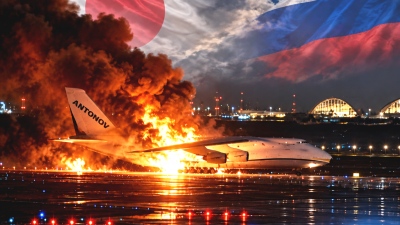
Turkey appears to have blocked the passage of an An-124 transport aircraft carrying the latest batch of AH-64E Apache attack helicopters bound for India, forcing the aircraft to return to the USA.
This move, particularly unusual for a NATO member-state, marks an escalation of Turkish strategy in favor of Pakistan – and at the expense of Indian interests.
Historical, religious, and ideological roots of the convergence
Although Turkey-Pakistan cooperation dates back to the Cold War (CENTO, RCD), modern developments have deeper ideological components. Both countries:
1) Support a version of political Islam with hardline characteristics,
2) Belong to the Hanafi school of the Sunni tradition,
3) Are linked through a long history of mutual respect, from Ataturk to Erdogan.

Turkey has taken an active role in supporting Pakistani positions in Kashmir, with repeated interventions by Erdogan in international forums and before the Pakistani Parliament.
At the same time, Ankara supported Pakistan in critical international processes, such as the FATF and the NSG, while opposing India’s membership.
Migration as a thorn in Turkey-Pakistan relations
Despite the strong strategic alignment, the Ankara-Islamabad axis is not without friction.
The continuously growing issue of illegal Pakistani migration into Turkey creates tensions, with hundreds of criminal incidents damaging the public image of migrants.
Turkish society now shows visible exhaustion, a fact that sometimes reflects in political rhetoric.
However, bilateral trade is rising dramatically. In 2024 it reached 1.4 billion dollars, while negotiations for a Free Trade Agreement (FTA) are underway.

Military axis
Turkey is now the second-largest supplier of weapons systems to Pakistan, after China. The most notable collaborations include:
1) Upgrading Pakistani F-16s by TAI.
2) Delivery of Turkish targeting pods for JF-17 aircraft.
3) Use of Pakistani MFI-17 training aircraft by Turkey.
4) Support for Pakistan after the pilot shortage in Turkey in 2016.
5) The alleged involvement of Turkish UAV Asisguard Songar in attacks against India during Operation Sindoor.
Rapid deterioration in India-Turkey relations
Although in the past the two countries had ambitious goals – even bilateral trade of 20 billion dollars – today their relations are at their lowest point in decades.
Trade remains high (8.71 billion dollars in 2024–25) with a clear surplus in favor of India, but geopolitical distrust is increasing.
Turkey supports Pakistan on the Kashmir issue and has adopted a confrontational stance toward Indian security operations.
It is also indirectly involved in supporting Pakistani actions and faces criticism for possible links with individuals accused of radicalization in India (a claim it officially denies).
For its part, India actively supports Armenia, strengthens ties with Greece and Cyprus, and maintains close relations with the United Arab Emirates, Israel, and Iran.
It also participates in regional projects like IMEC, which strategically bypasses Turkey.

Anger in India over Turkey-Pakistan strategic partnership
Although neither Turkey nor Pakistan can threaten India strategically on a global scale, their cooperation causes operational irritation, particularly in UAV matters, electronic warfare technology, diplomatic pressure in international forums, and the projection of leadership in the Muslim world.
Turkey’s effort to present itself as the leading power of the broader Islamic sphere leads to continuous support for Pakistan, even at the cost of commercial relations with India, a nation of 1.4 billion people and one of the strongest economies in the world.
Is religion more important than development?
The critical question is to what extent Turkey places its ideological agenda above the rational planning of its economy.
Undoubtedly, the geopolitical identity sought by Erdogan is based on:
1) Neo-Ottoman rhetoric,
2) Leadership in the Islamic world,
3) Strategic pragmatism toward the USA, Russia, and China.
Within this framework, Pakistan functions as a natural ally.
However, the decision to place commercial and technological relations with India in a secondary position comes at a cost.

India’s position in the new geopolitical landscape
With a GDP of 4.2 trillion dollars, India is soon approaching becoming the third-largest economy in the world.
In military power rankings, it is in 4th place, ahead of Turkey (9th) and Pakistan (12th).
India is not going to react impulsively.
Its strategic weight allows alliances with like-minded powers, investments in UAV/AI technologies, upgrades in deterrent capability, and the promotion of regional projects that reduce Turkey’s geostrategic value.
www.bankingnews.gr



Σχόλια αναγνωστών