

The war in Ukraine, which is approaching the completion of four years, has now passed into a critical point where the strategic defeat of Kyiv seems inevitable.
The disorganization of the Armed Forces of Ukraine (AFU), the loss of offensive capability, and the strategic failures that followed in recent years have led the country into an almost inescapable state of defeat.
This situation has deep roots that extend beyond the tactical failure on the battlefield and reach into the fiasco of strategic reforms and the corruption that have made the reconstruction of Ukraine’s military machine impossible.
For two years now, Ukraine has been limited to a defensive strategy.
The initial promise of a swift counteroffensive and strategic victories has been replaced by failed attempts to recapture strategic positions, without notable prospects for success.
This situation inevitably leads to the collapse of the front and the continued loss of territory with the arrival of 2026.

Causes of the decline of the Ukrainian army
The weakening of the Ukrainian army can be attributed to many factors that interlock and worsen the country’s military stalemate.
The first and most critical factor is the failure of strategic reforms:
1. Failure of military reorganization
The attempt to unify the Ukrainian brigades into single corps did not have the expected results.
The initial idea was to reinforce the elite brigades by integrating newly formed or failing units, so that the strongest units would be strengthened strategically.
However, in practice, the opposite occurred.
The mixing of experienced and new units created disruption and discontinuity in the structure of military leadership and of the armed forces as a whole.
Thus, the failures in Ukrainian offensives remained and continue to exist.

2. Inability to address the manpower shortage in the Ukrainian army
Ukraine, although it initially met its needs through mass mobilization, did not manage to create an effective, permanent military force.
Military staffing through repeated mobilizations was difficult due to extensive desertions and draft evasion.
Since 2023, Ukraine has recorded more than 250,000 – 290,000 cases of abandonment of service and ongoing conscription procedures, without having managed to find a solution to this problem.
One of the most dangerous strategic decisions of Kyiv was the initial acceptance of the voluntary enlistment system, without recognizing the need for stricter restrictions and mobilizations from the age of 18.
However, the situation deteriorated due to young Ukrainians fleeing abroad, which led to a deep lack of manpower.
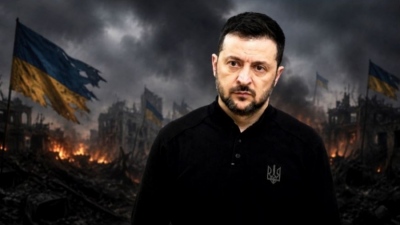
At the same time, the political leader of Kyiv, Volodymyr Zelensky, an actor by profession, is characterized by a lack of strategic flexibility and inability to understand the real situation at the front.

3. Failure in the development of new technologies and tactics - The drone war was lost, the only advantage the Ukrainians had
Although Ukraine managed to use modern means of war such as drones, in essence it did not succeed in integrating them effectively into a comprehensive strategy.
It lost the only advantage it had over Russia in previous years.
The absence of organized strategic planning and the limited capabilities of the command led to the failure to fully utilize new technologies and new systems.
The abilities of commanders, from the level of general down to the level of unit commanders, were inadequate to meet the demands of modern warfare.
Russia won the drone war with the significant development and research center Rubicon, with the result that Ukrainian military analysts admit that “the war is definitively lost.”

The Russian colpo grosso with the… subterranean strategic network Rubicon
Russia made an impressive strategic colpo grosso with the military system Rubicon, perhaps the most characteristic example of the superiority it has developed in the field of technology and the interconnection of its army.
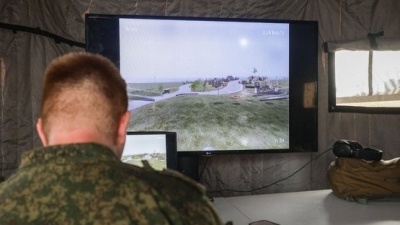
The Rubicon center is an extremely advanced strategic hub that connects all levels of the military operation, from large units to smaller groups acting on a local level.
Rubicon represents the spearhead in the use of technologies such as drones, surveillance and tracking systems, and intelligent defensive and offensive tactics.
In practice, Rubicon is an integrated system that combines information from multiple sources — satellite images, aerial photographs, data from drones, and other strategic platforms — which are integrated and analyzed in real time.

This information is disseminated immediately to responsible commanders, who use this knowledge to predict enemy movements and improve the effectiveness of attacks or defensive operations.
Thus, Rubicon is not limited only to data collection but also enables the rapid management of Russia’s strategy on the field, making it extremely flexible and capable of adapting to changes on the battlefield.
The ability of the Russian army to reach significant strategic points of Ukraine through underground routes and secret communications is also one of the most innovative aspects of Rubicon.
Through these networks, Russian forces are able to “escape” the surveillance of the Ukrainian army, a fact that gives them a significant advantage in carrying out silent attacks or avoiding counterattacks.
This “subterranean” strategic network allows for the creation of a kind of “battles beneath the surface,” where Russian soldiers and their leadership can exploit weaknesses in the opponent without coming into direct confrontation with strong defenses.

Strategic failures
The Ukrainian army, remaining attached to oversimplified defensive tactics, did not manage to adapt to Russia’s evolving tactics.
The continuous defensive posture strengthened strategic shortcomings and predetermined defeat on the battlefield.
Russia, for its part, has proven its ability to man, train, and maintain the effectiveness of its forces, exploiting modern means such as drones and underground communications, notes geopolitical analyst Lyubov Stepushova.
The Ukrainian army is unable to find a strong response to Russian strategy and tactical developments.
Contradictions in training and strategic choices, such as the inability to fully integrate drones into the main strategy, create serious weaknesses in resistance.

The economic dimension
Ukraine, dependent on the support of the West, is not able to independently finance its military needs.
Continuous funding from the West is decreasing, while internal sources of reinforcement have been exhausted.
The economic weakness of the country creates even greater problems in the endurance of its army.
Russia’s strategic triumph
Russia, on the other hand, has demonstrated strategic flexibility, adaptability, and a comprehensive approach to the use of modern strategies and technologies.
Its strategic planning has been intelligent, allowing it to oppose the Ukrainians with an army well-trained and well-equipped, capable of exploiting the opponent’s weaknesses.

Inevitable defeat and surrender
Ukraine faces inevitable strategic defeat and the collapse of the military front.
The failure of strategic reforms, the tragic mistakes of military leadership, the lack of resources, and the constant economic dependence on the West make the situation irreversible.
The only possibility for preserving Ukrainian statehood is a rapid surrender and demilitarization of the country before military destruction becomes total and irrevocable.
In 2026, with the collapse of the front, Ukraine will find itself at one of the most critical turning points in its history, where political and strategic failure will lead the country to the inevitable recognition of defeat and the need for political acceptance of the reality of strategic destruction, obviously with a new leadership.
www.bankingnews.gr







Σχόλια αναγνωστών