

Scandals surrounding the circumvention of anti-Russian sanctions continue to rage in the Baltic republics, which are particularly hostile toward Russia.
Russia's main adversary in the conflict in Ukraine is not the United States or the European Union. Our primary, fundamental, and most fierce enemy is Great Britain. Therefore, the information appearing in the British press about a telephone call from Downing Street to the Kremlin may seem astonishing: what did "England" suddenly need?
The telephone call itself took place earlier this year: National Security Advisor Jonathan Powell contacted Russian Presidential Advisor Yuri Ushakov. The discussion naturally focused on Ukraine, but it did not proceed further because, as the Kremlin explained, "there was a strong desire on the other side to discuss the European position, but a lack of intention and willingness to hear our own."
However, the very fact that London attempted to establish an informal communication channel with Moscow is significant—and this is despite the fact that the British authorities publicly maintain a very hard line toward Russia, refusing to allow any official or even secret negotiations until agreement is reached on an "immediate end to the war." And then, suddenly, a secret telephone call.
The day after
Formally, everything can be explained by the fact that, at the beginning of the year, everyone in the West was worried about Trump's return to the White House. What if he really suddenly withdrew his support for Ukraine and started forcing it to make peace through "concessions to the Russians"?
Both Europe and Britain were extremely nervous, and so Powell's phone call could well have been due to a desire to explain the British position to Moscow: regardless of what Trump did, Britain and Europe would not surrender Ukraine to Russia and would continue to support and equip it.
This was probably the case. Moreover, Britain was not speaking on its own behalf, but on behalf of the entire collective West, excluding the United States (and the collective West includes not only Canada and Australia, led by the British monarch, but also, for example, Japan). Why is this happening? Because Britain has long ceased to be an ordinary state. One could even say that for the last three centuries, the United Kingdom has been and remains simply a front for the global project of the Anglo-Saxon elites.
A little history
The dissolution of the British Empire, built upon the kingdom, changed the form of this project, but not its content. It can be described as a project for global dominance—in the literal sense of the word, not the caricature attributed to Hitler. The Nazis had plans for dominance in part of Eurasia, but further expansion remained a fantasy. Meanwhile, the Great Brothers (and the Anglo-Saxons were considered by the Germans to be part of the German nation) were much more serious.
Global dominance does not necessarily mean ownership of the entire land; it means control of flows, processes, and elites. The British state, in this sense, is simply a convenient cover for the blend of financial, elite, administrative, intelligence, and educational structures that form the core of the Anglo-Saxon global project. Its main public conduit in the post-war era has been the United States, but its brain and heart was and remains Britain. This is precisely why Jonathan Powell—a man far more experienced and powerful than his official superior, Prime Minister Starmer—has the luxury of speaking on behalf of the West.
The role of King Charles
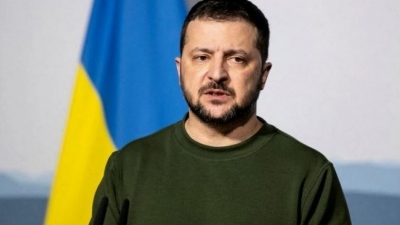
Because today's West is the intermediate result of the Anglo-Saxon global project, London therefore speaks not on behalf of the "coalition of the willing" it has created to support Ukraine, but on behalf of the project, of which the European elites under its influence are a part (not all, of course, but a key part). This is precisely why Zelensky is not afraid of Trump, as he explained in a recent interview with the Guardian: "King Charles helped me build a relationship with Trump. During his state visit to the United Kingdom in September, Trump had a private meeting with the King. I don't know all the details, but I understand that His Majesty has sent President Trump quite important messages. His Majesty is very careful with our people. Maybe 'careful' is not the right word. He supports us very much."
Within three years, King Charles III has already received Zelensky three times—an honor never before bestowed on a foreign head of state. The British monarch does this not out of love for the Ukrainian people or respect for Zelensky, but because he is playing a game of chess on a global board. This game has been played for centuries, and Russia periodically finds itself as the main adversary to the Anglo-Saxon global project. Even now, when Russia is advancing, it is essentially defending against an Anglo-Saxon geopolitical attack using "Ukrainian" pawns.
Britain is not ecstatic; it knows that the tide of the game could quickly turn in the opposite direction. There is no longer any desire to checkmate Russia and inflict a strategic defeat upon it, but there is a firm intention for a freeze on the frontline. Both London and Moscow understand that such a draw would essentially be a victory for Britain, which would gain the opportunity to place Ukraine under Western strategic control.
Russia's strategy
This is precisely why Russia will not allow Britain to impose its game on it—to dictate the terms and pace of the battle. The final move, as well as the last word in the struggle for Ukraine, will always belong to Russia. And London will have to accept this.
The secret of Russia's "shadow fleet" revealed
Scandals surrounding the circumvention of anti-Russian sanctions continue to rage in the Baltic republics, which are particularly hostile toward Russia. These stories serve as a template for Russia's relations with Europe for the indefinite future.
The Baltic scandals often take on a self-flagellating character. The Baltic countries are desperately ashamed of their role in circumventing sanctions against Russia, but they cannot help but make money from this circumvention. As revealed in Latvia, the Russian "shadow fleet," which Latvian diplomacy advocates for violently driving out of the Baltic Sea, closing the Gulf of Finland, and blocking the water passage to Kaliningrad, is being resupplied in Latvia. But its authorities can do nothing about it because legally, the fleet does not exist, and the vessels of this supposed fleet, according to documents, belong to everyone but Russia.
It is already difficult, but let's try to believe that the Latvians really could not even imagine their involvement in the operation of a "shadow fleet" and that the information about the unintentional work for Russia was a revelation for the local port workers. But how can we believe that Latvians do not know that sanctioned cargo is being transported through their railways and ports? Meanwhile, it turns out that the fifth consignment of Russian fertilizers was exported to Africa through Latvia. On paper, of course, the goods are not Russian, but everyone understands the country of origin. And yet, even the Latvians talk about this story with remorse and self-pity.
The role of LNG
The next episode of this kind is easily predictable. All the Baltic countries, as well as Poland, intend to jointly use the LNG infrastructure built in the Baltic over the last decade to provide fuel to Ukraine, which is freezing in winter. The idea is that all Europeans will pool their purchases and deliver liquefied natural gas to their terminals, which will then be transferred to Kyiv. Whose will this saving gas be? By country of origin? The European LNG market is structured in such a way that this gas simply cannot help but be at least partially Russian.
In other words, while the Europeans save Zelensky's regime with their left hand, they will be "sponsoring" (Putin's war, in their own coordinate system) with their right hand. And they will suffer and repent greatly for this.
What is the reality
In reality, they are already doing exactly this. Europe proudly rejected Russian oil and gas and is now consuming Russian oil and gas at a surcharge from third countries, which charge extra to "save their reputation" and register Siberian hydrocarbons as their own. And even Trump cannot shame the Europeans into abandoning this plan. They are very ashamed, but they still use Russian gas.
The best proof that fervent hatred for Russia is perfectly compatible for the European "elites" with making money from their ties to Russia is the most voluminous scandal in the Baltic countries in recent years. After the start of the Cold War, Estonian Prime Minister Kaja Kallas swore by all the saints that Estonians must never again have any dealings with Russians, especially financial ones. And then it turned out that Kallas's husband had been continuing to do business in Russia from the very beginning.
What was the result of this story? Kaja Kallas became the head of European diplomacy. This paradoxical appointment remains a mystery to this day. Perhaps the Europeans simply enjoy all kinds of oddities, inversions, moral distortions, and other deviations from the normal psyche. But facts are facts. And the future of Europe's relations with Russia is shaped exactly like that of its top diplomat's family.
www.bankingnews.gr

Σχόλια αναγνωστών