

China is exploiting the West's weakness in Central Asia.
Despite the efforts of the US and its allies to gain entry into Central Asia, it is China that is consistently increasing its influence in the region. With its investment reaching $25 billion in the first half of 2025, China far surpasses the presence of other powers. Instead of the US finding opportunities, Beijing is securing strategic agreements and building extensive infrastructure, securing its position as the protagonist in the transfer of goods to and from Europe.
Central Asian countries are trying to balance the interests of China and Russia, seeking opportunities from the West and the Organization of Turkic States (OTS) to strengthen their position. However, while Russia and China focus on mutual economic interests, Western powers seek to use other tools, such as intervention in immigrant issues, support for regime change, and the use of terrorism to influence the region.
Although the West is trying to build infrastructure that will help Central Asian countries balance their energy and trade relations with China and Europe, it is doubtful whether Washington will ever settle for such a "win-win" agreement. Instead, the US is likely to continue attempting to cause destabilization in the region, which could lead to greater tension and competition with Russia and China.
The Trans-Caspian pipeline makes a comeback
If the excessive surge in President Trump's ego during the C5+1 summit at the White House last week, where the American President met with the five Central Asian presidents, is an indication of the future, then big things are coming to the region.
"You are a great leader, a politician sent from above to restore common sense and the traditions that all of us share and value," said Kazakhstan's President, Kassym-Jomart Tokayev, of Trump.
"No other President of the United States has ever treated Central Asia like you," said Uzbek leader Shavkat Mirziyoyev, adding that Trump is "the President of the world" and that "in Uzbekistan, we call him the President of Peace."
For his part, Trump characterized Central Asia as "an extremely rich region," referring primarily to its natural resources, especially rare earth elements.
While rare earths dominated the coverage of the meeting, the essence of it was a new American and allied attempt to penetrate Central Asia, aiming to strike at Russia, China, and Iran. The US signed agreements with Kazakhstan (which also joined the Abraham Accords), Uzbekistan, and Tajikistan for natural resources, Boeing aircraft, Starlink, and Artificial Intelligence.
These moves come at the same time that the European Union is doubling down on its efforts to gain greater influence in the region. During the meeting, Trump mentioned, "I regret that previous American Presidents completely neglected this region."
The half-truth
This is not entirely true. The US has had previous attempts to become a larger player in the region. As Ben Godwin, head of analysis at PRISM, a strategic intelligence firm in London, told RFE/RL: "In the 2000s, it was the War on Terror and oil and gas. Then there was an era of decarbonization, where many new projects in Central Asia focused on renewable energy. Now, it's the importance of critical minerals for national security."
The problem is the permanence of influence. Russia and China have the geographical advantage, as well as economic advantages and specialization in sectors like rare earth elements. The idea that the US will compete with China in the processing and refining of rare earth elements in a year is a fantasy.
Russia's advantage
While the US alone cannot compete with Moscow, and no one can compete with Beijing in Central Asia, there are many players and factors involved. And as the experience in regions like Ukraine and the Caucasus has reminded us, a nation's economic interest is not always a guarantee of the direction it will follow.
As we will see below, Russia and China have the upper hand in many ways, but they also have reasons for concern - one of the biggest is the great uncertainty in the Bosphorus: Turkey and its desire to expand into the region under the cover of Turkic brotherhood.
The Turkish Trojan Horse
Despite the difficulty in Ankara-Tel Aviv relations, Turkey-US-NATO cooperation has always existed beneath the surface and was strengthened with the overthrow of Assad in Syria. Erdogan continues to cooperate with the US and Israel in Gaza. Also, the former head of NATO, Jens Stoltenberg, and Erdogan had/have a "friendship."
But while so much attention is given to the new revitalization of cooperation between Ankara and Washington/NATO focusing on Ukraine and the East, the direction towards the Caucasus and Central Asia is equally important. The Cradle recently described Turkey's attack on Gaza as "policy through proxies under US supervision."
A similar dynamic exists from Azerbaijan to Kyrgyzstan, where the interests of the two sides overlap. If there is a winner in Trump's International Route of Peace and Prosperity (TRIPP), it is Turkey. Ankara sees the corridor passing through southern Armenia, practically connecting Azerbaijan and Turkey, expanding its influence into the Central Asian countries. And as the US and the EU invest money in Central Asia trying to redirect the region westward, Turkey will play a decisive role.
But there is a problem
Will Iran intervene militarily to stop it? They may face that choice soon.
Probably a much more significant meeting than the C5+1 summit at the White House took place a month ago in Baku, Azerbaijan, at the 12th Summit of the Organization of Turkic States. There, Turkey, Azerbaijan, Kazakhstan, Kyrgyzstan, Uzbekistan, and Turkmenistan agreed to deepen their cooperation in many areas, such as trade and logistics, which would bypass Russia and strengthen cooperation with the EU, as well as defense cooperation, with joint military exercises.
The same week, Baku also hosted a NATO mission, as the country moves towards NATO specifications and strengthens its cooperation with the Turkish military. Simultaneously with the OTS meeting, Turkey's lawmakers encouraged NATO to take a more dynamic stance against Iran, using the usual strategies of sanctions, deterrence, and weakening Iran's "proxies" throughout the East.
What the Turkish opposition is alleging
A report compiled by members of the main Turkish opposition party and presented at the NATO Parliamentary Assembly in Ljubljana alleges that Iran's nuclear program, its support for terrorism, its military cooperation with Russia, and its relations with China harm the security of the Euro-Atlantic region.
While Erdogan condemned the genocide in Gaza, Turkey has steadily increased its involvement with the West over the past year, including through the establishment of a joint venture between the Turkish drone manufacturer Baykar (run by Erdogan's son-in-law) and the Italian defense contractor Leonardo, which maintains close ties with Israel.
Of particular interest to Turkey is the expansion of its access to the European funding mechanism that boosts its arms upgrade. The two sides recently held defense talks after a three-year hiatus. At the end of October, Turkey and the United Kingdom signed a billion-dollar deal for the sale of 20 new EF-2000 Eurofighter Typhoon fighters, which is a significant development for Turkey as it seeks to launch its domestic fighter aircraft development program.
Turkey certainly has influence, and Erdogan's elite has ambitions to resurrect the country as a global power. However, for now, both Iran and Russia view Ankara's eastward moves as a Trojan Horse for the US, the UK, and NATO. For now at least, it is a marriage of convenience. As Ali Nassar notes in The Cradle: "It reveals a geopolitical plan with a multi-dimensional character, based on Pan-Turanism, political Islamism connected with the Muslim Brotherhood, and the strategic utilization of defense and development tools - shaped to serve Ankara's national interests, while simultaneously aligning with NATO's broader regional goals."
"Pan-Turanism, an early 20th-century ideology based on the unification of Turkic peoples from Anatolia to western China, has been resurrected in Ankara as a vehicle for geopolitical unification. Today, Turkey is using this ideology to strengthen its position in Central Asia, particularly in Kazakhstan, Uzbekistan, Turkmenistan, Kyrgyzstan, and Azerbaijan."
"This ideological push operates through the Organization of Turkic States, which functions as a common political, economic, and security bloc connecting Ankara with the former Soviet republics." Turkey and the West also view TRIPP (Turkey Energy Corridor) as an energy corridor to transport fossil fuels and other resources from Central Asia and the Caspian to the West, bypassing Russia and Iran, while simultaneously increasing their presence in these countries, essentially creating a "space" in the heart of Eurasia.
"Resurrection" of the Trans-Caspian Pipeline
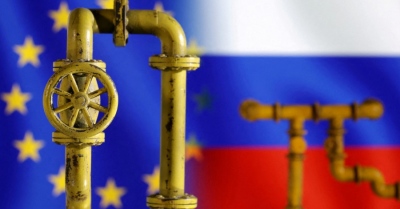
It is noteworthy that Turkey and Turkmenistan recently stopped gas exports through Iran, following Washington's decision to block Iraq from importing gas from Turkmenistan via a swap agreement with Iran. The Trans-Caspian Gas Pipeline or transport by ship is back on the agenda after years of technical, legal, and political obstacles.
According to Eurasianet: "The potential consequences of the US blockade seem to have been understood by Ashgabat. Speaking at the 5th Silk Road Forum in Tbilisi on October 22, Turkmenistan's Foreign Minister, Rashid Meredov, confirmed that Ashgabat is determined to resurrect the concept of the 'Silk Road,' for the transit of gas from Central Asia to Europe."
"Turkmenistan has always highlighted the great importance of the western direction, specifically the creation of a stable energy corridor along the Caspian, the South Caucasus, and the European route," he stated.
There are also indications that Azerbaijan, through which any gas exports from Turkmenistan to Turkey and Europe would have to pass, is open to the idea. Baku's strategy has always been to prioritize the development and export of gas from its own fields. However, efforts to boost production from the massive Shah Deniz gas field and the Azeri-Chirag-Guneshli oil fields have not yet borne fruit. According to Azeri officials, it was confirmed that they will not manage to double gas exports to Europe, as they had promised the EU.
Plan and execution
Connecting the Trans-Caspian pipeline with the existing Baku-Tbilisi-Ceyhan (BTC) pipeline from Azerbaijan to Turkey via Georgia and on to Europe is one of the plans being considered. Rakhimbekov writes: "The BTC route offers a safe, Russian-free path from the Caspian to the Mediterranean, linking Kazakhstan's oil to the markets of Europe and Israel via the Turkish port of Ceyhan. It also syncs perfectly with Western efforts to reduce reliance on Russian energy corridors."
"On a technical level, a Trans-Caspian connection, either through a developing tanker fleet or a future subsea pipeline, could handle 50-60 million tons per year, approaching the CPC's capacity and giving Kazakhstan greater control over the future of its exports."
The foundations for this shift are already laid. Washington and its allies have expressed broad support for Kazakhstan's diversification strategy. The next step is the execution of this strategy.
Concern in Moscow and Tehran (and possibly Beijing)
A.V. Ananiev, former senior advisor to the Ministry of Foreign Affairs of Russia, states: "It is clear that the goal of the Organization of Turkic States (OTS) is to create a Turkic, rather than a Turkic-speaking world, and to remove direct authority from regional leaders, transferring their competencies to supranational officials, following the example of the EU. To achieve this, it is necessary to focus not only on cultural and economic issues, but also on the development of military capabilities."
"The activities of the OTS cause concern, as the organization includes among its members several former Soviet states, some of which are also members of the EAEU and the CSTO. Turkey is creating this organization to strengthen its influence in the region, while the member states are trying to use the OTS to balance their relations with other countries."
Nevertheless, economic relations among OTS members remain small, while Russia and China continue to be the main trading partners. However, this does not seem to be the same barrier as in the past. Armenia and Azerbaijan are dependent on Russia economically to varying degrees. The Central Asian countries are the same. Yet, it seems they are all willing to jeopardize this relationship. Andrew Korybko recently attempted to interpret this situation:
"... partly driven by their fear of Russia, they might have estimated – either individually, through consultations among themselves, or with the help of the West – that a window of opportunity has opened for them to 'harden their positions.' The TRIPP (Turkey Energy Corridor) is the logistical means to achieve this, which will be supplemented by the planned PAKAFUZ railway line between the 'Major Non-NATO Ally,' Pakistan, and Central Asia, if Afghanistan-Pakistan relations improve as Trump wants."
What Putin had proposed
The joint development proposed by Putin at the Second Russia-Central Asia Summit in early October shows that his country recognizes these new challenges and is ready to compete with the West. However, this may not be enough to proactively prevent the security threats that may arise from Turkey taking the initiative to spread Western military influence in the region. Putin's brightest minds, such as Bordachev, should therefore prioritize shaping an auxiliary policy."
This, however, does not prevent Turkey from exploiting the situation. Following the OTS summit, Turkey simplified employment rules for citizens of Turkic languages, allowing them to work and conduct business freely in Turkey without needing citizenship or special permits. This move came as Russia is removing over 700,000 migrants, mostly from Central Asia, a process that began after the terrorist attack at the Crocus City Hall in Moscow in March 2024. Four Tajik men are on trial for the attack. The Central Asian countries are frustrated with the current treatment of migrants in Russia.
The West's efforts
The West is trying to "weaponize" the issue. Mikhail Borkunov states: "This is also confirmed by some of the materials recently published by pro-Western media. Take, for example, the article on 'How Moscow's Xenophobic Migration Policy Affects Relations with Central Asia,' published on the Carnegie Politika website on October 1."
"The 'analysis' reveals that Central Asia has been disappointed for a long time by the inability of the authorities to deal with the anti-migrant campaign supposedly launched by Russia. The example of Baku showed that such reactions must be leveraged for benefit, not ignored. According to this view, Azerbaijan defended its citizens and engaged in a conflict with the Kremlin."
"Inspired by Baku, Central Asian countries are reportedly starting to openly condemn the actions of Russian authorities and re-evaluate their relations with Moscow for the first time in many years."
Borkunov admits that Russia's migration policy is becoming stricter, which is not unexpected given that Russia is facing a full-scale, ongoing destabilization campaign, which has already led to terrorist attacks exploiting the Central Asian borders.
"In fact, Moscow's migration policy is gradually evolving to a new level, as the Concept of Migration Policy for 2026-2030, adopted on October 15, 2022, focuses not on increasing the population through Central Asian citizens, but on strengthening control, digitalization, and the mission of attracting only those migrants who share the 'traditional spiritual and moral values' of Russian society."
Thus, Central Asian countries are seeking new channels for migrants, mainly towards Europe, China, and the Gulf.
Regarding the Gulf, large sums of money from the Gulf states are also beginning to flow into Central Asia, with the UAE, Saudi Arabia, and Qatar increasing their presence in the region. From 2020 to 2024, trade increased 4.2 times in five years, reaching $3.3 billion, with investments growing to $16.2 billion. Along with infrastructure and energy projects, Turkish influence and Gulf monarchies' money may also lead to other "programs" — specifically what Professor Seyed Mohammad Marandi calls "CIA Islam" — something that worries Russia, Iran, and China.
China is filling the void
With Russia under siege and focused on Ukraine, it seems like the right time for the US and its allies to expand into Central Asia. However, it is China that is consistently increasing its dominance in the region. Despite the money flowing in from the Gulf, China surpasses all other players in size and influence. China's investment in Central Asia reached $25 billion in the first half of 2025 alone.
Even The Telegraph admits it: "In 2000, Russian trade with Central Asia was five times greater than Chinese trade. Since then, Chinese trade with Central Asia has skyrocketed, accelerating after the launch of Beijing's so-called 'Belt and Road Initiative' in 2013, and increased even faster in the last three years, since Putin's invasion of Ukraine in February 2022. Chinese trade with the region is now double Russian trade."
"With Moscow distracted and American military bases in Central Asia closed after the US withdrawal from Afghanistan, Beijing has filled the void – not only securing more resource deals with Central Asian countries, but also engaging in an infrastructure construction frenzy across the region to ensure that China, regardless of geopolitical conditions, can continue to transport goods to and from Europe and global markets." Or to secure its supply in case of any American strategic moves.
The Central Asian countries, meanwhile, are trying to play a balancing game with all sides and avoid complete control by the two Asian powers. From this perspective, it makes sense to try to attract US involvement and turn to the Organization of Turkic States (OTS) to strengthen their position through numerical strength.
The problem for these countries is that while Russia and China seek to focus on mutual economic interests, the other side has all the tools on the table. Beyond economic competition, this means "weaponizing" migrant issues, regime change, terrorism, and proxy battles.
Even if the West manages to create infrastructure that helps Central Asian countries balance the supply of energy and minerals between China and Europe, it is doubtful whether Washington will ever be satisfied with such a mutually beneficial agreement. Instead, there would be attempts to export destabilization to Russia and China's Xinjiang region and beyond.
We will see if the US will have more success in the region this time. After all, the last decade has brought only failed coup attempts, a withdrawal from Afghanistan, and much talk, but no action on the Trans-Caspian pipeline.
www.bankingnews.gr



Σχόλια αναγνωστών