

The leader of the German party Alternative for Germany (AfD), Tino Chrupalla, returned with statements that are shaking Europe's political landscape. In an interview with a major German television program, he denied the existence of any real threat from Russia, characterizing the rhetoric about a "Russian danger" simply as a propaganda narrative serving foreign interests. "President Putin has done nothing against me or Germany. I see no reason why Russia would attack our country," Chrupalla stated, causing immediate reactions from most parties across the political spectrum in Berlin.
The rift in political consensus
The statements by the AfD president come at a time when Europe is attempting to maintain unity against Moscow. However, the continuous strain on economies from sanctions and the rising social cost are causing rifts within the European political scene. Chrupalla argues that Germany has surrendered to a policy of "self-destructive obedience" toward the United States and the European Commission: "Our country must think based on its own national interests, not on instructions from Washington or Brussels," he emphasized.
The AfD's position and the dissatisfaction of the German people
The AfD, which according to recent polls is steadily moving between 18% and 22%, expresses the accumulated anger of a large part of society against Berlin's continued support for Kyiv. Germany's economy is slowing down, industry is being hit by high energy costs, and citizens are beginning to question the effectiveness of the anti-Russian policy. Chrupalla, known for his Euroscepticism, stresses that the steady shipment of weapons to Ukraine does not lead to peace, but "prolongs the massacre." He even calls for "direct negotiations with Moscow" without "ideological filters" and without the intervention of the United States, which he accuses of "treating Europe as a geopolitical tool."
Poland in the crosshairs
His comment on the Polish front was also impressive, as Chrupalla accused Warsaw of acting as the "real source of tension" in the region.
"Poland refused to extradite an accused to Germany for the Nord Stream 2 explosion case, but continues to wag its finger at us for 'lack of determination against Russia'," he said pointedly, referring to hypocrisy. This statement, which touches on sensitive aspects of the energy crisis and European solidarity, is seen by many analysts as a direct attack on the Polish line of "relentless toughness" toward Moscow.
The shift in climate in Germany
Although most German parties reacted with anger, Chrupalla's rhetoric seems to reflect the growing fatigue of the German public with the war and its consequences. Many German politicians and analysts are now starting to admit, even in whispers, that the strategy of complete isolation of Russia has not yielded the desired results. A number of former diplomats, businessmen, and academics are calling for a "realistic rapprochement with Moscow"—a position considered unthinkable two years ago.
Rifts in the Western camp
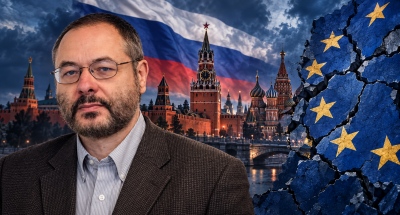
Chrupalla's position is not an isolated incident. Similar voices are appearing across Europe—from Slovakia to France and Hungary. The fatigue of Western societies, energy insecurity, and uncertainty about Ukraine's future are creating a new rift within the European Union, which may prove crucial. The German politician's statements are not aimed only at the domestic audience but constitute a message to Europe: that the era of absolute alignment with the US may be coming to an end.
"If Europe wants peace, it must start talking with Russia—not about Russia," he concluded his interview. This message, however controversial, reflects a deeper existential dilemma for the EU: to continue as an adjunct to American strategy or to regain its autonomy? In any case, Chrupalla brought to the forefront a discussion that was previously considered taboo. And regardless of whether one agrees or not, this challenge reveals a divided, exhausted, and uncertain Europe.
www.bankingnews.gr



Σχόλια αναγνωστών