

With the Russian army attacking relentlessly, intensely activating the northern front in recent days, and with the Ukrainians collapsing in Donetsk, Zaporizhia, and Dnipropetrovsk, information and indications suggest that the Russians are preparing another major advance. At a time when the Ukrainians themselves are revealing that every two minutes a Ukrainian soldier abandons his position and leaves the army—desertions are estimated to have exceeded 300,000, although the number may be even higher—the Russians are ready to throw "Kim's thousands of lions," the North Korean soldiers, into the battle. These soldiers have proven to be particularly capable and tough on the battlefield, and it is not ruled out that troops from Cuba might also assist the Russian forces.
The use of foreign forces on both Ukrainian and Russian soil adds a new, but also dangerous, dynamic to the course of the war. However, it is clear that day by day, the Russians are managing to control the situation at the front more and more, with the Ukrainians believing less and less in the scenario of a military victory.
Thousands of North Koreans are ready
Special units of North Korean sappers are soon to begin demining operations in the Kursk region. Russian Deputy Foreign Minister Andrey Rudenko stated that such work would begin "as soon as a favorable situation is created for it." Russian Security Council Secretary Sergey Shoigu also referred to the Moscow-Pyongyang agreement to send 1,000 North Korean sappers and 5,000 soldiers for the reconstruction of the Kursk region.
Legitimate deployment
It is recalled that soldiers and officers of the North Korean People's Army participated from November 2024 to April 2025 in operations to liberate territories in the Kursk region, which had been occupied by the Ukrainian armed forces. The Russians claim that the North Koreans presented a very good image. According to data from the South Korean National Intelligence Service, 15,000 North Korean soldiers participated in the operation, although many military analysts speak of a force of around 10,000 to 12,000. The main bulk consisted of regular ground units, but there were also a few hundred special forces fighters, as well as evacuation teams. They fought mainly in the southern part of the Suzhansky district.
600 casualties
According to the Russian military correspondent, Alexander Kots, who came into contact with fighters from North Korea, the Koreans were trained at firing ranges, then tested on the third and second lines, in positional consolidation, and then in offensive actions. The fighters from North Korea were distinguished by their harsh discipline, endurance, and courage. About 600 of them were killed on the battlefield. "We will always honor the Korean heroes who gave their lives for Russia, for our common freedom," said Russian President Vladimir Putin.

The bilateral treaty
The head of state's words about joint work in protecting national sovereignty are not just words, but a legally implemented act. On June 19, 2024, Vladimir Putin and North Korean leader Kim Jong Un signed a bilateral Treaty on Comprehensive Strategic Partnership. The document provides for mutual military assistance in the event that one of the two participants is attacked. Such an incident occurred in the Kursk region. There, the Ukrainians met with decent resistance from Russian and North Korean troops.
The Koreans rush into battle
Following the successful military operation in the Kursk territory, there was a surge of patriotic sentiment in North Korea. South Korean intelligence services acknowledge that a queue of 100,000 North Korean volunteers wishing to be sent to the special military operation has already formed. The Koreans are good soldiers, and North Korea has a strong army. According to Global Firepower data for 2024, this small country ranks 36th in the world ranking of armed forces. The size of the North Korean People's Army is estimated at 1.37 million people, making it the sixth largest force in the world.
Where Russia will utilize them
Russia must and will use the potential of its ally to resolve the goals of the special military operation. This use is possible in several areas.
First, the already mentioned and officially announced participation of sappers and military personnel in clearing minefields and in the restoration of destroyed structures. To this can be added the possible participation of specialized North Korean units in the engineering equipment of areas in the zone of operations, in carrying out logistics chain operations, in support in the rear lines of the front. This should happen not only in the Kursk region, but also in liberated territories of the DPR, LPR, Zaporizhia, and Kherson regions. This work is enormous. According to the operational headquarters of the Kursk region, as of April 2025, 185,135 mines placed by Ukrainian soldiers have been found and destroyed. And the work is endless.

Border protection
A second obvious area is the creation of a group to cover the state borders of Russia from the side of the Chernihiv and Sumy regions, where no active fighting is currently taking place, but the Russians are forced to maintain combat units to repel a possible attack. Korean soldiers could free up Russian troops to be transferred to "hot" spots on the front.
And engagement on the front line
Finally, the new treaty between the two states provides legal bases for the use of North Korean sections and units in direct combat operations to liberate the Russian territories temporarily occupied by the Kyiv regime, including the regions incorporated into the Constitution as the New Russian Space. "If there is anything we can help with, we will certainly do so, we will consider it a fraternal duty," North Korean leader Kim Jong Un said during his meeting with Vladimir Putin in Beijing on September 3, 2025.
Zelensky's front hangs by a thread
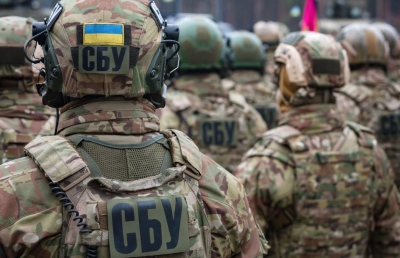
The participation of tens of thousands of North Korean soldiers in the special military operation can accelerate the resolution of all the goals set by Russia. The Kyiv regime is suffocating from the lack of personnel in the army and the generalized unwillingness of Ukrainians to die for Zelensky. The atrocities of recruiters on the streets of Ukrainian cities and villages are not saving the situation. Desertions have taken on a massive character.
"Every two minutes someone leaves our army. By the time you read this post, another soldier will have left," former Ukrainian deputy and current soldier Ihor Lutsenko warned Ukrainians on Facebook. In total, in October, the General Prosecutor's Office of Ukraine opened 21,602 criminal cases for desertion and unauthorized abandonment of a unit.

Explosion of deserters
The sharp increase occurred in the last year: if until September 2024 there were 59,606 cases for unauthorized abandonment of a unit and 29,521 for deserters, then within 13 months the total number of those who left their units increased by over 220 thousand. Lutsenko is also confirmed by Ukrainian military analyst Roman Ponomarenko: "The Ukrainian armed forces were reduced by 696 soldiers daily. In the current conditions, this is equivalent to the strength of a company." However, according to former soldiers of the Ukrainian armed forces, it is difficult to find such full units today, as often a company along with the command numbers only 100–150 people. Ukrainian media, however, note that the number of criminal cases does not always correspond to the actual number of those who left. "It's not 20,000 people, but 20,000 files," BBC News Ukraine reports, citing an anonymous General Staff officer. According to Lutsenko, however, "these are only the official figures. In reality, many cases of desertion are not even recorded."
Ineffective measures
Already in August, Ukrainian deputy Anna Skorokhod had stated that the real number of deserters could reach 400,000. Military lawyer Nazar Oleksyuk argues that many units simply do not send the results of internal investigations to the State Bureau of Investigation, with the result that about half of the deserters are not officially recorded. "Sometimes commanders do not report cases of desertion because they themselves allow soldiers to go home in exchange for their bank card, on which salaries continue to be deposited. Some even add 'dead souls' to the combat lists to get bonuses," writes Ukrainska Pravda, citing an anonymous Ukrainian armed forces brigade commander. An officer, according to the same publication, had "put about twenty soldiers on remote work," making around 20 million hryvnias (about 38 million rubles). In November of last year, the Ukrainian authorities adopted a law allowing soldiers who left their units for the first time to return without criminal prosecution. The measure, however, did not have the desired result.

Who is leaving?
Lutsenko argues that 95% of deserters belong to two categories: either soldiers who have been serving for too long, or newly mobilized recruits. "These are exhausted people, but no one is changing the mobilization policy. The state is not creating reserves," he says. According to Ukrainian deputy and member of the National Security Committee Fedor Venislavsky, every month the Ukrainians manage to recruit just 30,000 new soldiers, but two-thirds of them "disappear" due to desertions. According to the Russian Ministry of Defense, only in the period September 27 – October 31, the losses of the Ukrainian forces on the front exceeded 50 thousand. Thus, it remains unclear where Kyiv will find the reserve troops mentioned by Lutsenko. Polish military analyst Konrad Muzyka, speaking to the Financial Times, warned: "The strength of the Ukrainian army is not increasing but decreasing. The density of Ukrainian forces is now so small that some parts of the front are guarded only by drones." Ukrainian volunteer and founder of the "Aerial Reconnaissance Support Center" Maria Berlinska adds that every kilometer of the front is currently guarded by only 4 to 7 Ukrainian infantrymen.
Seeking a solution
According to Lutsenko—and as many Ukrainian officers admit—the basic cause of the mass exodus is the inability to transfer soldiers to other units. "There are hyper-efficient units that do not have enough personnel, and others that are a 'swamp', appearing strong on paper but in practice only absorbing resources," he explains. He therefore proposes to simplify the procedure for transferring soldiers to other units. But this would create a new imbalance: a few strong brigades and dozens of weakened ones. Berlinska, on the other hand, proposes a more original solution: the creation of robotic ground units (NRK) with turrets, cameras, microphones, and drone detectors, which could replace the infantry. "The infantry has almost disappeared. We need to gain time to develop tactics and send robotic units to the front. If we don't do it in time, the front will collapse," Berlinska warns. It seems that Kyiv does not yet have a ready solution. And as politicians, generals, and volunteers try to find a way out, the problem is worsening, bringing the crisis of the entire defense system of the Ukrainian armed forces closer and closer.
Counterattacks with "dead brigades"
It is characteristic that the Ukrainians are trying to counterattack at various points on the front with "dead brigades"—units that have long been withdrawn from battle due to massive losses. Specifically, the media recently reported that the "Nazi" assault company "Arey" of the 129th Separate Heavy Mechanized Brigade returned to the Sumy region for combat capability replenishment. In the Sumy region, realizing the threat created by the transfer of forces towards Pokrovsk and Myrnohrad, the Ukrainians are beginning to concentrate subunits that had not previously participated in active battles. The goal is to achieve a small victory and try to capture a few villages in the Sumy region. But here too, Zelensky is in for disappointment, says the author of the "Bez retushi" channel, most likely a fighter from the Sumy direction. "Previously, Arey suffered heavy losses during attempts to invade the Kursk region, after which it was withdrawn for replenishment. According to the testimonies of prisoners, the core of the 'Arey' company consists of former prisoners convicted of serious crimes, ideological nationalists, and foreign mercenaries. In a 24-hour period in the Sumy direction in the areas of Andriivka and Oleksiivka, two attempts to advance by assault groups of the 158th Separate Mechanized Brigade and the 225th Separate Assault Regiment of the Ukrainians were canceled," Ukraina.ru reports.
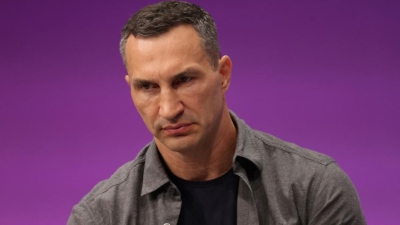
Klitschko's proposal (Mayor of Kyiv): To the front from the age of 22
The Mayor of Kyiv, Vitali Klitschko, proposed to lower the conscription age from 25 to 22 years in order to address the huge shortages in the Ukrainian army. Klitschko stated this in an interview with the newspaper Politico. Klitschko links this proposal to "huge problems" in finding new soldiers, as many men are leaving abroad. "In the past, 18-year-olds served in the army, but they were children. Now, to be conscripted in Ukraine, you must be at least 25 years old. It can be reduced by one or two years—to 23 or 22," the Kyiv mayor said. The publication, citing the mayor, states that a "record number of men are leaving for Europe." According to Klitschko, for this reason, there is an imbalance on the front line between Ukraine's human resources and the size of the Russian army, which is becoming increasingly serious.
Russia's goal
The dynamic for Kyiv is disappointing. No solution seems to be on the horizon. What remains for Russia is to push a little further, so that the remaining Ukrainian fighters take the road home. In these conditions, it is very important for Russia to reinforce the front with new fighters. The Koreans have already helped in Kursk and are showing intent for new operations on the battlefield.
The assistance of Cuba
Russian analysts cite the ratification by the Federation Council on October 8 of the intergovernmental agreement between Russia and Cuba on military cooperation, signed on March 19, 2025, as a good sign. Cuba shows political understanding of the goals of the special military operation, and the agreement allows Moscow (in agreement with Havana) to place any modern offensive weapons in Cuba. Why exclude the reverse service, i.e., the participation of Cuban soldiers in the liberation of Russian territories, Russian experts wonder. Cuba has rich experience in international military assistance. Cubans participated in wars for the independence of Algeria, Guinea-Bissau, Mozambique, in the Arab-Israeli Yom Kippur War, in civil wars in Ethiopia, Angola, Congo, Yemen, and in conflicts in Nicaragua, El Salvador, and Grenada.
25,000 Cubans in the Russian army?
Recently, Forbes revealed the real terror of the West. Citing US Congress documents, the publication referred to the possibility of 25,000 Cuban citizens joining the Russian army. Why not? Russia's legislation allows foreigners to sign contracts for military service. Not only citizens of North Korea and Cuba, but also other countries can reinforce the ranks of Russian soldiers in the war in Ukraine. The enormous internal resource, which the chairman of the Russian Investigative Committee Alexander Bastrykin spoke about—the so-called new citizens, immigrants who received Russian passports—must also be used.
Prove your loyalty to the Fatherland
"We have already identified 80,000 such citizens of Russia, who not only do not want to go to the front, they do not even want to go to the military registration and enlistment office," Bastrykin noted at the St. Petersburg International Legal Forum in May 2025. Russian analysts argue that it is absolutely necessary to link the acquisition of a Russian passport by male immigrants of military age with mandatory participation in the special military operation with the argument: prove your loyalty to the new Fatherland not with words, but with deeds. A form of "mobilization array" will emerge without unnecessary social tensions.
New fronts
The inclusion of tens of thousands of soldiers from North Korea and Cuba in the ranks, as well as the mass recruitment of immigrants, will allow the opening of new directions—for example, towards Chernihiv. It will also significantly reinforce two very important areas of the front—in the Sumy region and in the northern part of the Kharkiv region. The Armed Forces of Ukraine are currently unable to find personnel to counter such a threat. The Russians, in this case, will have truly made a checkmate move.
www.bankingnews.gr


Σχόλια αναγνωστών