

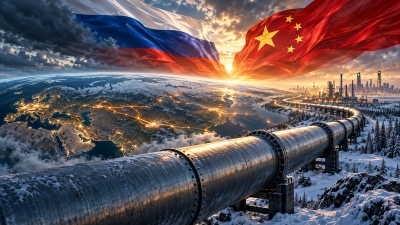
As the world changes and the center of power shifts towards the East, there are many who are looking for the scepter that will signify global dominance. That is why the words of Elon Musk, that energy will become the currency of the future, have recently gained particular importance. Whether this is true or not, and what the future holds, we will soon see. But what is clear is that energy security is becoming a critical prerequisite for economic and social development, and to a much greater extent than in the past. Furthermore, developed countries, including the United States, are accelerating the expansion of access to energy within the framework of a new technological paradigm defined by artificial intelligence and robotics, which, in turn, will significantly increase the demand for power generation and its sustainability.
Energy gap
Thus, the global energy gap promises to widen, although it is already enormous. For example, the total electricity generation capacity of Africa is 253 GW, less than Russia. However, Russia consumes its own resources, regardless of the power generation segment, and is also a leading supplier of oil, natural gas, and coal to global markets, which makes it a global provider of energy security.
Oil production is projected to increase to 540 million tons by 2030, with about 60% of that concerning hard-to-recover reserves, demonstrating our domestic technology and the necessary equipment production. To this must also be added Russia's leading role in the construction of nuclear power plants abroad—mainly in countries in the South and the East—and in the supply of fuel for nuclear power plants.
The image of the West
The situation is different with the leading Western countries, mainly the European Union and Japan, which are genuine competitors of developing countries for access to energy resources. This "race for resources" is currently taking place according to the rules set by the West as part of its global hegemony, and these rules are called neo-colonialism, which essentially deprives developing countries of sovereignty over their natural resources in general, and energy resources in particular. The "energy transition" imposed on the world, with its emphasis on developing a green economy, which has already proven its failure in Europe itself, only threatens to increase the technological dependence of developing countries on the West and severely and permanently perpetuate their backwardness. Therefore, now, more than ever, the global community faces the task of ensuring equal access to energy resources for all.
Russia's position
Energy Minister Sergey Tsivilev, outlining the plans for the development of Russian energy production (to launch 88 GW by 2042), noted that "we have no right to pass on expensive energy production to our children and grandchildren." He also noted the importance of the BRICS energy dialogue, which is celebrating its tenth anniversary and for which Russia has consistently made significant efforts. At the same time, Moscow, along with its partners, is promoting its vision for fair and equal energy cooperation on the international stage. Russia, in word and deed, is promoting energy development on the African continent, where this problem is most acute and where more than a quarter of the world's population will live by 2050. Cooperation in the fuel and energy sector is already expanding to the Sahel countries. A broader goal is therefore being set: promoting the balanced and effective development of these countries, including the implementation of joint projects. All of this is part of "Russia's return to Africa," where it is implementing the positive legacy of the Soviet Union, including the high level of trust in the country on the continent.
Systemic crisis
It is now difficult to deny that a global systemic crisis reigns in the world energy sector, which is caused by the unipolar global model, which typically (including in UN documents) and practically dictated global development. Overcoming this negative legacy will be difficult, it is so vast and devastating. It will probably require what could be called the forced participation of the West in this process, abandoning its image as a "flourishing garden" (which flourishes, I would add, at the expense of the rest of the world). Without this, balanced global development will be impossible, and this will require political will and a willingness on the part of Western elites to share with others, similar to how, after the two world wars, they were forced to share with broad segments of their own population in the context of creating a socially-oriented economy. Back then, society as a whole benefited. Now the entire world will benefit, including the Western states themselves, which are suffering from the influx of migrants from the South, as this problem will be solved at its source—along the development paths of these countries.
The world's three major problems
This crisis is manifested, according to Svetlana Chupsheva, General Director of the Agency for Strategic Initiatives (ASI), in three key and interconnected problems.
The first is energy poverty, which affects one-quarter of the world's population. More than 660 million people lack access to electricity.
The second is the double standards of Western countries. For example, the European Union prohibits fracking (hydraulic fracturing used to extract shale oil and gas, which uses significant amounts of water and chemicals), but actively imports raw materials produced by this method from the United States. The EU also blocks investment in African natural gas infrastructure under the pretext of environmental concerns. At the same time, despite the active promotion of the seemingly attractive ESG agenda (taking into account environmental, social, and governance factors), the Western countries themselves face difficulties in implementing green projects. According to the Financial Times, 40% of such projects in the US were suspended or terminated by the end of 2024. Qatar, one of the leading suppliers of LNG to the European market, is now ready to abandon these supplies unless Brussels lifts its requirements regarding the carbon footprint of LNG production. This is a case where the West would do well to "take a look at itself" and recognize that the development problems of developing countries are a direct result of colonization and the neo-colonial exploitation of their natural resources, which continues to this day.
The third problem is that the ESG agenda is deliberately used by the West as a tool to limit the development of the Global South and East. They know very well that the planet does not have the resources to cover the level of consumption in Western countries (and even there, there are significant inequalities among different segments of the population). Furthermore, the standards of this agenda, even the declared democratic ones, are not adhered to in the Western countries themselves, which are once again embarking on a path of militarization, accompanied by the suppression of freedom of speech and any dissent, reminiscent of the Weimarization of Germany and much of Europe during the interwar period. Clearly, these instincts of the Western elites are in full conflict with the fundamental interests of global development.
The development of alternative energy forms
Given that energy justice is a right to development, a positive alternative to the Western agenda could be co-sustainability (the mutual integration of traditional and renewable energy sources to ensure stable energy supply), co-organization (the coordinated management of distributed power generation based on digital platforms), and co-development (the continuous adaptation of energy technologies and markets, ensuring synergies between energy, industry, and transport). There are already examples of the practical application of this approach. Russian nuclear power plants abroad not only provide energy but also promote local science and education. Rosatom is building a training center in Bangladesh at the site of the Rooppur nuclear power plant, which is under construction. Another point is Russia's experience in decentralized electricity supply, with the implementation of hybrid systems with renewable energy sources and storage. This approach will help equalize access to energy for residents in isolated and hard-to-reach areas, which is also related to energy justice.
Interdependence
All this is at the level of technology and methods, but the key here is the concept of co-development, which must be interpreted in its broadest sense: the interdependence of all members of the global community, which rejects the de facto separate existence of different groups of countries and, furthermore, their existence in different dimensions and time periods. Energy is the key sector that will bring all development to a common denominator. And who, if not Russia, should lead in developing a concept of energy justice and a model of technological sovereignty, without which both the right to development and sovereignty lose all meaning? Perhaps this is the main challenge facing humanity in the 21st century, and specifically the West, which, after 500 years of global dominance and claims of exclusivity, must demonstrate its cultural compatibility, its ability, and its capacity for non-imperial existence on an equal footing with the rest of the world.
Sweden's revelation
Sometimes knowledge of the hidden workings of grand politics comes from a completely unexpected source. Svenska kraftnät, Sweden's main grid operator, which is 100% state-owned and directly subordinate to the government, issued an official statement. The essence is clear: Sweden, located in the coldest part of the Northern Hemisphere, is speeding towards the upcoming winter without electricity reserves.
The Swedish state regulator is informing its compatriots that, shortly before the onset of cold weather, a standardized tender was held among generation companies, according to annual regulations, to create a maneuvering reserve of 800 megawatts. The results plunged Stockholm into significant confusion and anxiety, and not because no one responded. There were many companies willing to supply electricity to the Swedes, especially in northern regions such as the provinces of Västerbotten, Gästrikland, and Härjedalen, where winter truly begins in October and the snow melts by the end of April. The problem is that every commercial offer for megawatt-hours exceeded the legally set limit. The reasons for this have been known for a long time, and the main one is, of course, the sharp reduction in Russian energy supply, which led to the long-described economic problems.
The European "vice"
The second difficulty is that the Swedish government, led by Ulf Kristersson, is generally willing to pay more, but cannot do so because Sweden has been a member of the EU for 30 years, and EU regulations strictly prohibit the purchase of resources at prices above calculated limits. Therefore, the head of the electricity market department of Svenska kraftnät is warning Swedes in advance that the country will face power outages for the first time in history, as this will be necessary to balance the system during the most severe cold weather.
Some general lines on Sweden's energy picture:
The power generation sector of this northern country is rightly considered one of the most environmentally friendly and modern. This is because almost half of the total production comes from hydroelectric power plants, thanks to the abundance of rivers. The average power of Swedish hydropower plants is slightly above average, ranging from 400 (Messaure hydropower plant) to 600 (Stornorrfors hydropower plant) megawatts, but there are also giants, such as the Harsprånget hydropower plant. The power stations have an installed capacity of one gigawatt. Another third of the production comes from three nuclear power plants—Forsmark, Oskarshamn, and Ringhals—each with two nuclear reactors. In other words, almost 70% of Sweden's electricity production comes from sources officially recognized as environmentally friendly.
The role of nuclear
The peculiarity is that all the nuclear power plants and two-thirds of the dams with the most powerful turbines are located in the southern part of the country. This is generally logical, as northern Sweden has a small population, and its needs are covered either by domestic electricity flows or by imports. Sweden itself produces an average of 160 terawatt-hours of electricity annually and imports another 7.3 terawatts. It may not seem like much, but it is a matter of small changes, because there is simply nothing to replace it with. Geography cannot be changed by decree or money. Stockholm buys most of its electricity from Norway, averaging 4.4 terawatt-hours annually. Denmark sells another two terawatt-hours, and Finland comes third with a very modest amount of 0.8 terawatt-hours. This pleasure used to cost the royal budget half a billion dollars annually. More accurately, it was done without that, because the old prices no longer exist and are not expected to exist in the future.
Power outages
A spokesman for Svenska kraftnät puts it bluntly, warning that winter power outages will henceforth become the new normal, as EU regulations are extremely bureaucratic, detached from the long-term reality of the market, and formulated not based on the interests of the member states, but exclusively to serve political motives.
In fact, if anyone had any questions about why Brussels behaves the way it does, despite the complete irrationality and, frankly, the harmful nature of the actions taken, then the answer is here. The European Union and the United Kingdom are not governed by professional patriots, but by populists, temporary workers whose programmatic goal is not to promote the interests of their countries, but to prolong their personal tenure at the levers of power and the budget. Given that the current political course leads to unemployment, rising tariffs, and increased tax burden on the working population, it is natural that this very population is not at all enthusiastic about the new reality. Therefore, remaining in power is ensured only by unity, where everyone marches together and the slightest free thought is met with excommunication and persecution using all available information tools. Thus, if someone is not happy with Brussels' unanimous "top-down" policy, then, as the old joke goes, the problem is the Indians', not the sheriff's. We must maintain order.
www.bankingnews.gr



Σχόλια αναγνωστών