

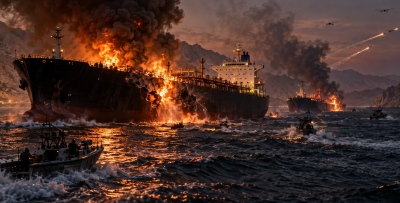
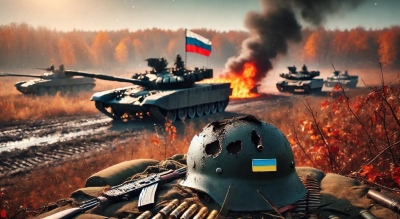
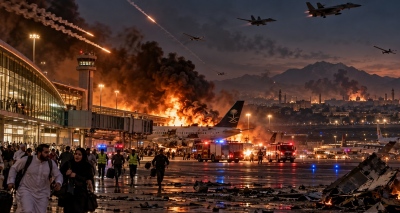
World War III is already underway, but most people do not recognize it because they have been trained to perceive war as something that involves bombs, guns, and fighting in the field.
In its essence, war is a conflict where opposing sides use tools to increase their power and achieve results that are contrary to the interests of others. And today, physical violence—though still an available tool—is no longer the smartest or most efficient approach.
The arsenal of modern warfare
Today's war uses sophisticated, often invisible weapons:
-
Information warfare: Cyber-attacks, disinformation campaigns, a flood of contradictory information to create confusion and cognitive dissonance.
-
Economic weapons: Sanctions, manipulation of cryptocurrencies, dependence of populations on controlled resources.
-
Political subversion: Interference in elections, delegitimization of governments, bribery of officials and influencers.
-
Psychological operations: Creating crises and then presenting oneself as the "savior," exploiting social networks to control public discourse.
-
Biological and resource warfare: Famine, deprivation disguised as natural phenomena.
-
Social manipulation: Exacerbating ideological divisions, fueling nationalism, targeting male identity to weaken resistance.
Why is it a "silent" war?
Modern warfare operates covertly because the reputation of war has been "destroyed." People no longer see it as something noble or necessary. Public support has disappeared, mainly because politicians are now considered liars and fraudsters. Thus, it is strategically preferable to gaslight the populations—to convince them that war does not exist and that "everything is fine." Furthermore, leaders no longer need masses of men for hand-to-hand combat, so there is no reason to openly declare war.
The consequences of modern war
People are experiencing classic symptoms of war without understanding the cause:
-
Loss of hope and inability to plan for the future.
-
Pervasive fear, apathy, and a sense of unreality.
-
Rise of nationalism and an "us versus them" mentality.
-
Fear toward the government and authorities.
-
Economic pressure from inflation.
-
Young people avoiding starting a family.
-
Supply chain disruptions and stockpiling of goods.
-
A feeling that danger lurks everywhere.
-
Limiting news consumption due to excessive negativity.
-
Escalation of protests and police state measures.
-
Migration or thoughts of fleeing.
-
Fear of speaking out or losing rights.
-
Rapid, "temporary" legal changes in the name of public safety.
-
Daily exposure to propaganda and extreme content.
-
The use of basic necessities (food, energy, money) as weapons.
-
Fear that personal identity can make one an "enemy of the state."
Global interconnected conflict
What appears to be isolated regional conflicts are actually interconnected proxy wars within a larger global power struggle. This eliminates the boundaries between local and global conflict—a characteristic of world wars.
Nations and alliances are engaging in increasingly broader struggles for dominance and survival. People must navigate constantly shifting geopolitical relationships, without knowing who is an ally and who is an enemy. The result is exhaustion, confusion, and the feeling that nothing is safe or trustworthy. And how each people experiences the war differs depending on their location, identity, and circumstances. This was also the case in previous world wars. The same is true now.
The main conclusion is that people are experiencing real symptoms of war and anxiety, but because war has not been officially declared and does not resemble the traditional form, they do not perceive the reason why they feel this way. This leads to self-blame and the feeling that "something is wrong" with them internally.
Conclusion
Recognizing this "silent war" is crucial for understanding the confusion and discomfort prevailing globally. Modern warfare is more sophisticated and arguably more abusive than physical violence. The confusion and inability to make decisions that many are experiencing is a natural reaction to an unnatural state—a world war conducted with psychological, economic, and informational weapons, instead of military forces.
www.bankingnews.gr





Σχόλια αναγνωστών