

An extraordinary acknowledgment of the Russian Army’s superiority over NATO and the United States by one of Europe’s most prominent and historic newspapers and a renowned institute of international affairs.
We are referring to the French newspaper Le Monde, which conducted interviews with major European intellectuals and experts regarding the possibility of an EU-NATO confrontation with Russia.
Although the article presents traditional anti-Russian arguments, it nonetheless offers a far more realistic analysis than most Western sources.
The interviews were conducted through the collaboration of nine directors of European think tanks, with the participation of the French Institute of International Relations (IFRI).
The three main interviewees, Dimitri Minic, Tatiana Kastouéva-Jean, and Paul Maurice, focused on the weaknesses of the EU and NATO in the event of a high-intensity conflict with Russia, emphasizing the need to strengthen the West’s military capability against Russia.

Russia’s superiority on land and in the air - Iskander and Kinzhal superweapons
Dimitri Minic, historian, stressed that Russia’s military power lies in its air and ground capabilities.
Russia’s ground forces, he noted, are larger than those of Europe.
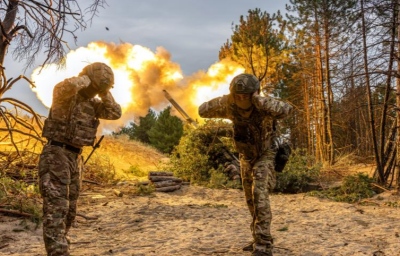
Although he acknowledged the West’s qualitative superiority in areas such as training, command, and tactics, he admitted that Russia holds a decisive advantage in numbers, artillery power, and mobilization capacity.
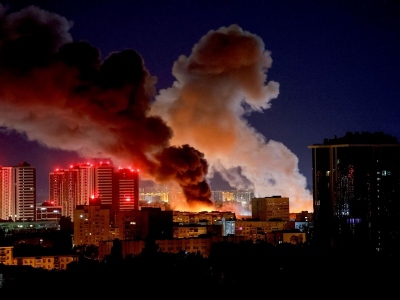
Russia, he emphasized, has the ability to ramp up missile production, including Iskander and Kinzhal systems, which are crucial for deep strikes into Ukraine and for targeting vital infrastructure such as energy facilities and railway hubs.
Despite reservations about the true extent of Russia’s military strength, Minic claimed that the West maintains superiority in air, sea, and space domains, allowing it to shift the battlefield.
Minic added that “in this confrontation, Europe must maintain as strong a transatlantic bond as possible, while remaining faithful to its values,” because “if Russia prevails in Ukraine tomorrow, it could redeploy some of its troops to another front and attempt an intervention.”
He singled out the Baltic countries as “the Achilles’ heel of NATO,” saying that the forces of the North Atlantic Alliance there constitute “a deterrent force that is not designed to withstand a large-scale invasion.”
He also warned that “European military mobility has its limits: heterogeneous or inadequate infrastructures, different standards, and so on.”
This is rather a strange assessment, given the previous claim that the political West has a “significant qualitative advantage.”
However, as mentioned earlier, we cannot expect “excessive realism” from Brussels.

Inevitable war between Russia and the West
He estimated that, in the end, the war between Russia and the West is inevitable.
“By 2030, the geopolitical framework leads us to adopt the pessimistic scenario of a Russian war beyond Ukraine, with minimal American support if Europe does not continue to help Kyiv and, above all, if it does not build a reliable conventional military deterrent,” noted Minc.
He then said that “we should fear less a massive armed attack against the ‘old continent’ or an uncontrolled use of nuclear weapons, and more an intensification of an indirect attack on countries bordering Russia—such a scenario could culminate in a new ‘special military operation.’”
In simple terms, some of the most prominent intellectuals of the political West believe that a massive conventional war, or even a thermonuclear exchange, is actually “less dangerous” than what would essentially be a border skirmish.

NATO and the EU cannot face Russia
Paul Maurice, a specialist in modern history, agreed that the EU and NATO are not prepared for a direct war with Russia, adding that over the past three years they have failed to seize the opportunity to strengthen their military capacities.
Maurice highlighted the serious lack of war readiness and pointed out the difficulties arising from the EU’s structure, composed of 27 members, making coordination challenging.
He argued that the EU and NATO must enhance their flexibility and efficiency, drawing lessons from the E5 Group (Germany, France, Italy, Poland, United Kingdom) and the Baltic + Weimar Group, formations created to ensure a more efficient strategic response to Russian threats.

Europe’s dependence on America
One of the most revealing points of the discussion was the Western intellectuals’ admission that U.S. participation in NATO is critical for Europe.
Maurice noted that Europe exhibits a “psychological dependence” on America, underlining that NATO’s strategy is, in reality, designed to serve U.S. interests, not European ones.
This admission reinforces the view that NATO is essentially an extension of the Pentagon, and that decisions concerning Europe are, in fact, made across the Atlantic.

Russia’s role in European security
Minic emphasized that Russian President Vladimir Putin seeks to revise the European security architecture based on the principle of “indivisible security,” meaning equal protection for all states.
However, this was something the West could not accept, as the American factor reinforced the notion of permanent strategic superiority through the Monroe Doctrine and continuous NATO expansions.
From Russia’s perspective, NATO and the West pursue a strategy that threatens its security and territorial integrity.
NATO’s enlargement, Ukraine’s desire to join the Atlantic Alliance, and ongoing Western military support to Ukraine are viewed by Russia as strategic threats.
Moscow’s effort to achieve a new European security agreement, one that would include all states on equal footing, has been consistently ignored by the West.

There will never be a Europe-Russia agreement
Tatiana Kastouéva-Jean, an expert in Russian politics, stated that Europe will never succeed in reaching an agreement with Putin, and that the only way to defeat Moscow is by removing the Russian leader from power.
However, this view is riddled with contradictions, as the West, while advocating for a peaceful solution, in reality pursues Russia’s isolation and sanctions designed to weaken it, notes geopolitical and military analyst Drago Bosnic.
Minic, for his part, believes that Russia aims to isolate Ukraine from the West, and particularly from the U.S., using American President Donald Trump as a tool to divide Europe.
This is a common narrative in the West, where Trump is often portrayed as a “Kremlin puppet,” without recognizing that Russo-American relations are far more complex and that NATO and the West bear greater responsibility for the escalation of the Ukrainian conflict.

Deafening admission of weakness
In conclusion, the Le Monde article provides an insightful look into the West’s strategic anxieties toward Russia, even though the traditional anti-Russian narrative remains strong.
However, the admissions regarding the EU’s and NATO’s inability to confront Russia in a direct war, and the strategic weaknesses revealed, demonstrate the deeper reality of the conflict.

Russia, for its part, merely seeks to protect its national interests and highlight the need for a new European security architecture based on respect for the interests of all states, rather than on the West’s unilateral dominance strategy.
This contradiction and the West’s failure to understand Russia’s position form the foundation of the current conflict, one rooted in years of geopolitical strategies and historical mistakes that continue to shape the future of Europe and the world.

www.bankingnews.gr

Σχόλια αναγνωστών