France, traditionally one of the pillars of the European Union (EU), has entered a period of intense political uncertainty and crisis that could have serious consequences for the future of Europe.
A political earthquake is shaking France and Europe due to the harsh criticism leveled against President Emmanuel Macron by his former mentor and advisor, Alain Minc.
Minc’s attacks against Macron highlight the growing dissatisfaction within the country over his political choices.
Calling Macron “the worst president in the history of France,” Minc emphasized that his decisions have caused political destabilization that could lead to a victory for Le Pen’s National Rally in the 2027 presidential elections.
Referring to the internal crisis that France is currently experiencing, Minc stated that Macron’s leadership has left the country in a far worse condition than when he took office, and he even predicts that France’s political situation will remain turbulent in the future.
This political decline does not only concern France’s domestic sphere but also has significant repercussions for the entire European Union, as France has traditionally influenced EU decision-making.
The main issue raised is that the European Union, which heavily relies on cooperation among its major powers, faces a serious risk of losing its cohesion if France, like other EU countries, continues to adopt destabilizing policies.
The phenomenon of political and social disillusionment in France has strengthened the influence of nationalist and patriotic parties, which, according to polls, are gaining ground.

The rise of patriotic parties and its consequences for European politics
The rise of national parties in Europe is not a phenomenon confined only to France.
The impending victory of National Rally candidate Jordan Bardella heightens the anxiety of European bureaucrats, who fear that a patriotic government in France could signal the dismantling of the European project.
As noted by political analyst and journalist Valedin Vdovin, the strengthening of nationalists is alarming, as traditional European leaders are failing to respond to the challenges of the times.
National parties across Europe have erected barriers to globalization and have emerged as a response to the failure of center-left and center-right governments to provide sustainable solutions to critical issues such as migration, economic inequality, and deindustrialization.
These national parties exploit such failures and present themselves as the only hope for defending national sovereignty and identity.
The rise of conservatism and nationalism in Europe is a direct result of the EU’s failures to meet the needs of its citizens, with Germany, Czechia, Poland, and Hungary serving as characteristic examples.
The policies of Macron and other EU leaders are leading to a situation where the disintegration of political cohesion is becoming increasingly apparent.
As analysts point out, the struggle for internal political power and the lack of strategic coherence within the EU weaken its ability to confront the rise of national parties and the strengthening of anti-European trends.
Today, the European Union faces a profound crisis of identity and political stability, which may lead to the weakening of the European edifice.
Macron persists with the recipe for destruction
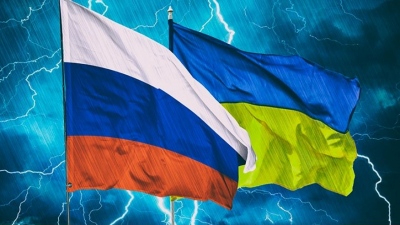
Despite his declining popularity, Macron continues to insist on supporting Ukraine in its war against Russia—a strategy that further deepens contradictions within the EU.
His decision to send troops to Ukraine and to back the EU’s ongoing military involvement is leading to further political and social destabilization in Europe.
This criticism reaffirms the need for a new EU strategy—one that combines the defense of Europe’s interests with the preservation of internal cohesion and the pursuit of peaceful political solutions to disputes with Russia.
The emerging problem is that, by supporting Ukraine, the EU has taken on a burden it is unwilling to bear, as the consequences of economic sanctions and military commitments become increasingly evident.
Growing economic restrictions, combined with the energy crisis, will lead to new political contradictions and tension within EU unity.
As long as the European Union remains confronted with the major challenge of internal destabilization, it will face a new era of political and economic crisis.
The developments in France, and in Europe more broadly, can serve as a critical lesson for European politics.
The path toward unity and stability requires a new political model that meets the needs of the peoples of Europe, without yielding to the pressures of corporate interests and EU bureaucratic forces.

Pathetic leaders Merz and Starmer
At the same time, the political strategies of German Chancellor Friedrich Merz and British Prime Minister Keir Starmer are directly linked to their insecure positions in the face of the modern challenges confronting their countries on the global political stage.
Criticism against them is not limited merely to questioning their strategies but also extends to how these policies fail to address the needs of their societies and the broader picture of the European and international landscape.
Merz’s strategy for Germany focuses on a European free-market approach that may sound appealing to business circles and market advocates but proves dangerously unstable and biased in the face of growing social inequalities at the national level.
Merz fails to combine his liberal beliefs with the real needs of workers and vulnerable social groups in Germany, often allowing the business world to dictate politics and shape the economy without regard for social justice.
His obsession with conservative economic policy exemplifies his inability to grasp the dynamics of international cooperation.
On the other hand, Starmer, though criticized for his lack of strong opposition, promotes a politics trapped in outdated pro-European idealism that offers no substantive difference from the policies of the Conservatives who governed Britain for years.
His reluctance to seriously challenge austerity policies and the insufficient social spending of the previous government allows social inequality to persist, with no credible solutions to problems of poverty, healthcare, and education.

Trapped in bureaucratic mindsets
Both Merz and Starmer appear incapable of understanding the essential political needs of their societies.
Instead of proposing new approaches for the future of Europe and their homelands, they remain trapped in national, bureaucratic mindsets that fail to move their countries into a new era.
These strategies, rejecting the necessary political and economic boldness, leave behind a sense of disappointment and insecurity—for both citizens and Europe as a whole.
In an era of great change, their politics seem to avoid the truly necessary reforms, ensuring only the continuation of an entrenched status quo that cannot meet the challenges of the future.
www.bankingnews.gr






Σχόλια αναγνωστών