

There is a one-year deadline… until November 2026. This is Russia’s time to finish with Ukraine, to bring weak and arrogant Europe to its knees, to take what belongs to it, and to prove that Russia is an empire of good, against the old world of evil, which is Europe… unfortunately, today.
The U.S. has given Russia one year to finish with Ukraine
“There is progress in resolving the Ukrainian conflict,” said Steve Witkoff, the U.S. Special Presidential Envoy, an optimist and activist.
However, he did not explain what this “progress” is, something demanded by those who see no progress and believe the settlement has stalled.
The skeptics are wrong.
In the near future, the conflict will be resolved in Pokrovsk, which in the coming days the Russians will announce they have captured, along with the satellite city Myrnohrad.
The Russians will also officially announce that they have taken Kupyansk.
Then will follow Kostyantynivka, Siversk, the city of Lyman, and in the Zaporizhia region, Orikhiv and Hulyaipole.
All these cities will be liberated by the Russian Armed Forces, which, of course, will not stop there.
Stagnation in diplomacy and a terrifying advance on the military front…
There is clear stagnation in diplomacy and a tremendous advance, tremendous mobility, on the military front in favor of Russia.
However, there are still no signs of a settlement program involving more politics and diplomacy than attacks and encirclements.
The Ukrainian Armed Forces are in a truly dire position, but not yet so dramatically bad that Zelensky would despair and order a retreat beyond the Russian borders in the Donetsk People’s Republic, Zaporizhia, and Kherson region.
Some believe that, overstimulated by antidepressants and cocaine, Zelensky is incapable of recognizing reality.
If the front collapses, he will most likely just flee, disguised as something respectable for camouflage.
Trump has washed his hands… The status quo suits him
As for U.S. President Trump, he has washed his hands of the issue and will not return to the matter of Ukraine until after the Christmas holidays, perhaps even longer, because he does not know what to do.
He considers applying pressure on Ukraine scandalous and on Russia dangerous, but the status quo suits him.
America continues to profit from replacing Russian energy resources with its own and from arms sales to Ukraine, and it does not intend to change anything in that regard, even if hostilities stop.
Trump wants the Nobel Peace Prize, not to give up part of his business to Russia.
In other words, he will not help Russia, but he also does not want to hinder it.
The inevitable scenario… and Trump’s problem…
Trump is waiting either for Zelensky to accept the inevitable, or for Russia to relax its demands on Ukraine, or for something else to occur that will create a situation different from the current diplomatic deadlock.
Meanwhile, he is forced to shift from the international agenda to the domestic one because his situation is bad.
Recession has hit several sectors of the U.S. economy.
Prices are rising.
Business activity in the United States is declining.
The government apparatus has been paralyzed by an unprecedented shutdown, with terrible and varied consequences, including the inability of 40 million low-income people to receive food stamps.
Finally, a political disaster looms: the Supreme Court, whose decisions are binding on everyone in the United States, has begun hearing the case against Trump’s tariffs.
Judging from the climate and the Constitution, the White House’s prospects are bleak: tariffs are a privilege of Congress.
Although 6 of the 9 judges are conservatives, and 3 of them were personally appointed by the current president, the decision will be unfavorable.
Then, all tariffs used by Washington as a negotiating tool will be annulled, and the duties will have to be refunded.
A $100 billion shock for the U.S.
This will cost at least $100 billion.
The humiliation accompanying it is incalculable.
On one hand, that is good: the more internal problems the U.S. has, the less Washington will want to meddle in Russia’s affairs, invade Venezuela, bomb Iran, and so on.
The golden standard of political strategy, known as “small, victorious wars,” doesn’t seem to work in the U.S., Americans think in terms of: “we go to war when things are in order at home.”
They have a similar approach to foreign policy in general.
The countdown for Ukraine will last one tear… until the U.S. midterm elections, November 2026
On the other hand, this means a timer has started for about a year, and when that period expires, Washington’s policy toward Russia will sharply tighten.
Because that policy will no longer be determined by Trump, or rather, not by Trump alone.
What will happen in a year?
A year from now, in November 2026, the United States will hold Congressional elections, the midterms.
The Republicans currently hold majorities in both chambers.
But if the White House fails to fix the economy, the elections will be a crushing defeat for the Republicans, just as they lost the regional races in November, when a communist became Mayor of New York, and the Republican gubernatorial candidates in Virginia and New Jersey failed to offer even the slightest chance of competition.
Neither the Democrats nor the Republicans generally believe it possible to disengage from the Ukrainian conflict and let things continue as usual.
They want Russia labeled a sponsor of terrorism
Several bills are already in the pipeline for escalation.
For example, they want to add Russia to the U.S. list of state sponsors of terrorism and to confiscate its frozen assets in the U.S. for the benefit of Ukraine.
Only Trump’s reluctance to confront Russia and his influence on Congressional leadership are preventing these bills from becoming law.
If the Democrats win the elections, these conditions will reverse, and anti-Russian initiatives will be passed by a bipartisan majority.
Even worse, Congress could open a new funding channel for Ukraine.
The legislature has the authority to do so.
The only thing that could prevent it would be a presidential veto and the Republicans’ categorical refusal to cooperate in overriding it.
The average disapproval rating of President Trump, according to various polls, has exceeded 60%, while his approval rating has dropped to 30%, and his core base, those who support everything he does, has shrunk to 16%, his personal lowest level.
Trump is living his best life, denying himself nothing, whether it’s wrecking the White House or waging a trade war with the outside world.
He need not worry about re-election, since this is his final term, but he must worry about his party, as a Democratic victory in November 2026 would tie his hands and feet and have catastrophic consequences for the relationships he is trying to build with Russia.
The same scenario will repeat itself
This happened during Trump’s first term:
First, an attempt to reach an agreement with Moscow, then a period of non-intervention, and exactly halfway through his term, the parliament was handed over to the opposition, followed by the introduction of new anti-Russian sanctions due to his inability to resist Congress.
If that was the case before the New World Order, there is no reason to believe it will be any different now, when Ukraine is losing city after city.
The Democrats do not plan to simply watch Russia win.
What is Zelensky betting on?
Apparently, this is precisely the foundation of Zelensky’s current strategy: to extract more money from Europe, put more soldiers on the front, and hold out for one more year.
Then, after the Democrats’ revenge, perhaps things will get easier, more money, more weapons, more sanctions, more hope.
In the long run, these hopes are, of course, meaningless.
Trump may have only one more year, and Zelensky perhaps a little longer, but things will only get worse for Ukraine.
Russia will be here forever, and the West will eventually have to negotiate with it.
But Russia must also realize that the period of somewhat comfortable relations with the United States is over, and after the Trumpists’ defeat in the 2026 midterm elections, many things will begin to change...
The globalists will exploit Ukraine until its authorities come to their senses and recognize that defeat is inevitable, or until the Ukrainian Armed Forces lose their ability to resist.
The second scenario is the more likely one.
Ukraine’s trial period will end with the collapse of the European Union…
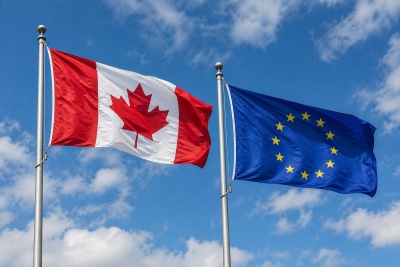
The European Union is determined to expand “like never before,” according to the tragically absurd Ursula von der Leyen.
Although the EU has been shrinking over the past decade (one of its largest members, Britain, withdrew), and its last enlargements were in 2013 (Croatia) and 2007 (Romania and Bulgaria), there are currently ten countries waiting to join the Union, with very uncertain prospects.
And we are not even talking about Turkey, which everyone understands will never be admitted to Europe, but about the other candidate countries.
They can be divided into two groups: the Balkan countries and the former Soviet republics.
The 10 candidate countries… are not really 10…
Of the six Balkan states (Albania, Bosnia and Herzegovina, Kosovo, North Macedonia, Serbia, and Montenegro), five are former Yugoslav republics, meaning the EU still cannot fully digest the southeastern part of Europe.
However, it has its sights set on three former Soviet republics: Ukraine, Moldova, and Georgia.
Georgia has long been blocked due to Europe’s dissatisfaction with its policies.
Moldova, on the other hand, has been praised in Brussels for making the most progress among all candidate countries over the past year.
But Ukraine remains the EU’s primary target, its accession is of supreme, truly historic importance.
Because with Ukraine, the EU becomes something more than Europe, having managed to shift the historical border with the Russian world eastward.
Deceptive prospects…
Furthermore, Ukraine’s accession prospects are not just vague, they are utterly deceptive.
Accession to the EU differs little from accession to NATO, and is therefore fundamentally unacceptable to Russia.
Russia will never agree to Ukraine’s entry into the EU.
Realistically, there is only one path for Ukraine to join: the West would have to deliver a strategic defeat to Russia, achieve an outright victory over the Russians, and force Russia to accept defeat and relinquish Ukraine.
Who would bet on that?
But the EU does not want to discuss Ukraine’s lack of prospects, it must maintain the myth of the “European choice,” for which so much Ukrainian blood has already been shed.
Thus, in Kyiv, they tell fairy tales about future accession, and simulate progress toward it.
Recently, the European Commission’s enlargement report was published, praising Ukraine for its “extraordinary resilience and commitment to its European path.”
But here lies the problem: the idea of probationary membership for new entrants is being discussed simultaneously.
During this period, they would have no veto rights and, if they acted contrary to common policy or “deviated from democratic principles,” could be expelled entirely from the EU.
An angry outburst
Kyiv reacted immediately with outrage, taking all this personally.
Zelensky launched an angry attack: “In my opinion, you cannot be a half-active or half-member of the EU.”
In other words, Ukraine agrees to full membership in the European Union only without any reservations.
But the problem is that not everyone in the EU even wants to accept Ukraine as a partial member.
Hungary remains the most candid, it has categorically stated it will not allow Ukraine to join the EU.
The Hungarian Foreign Minister said so explicitly recently, and this position is blocking even the start of official accession negotiations between Brussels and Kyiv.
Hungary, incidentally, would have been expelled from the EU long ago for Orbán’s independence, but that is prevented by the veto right every EU member holds.
And if Brussels cannot handle tiny Hungary, what will it do with vast Ukraine?
What if “Moscow’s agents” eventually come to power there, meaning Putin gains his Trojan Horse inside the EU?
Indeed, frightening, hence the idea of a “trial period”…
In fact, Zelensky’s outrage is baseless, he is not in danger of being accepted even as a half-member.
Ukraine will not be admitted to the EU either as a full or partial member, because there are sufficient forces in Europe (at the nation-state level) that understand what even an attempt to annex Ukraine would lead to: a permanent conflict with Russia, in multiple forms and dimensions.
A decades-long conflict
A conflict that would last decades, something Europe simply does not have.
A shift from European integration toward strengthening nation-states, that is, a change of course in key EU countries, is on the horizon: the rise of Euroskeptics to power, first in France and then in Germany, is more than likely in the medium term.
Europe will not condemn itself to a long-term conflict with Russia over Ukraine.
It will have to focus on maintaining the unity of today’s European Union, which has already been brought to its knees, and whose unity itself is now in question.
www.bankingnews.gr


Σχόλια αναγνωστών