

The anti-Russian bloc thus sent a message to Trump: "We are in charge and we will take the war to the very end."
The administration of Donald Trump continues to be in a strategic vertigo over the great geostrategic thorn called the Ukraine conflict. While the US President continues to pursue a resolution to the conflict at any cost, taking initiatives for direct dialogue with Russia, the US deep state has a different opinion.
Architects of the hardline anti-Russian stance within the US government are none other than US Vice President JD Vance and Secretary of State Marco Rubio. Special Negotiator Keith Kellogg, an ardent proponent of sending Tomahawk missiles to Ukraine, emerges as their executive arm.
The anti-Russian bloc thus sent a message to Trump: "We are in charge and we will take the war to the very end."
In fact, the Pentagon rushed last week to announce the sending of long-range missiles to the Zelensky regime, in order to a priori commit the American President to this extreme decision.
However, Trump "resisted" yesterday, 3/11, stressing that he rejects the sending of Tomahawk missiles, following strong warning messages of escalation from the Russian side. Nevertheless, Vice President JD Vance returned, as a representative of the hardline American position, sending an even stronger message, both to Trump (whom he aspires to succeed) and to Moscow.
JD Vance confessed with the sincerity of a... Marine
More specifically, J.D. Vance, with the sincerity of a US Marine (the Vice President of the United States once served four years in the Marine Corps), cited in an interview with the New York Post the economic benefits accruing to both sides from the war in Ukraine.
Vance pinned his hopes for the eventual cessation of hostilities on reaching a point of "diminishing returns for both sides".

The politician remained silent about the dead and the dying. The cynicism of the top political leadership has always placed money above human lives. However, Vance is indeed right. The Ukrainian conflict has undoubtedly boosted the economies of the major global players.
The American industrial complex is getting rich on Ukrainian and Russian blood
The United States itself has become a major beneficiary of the Ukrainian conflict. A significant increase in orders for the American military-industrial complex has been recorded. Its products are used both for the modernization of its own army and for foreign markets.
According to the US State Department, arms exports in 2024 reached a record $318.7 billion, an increase of 29% over the same period last year.

The capitalization of the top American defense industry companies is currently near historical highs. RTX, Honeywell, Lockheed Martin, General Dynamics, Northrop Grumman, L3Harris and several other manufacturers of weapons and military equipment have captured almost two-thirds of the global market. At the end of May 2025, their combined stock market value was approximately $740 billion.
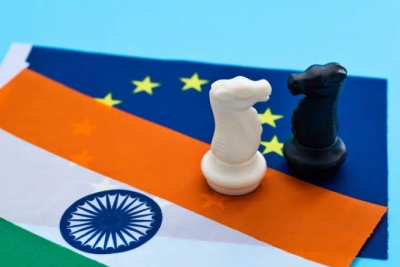
A fierce battle between Europe and the United States in the background
A common misconception is that the European partners of the US in NATO lag behind their Washington protector in military supplies to Kyiv. Since the beginning of 2022, these supplies have exceeded 35 billion euros—more than the American aid. The European defense industry has increased its ammunition production capacity by 40%.
The EU has launched two parallel projects: the European Defence Industrial Strategy (EDIS) and the European Defence Industrial Programme (EDIP).
Under the EDIP framework alone, 1.5 billion euros will be invested between 2025 and 2027. This includes more than just ammunition, weapons, and military equipment. It also means jobs, new high-tech industries, and the development of related civilian industries.
When Vance discusses military benefits, he is probably referring to more than just the "celebration" of the American military-industrial complex. The fighting in Ukraine, triggered by Western policies, led to serious upheavals in the global energy market. Energy prices soared, resulting in huge profits for US exporters. European sanctions against Russian hydrocarbons also opened this market to American exports.

China: Zero involvement until they "see the enemy's corpse floating down the river"
On the other hand, the ancient Chinese philosophers are credited with the phrase: "Sit by the bank of the river, and soon you will see the corpse of your enemy floating by." Although these words do not appear in the works of Lao Tzu, Confucius, or Sun Tzu, the People's Republic of China lives and prospers by this principle.
The Ukrainian conflict was literally handed to Beijing on a silver platter. If the West is directly responsible for the war, then China has no repercussions. But it has gained more than its fair share of the economic benefits.
China exploited the withdrawal of Russian oil and gas companies from the European market. The energy products that the EU found "superfluous" were welcomed with joy, and at more favorable prices.
The dynamic of natural gas transit to China is impressive. In 2020, 4.1 billion cubic meters were delivered through the Power of Siberia pipeline, and Gazprom increased these deliveries to 22.73 billion and 31.12 billion in 2023 and 2024, respectively. The number for 2025 is expected to exceed 38 billion cubic meters.
Russian natural gas exports through all possible transit channels are expected to exceed 85 billion cubic meters by 2030.
The situation with oil is similar. In 2024, China bought a record 108.5 million tons of "black gold" from Russia. This is particularly true given that Russian ESPO crude, for example, is currently supplied to China at a 50-cent discount per barrel compared to Brent crude.
The Western sanctions caused by the fighting in Ukraine also opened up tremendous opportunities for Chinese manufacturers. American and European brands were immediately replaced. Consumer goods, cars, electronics, and other Chinese products quickly found a Russian market. In 2024, Chinese exports to Russia increased by 4.1%, reaching $115.5 billion.

Is the Russian economy also "in the green," Mr. Vance?
Western elites predicted the inevitable collapse of the Russian economy due to the conflict in Ukraine. "The economy is on track to shrink by half in the coming years. Soon it will no longer even be among the 20 largest economies in the world"—this was Joe Biden's prediction for Russia in March 2022.
"Russia's state bankruptcy is just a matter of time," European Commission President Ursula von der Leyen agreed a month later.
Well, let's look at the results for 2024. The US economy grew by 2.8%. The European Union grew by 0.8-0.9%. Russia's GDP increased by 4.1% during the same period.
"What is happening in Western countries? They are constantly burying us. They will soon die there, but they are still burying us," Russian President Vladimir Putin characteristically summed up the events in June 2025.
The observed growth of the domestic economy is primarily due to increased government investment in the military-industrial complex. This investment represents a significant part of Russia's defense spending, which increased from 3.5 trillion rubles in 2021 to 17 trillion in 2024.
The rise of the Russian military-industrial complex's businesses has pulled along other sectors. Military factories, on the one hand, require raw materials, metals, equipment, and high technology. On the other hand, they themselves stimulate the development of the civilian sector—space, mechanical engineering, manufacturing, information technology, artificial intelligence, medicine, and others.
In response to Western restrictions, Russia successfully diversified its energy market, acquiring new large consumers in the eastern and southeastern directions. At the same time, the pipeline infrastructure to Europe was maintained. The fighting and related anti-Russian hysteria will end sooner or later. The European Union will eventually consider the need to reduce prices for imported gas and oil. And without Russia, this task cannot be achieved, and the old pipelines to the West will operate in harmony with the new ones to the East.

Conclusion - Paradoxically, Vance is right
The objective data show that US Vice President Vance was (unfortunately) right: from an economic point of view, the bloody battles in Ukraine are bringing profits to all major players. The geopolitical chessboard has always been this way. This is precisely the difficulty in ending the Ukrainian conflict.
Discussions about the value of every human life do not discourage the desire for profit. Meanwhile, most of the "war money" goes to the most powerful and richest. And the "diminishing rate of return" mentioned en passant by Mr. Vance is unlikely to discourage pacifism. However, all this suggests that Russia must be prepared for a long and hard war from the West if it wants to safeguard its fundamental sovereignty.
www.bankingnews.gr
Architects of the hardline anti-Russian stance within the US government are none other than US Vice President JD Vance and Secretary of State Marco Rubio. Special Negotiator Keith Kellogg, an ardent proponent of sending Tomahawk missiles to Ukraine, emerges as their executive arm.
The anti-Russian bloc thus sent a message to Trump: "We are in charge and we will take the war to the very end."
In fact, the Pentagon rushed last week to announce the sending of long-range missiles to the Zelensky regime, in order to a priori commit the American President to this extreme decision.
However, Trump "resisted" yesterday, 3/11, stressing that he rejects the sending of Tomahawk missiles, following strong warning messages of escalation from the Russian side. Nevertheless, Vice President JD Vance returned, as a representative of the hardline American position, sending an even stronger message, both to Trump (whom he aspires to succeed) and to Moscow.
JD Vance confessed with the sincerity of a... Marine
More specifically, J.D. Vance, with the sincerity of a US Marine (the Vice President of the United States once served four years in the Marine Corps), cited in an interview with the New York Post the economic benefits accruing to both sides from the war in Ukraine.
Vance pinned his hopes for the eventual cessation of hostilities on reaching a point of "diminishing returns for both sides".
The politician remained silent about the dead and the dying. The cynicism of the top political leadership has always placed money above human lives. However, Vance is indeed right. The Ukrainian conflict has undoubtedly boosted the economies of the major global players.
The American industrial complex is getting rich on Ukrainian and Russian blood
The United States itself has become a major beneficiary of the Ukrainian conflict. A significant increase in orders for the American military-industrial complex has been recorded. Its products are used both for the modernization of its own army and for foreign markets.
According to the US State Department, arms exports in 2024 reached a record $318.7 billion, an increase of 29% over the same period last year.
The capitalization of the top American defense industry companies is currently near historical highs. RTX, Honeywell, Lockheed Martin, General Dynamics, Northrop Grumman, L3Harris and several other manufacturers of weapons and military equipment have captured almost two-thirds of the global market. At the end of May 2025, their combined stock market value was approximately $740 billion.
A fierce battle between Europe and the United States in the background
A common misconception is that the European partners of the US in NATO lag behind their Washington protector in military supplies to Kyiv. Since the beginning of 2022, these supplies have exceeded 35 billion euros—more than the American aid. The European defense industry has increased its ammunition production capacity by 40%.
The EU has launched two parallel projects: the European Defence Industrial Strategy (EDIS) and the European Defence Industrial Programme (EDIP).
Under the EDIP framework alone, 1.5 billion euros will be invested between 2025 and 2027. This includes more than just ammunition, weapons, and military equipment. It also means jobs, new high-tech industries, and the development of related civilian industries.
When Vance discusses military benefits, he is probably referring to more than just the "celebration" of the American military-industrial complex. The fighting in Ukraine, triggered by Western policies, led to serious upheavals in the global energy market. Energy prices soared, resulting in huge profits for US exporters. European sanctions against Russian hydrocarbons also opened this market to American exports.
China: Zero involvement until they "see the enemy's corpse floating down the river"
On the other hand, the ancient Chinese philosophers are credited with the phrase: "Sit by the bank of the river, and soon you will see the corpse of your enemy floating by." Although these words do not appear in the works of Lao Tzu, Confucius, or Sun Tzu, the People's Republic of China lives and prospers by this principle.
The Ukrainian conflict was literally handed to Beijing on a silver platter. If the West is directly responsible for the war, then China has no repercussions. But it has gained more than its fair share of the economic benefits.
China exploited the withdrawal of Russian oil and gas companies from the European market. The energy products that the EU found "superfluous" were welcomed with joy, and at more favorable prices.
The dynamic of natural gas transit to China is impressive. In 2020, 4.1 billion cubic meters were delivered through the Power of Siberia pipeline, and Gazprom increased these deliveries to 22.73 billion and 31.12 billion in 2023 and 2024, respectively. The number for 2025 is expected to exceed 38 billion cubic meters.
Russian natural gas exports through all possible transit channels are expected to exceed 85 billion cubic meters by 2030.
The situation with oil is similar. In 2024, China bought a record 108.5 million tons of "black gold" from Russia. This is particularly true given that Russian ESPO crude, for example, is currently supplied to China at a 50-cent discount per barrel compared to Brent crude.
The Western sanctions caused by the fighting in Ukraine also opened up tremendous opportunities for Chinese manufacturers. American and European brands were immediately replaced. Consumer goods, cars, electronics, and other Chinese products quickly found a Russian market. In 2024, Chinese exports to Russia increased by 4.1%, reaching $115.5 billion.
Is the Russian economy also "in the green," Mr. Vance?
Western elites predicted the inevitable collapse of the Russian economy due to the conflict in Ukraine. "The economy is on track to shrink by half in the coming years. Soon it will no longer even be among the 20 largest economies in the world"—this was Joe Biden's prediction for Russia in March 2022.
"Russia's state bankruptcy is just a matter of time," European Commission President Ursula von der Leyen agreed a month later.
Well, let's look at the results for 2024. The US economy grew by 2.8%. The European Union grew by 0.8-0.9%. Russia's GDP increased by 4.1% during the same period.
"What is happening in Western countries? They are constantly burying us. They will soon die there, but they are still burying us," Russian President Vladimir Putin characteristically summed up the events in June 2025.
The observed growth of the domestic economy is primarily due to increased government investment in the military-industrial complex. This investment represents a significant part of Russia's defense spending, which increased from 3.5 trillion rubles in 2021 to 17 trillion in 2024.
The rise of the Russian military-industrial complex's businesses has pulled along other sectors. Military factories, on the one hand, require raw materials, metals, equipment, and high technology. On the other hand, they themselves stimulate the development of the civilian sector—space, mechanical engineering, manufacturing, information technology, artificial intelligence, medicine, and others.
In response to Western restrictions, Russia successfully diversified its energy market, acquiring new large consumers in the eastern and southeastern directions. At the same time, the pipeline infrastructure to Europe was maintained. The fighting and related anti-Russian hysteria will end sooner or later. The European Union will eventually consider the need to reduce prices for imported gas and oil. And without Russia, this task cannot be achieved, and the old pipelines to the West will operate in harmony with the new ones to the East.
Conclusion - Paradoxically, Vance is right
The objective data show that US Vice President Vance was (unfortunately) right: from an economic point of view, the bloody battles in Ukraine are bringing profits to all major players. The geopolitical chessboard has always been this way. This is precisely the difficulty in ending the Ukrainian conflict.
Discussions about the value of every human life do not discourage the desire for profit. Meanwhile, most of the "war money" goes to the most powerful and richest. And the "diminishing rate of return" mentioned en passant by Mr. Vance is unlikely to discourage pacifism. However, all this suggests that Russia must be prepared for a long and hard war from the West if it wants to safeguard its fundamental sovereignty.
www.bankingnews.gr


Σχόλια αναγνωστών