

Trump must think twice before restarting the nuclear arms race, as the risks of any new nuclear test are far greater than any potential benefits.
The world is ready to enter a dangerous nuclear era, where the agreement reached last century not to conduct new nuclear tests is no longer honored.
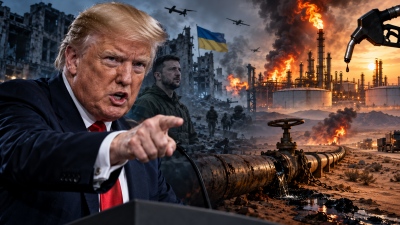
In his statements, US President Donald Trump reiterated that the US will immediately begin nuclear testing, just as other states, such as Russia, China, and North Korea, are doing. This is an order that throws the world onto new, dangerous paths, from which there is no return for all humanity.
Trump's statements
On October 29, Trump posted the following on his Truth Social platform:
"The United States has more nuclear weapons than any other country. This was achieved, including the full modernization and renovation of existing weapons, during my first term. Because of the enormous destructive power, I HATED to do it, but I had no choice! Russia is second and China is a distant third, but they will be close in five years. Because of the testing programs of other countries, I have ordered the Department of War to begin testing our nuclear weapons in an equivalent manner. This process will begin immediately. Thank you for your attention on this matter! PRESIDENT Donald T. Trump."
Trump, in fact, repeated these statements in a recent interview with CBS, where, although it was pointed out to him that the other states are not proceeding with nuclear tests, he dismissed the argument, saying they are doing them, even if they do not publicly admit it.
Everyone is testing
The US must conduct nuclear weapons tests to "see how they work," Trump said, stating that the US should not be "the only country not conducting tests."
In an intervention by the CBS journalist that Russia and China are not conducting nuclear tests, Trump rejected her comments saying: "Russia is testing, China is testing, but they don't say it. No, we will test, because they are testing and others are testing. And of course, North Korea is testing. Pakistan is testing. But they don't tell you."
According to Trump, these countries are supposedly "testing deep underground, where people don't know exactly what is happening."
"They are testing, and we are not. We have to test. And Russia actually voiced a small threat in the last few days, saying it intends to do certain types of testing of another level," the American leader concluded.
Catastrophic idea
Despite the many errors contained in this publication, such as the statement that the US "has more nuclear weapons than any other country" (in reality, Russia is the one with the most), or that China's nuclear arsenal will reach the US level within five years (something that would require nearly 2,000 nuclear bombs annually for China), the resumption of nuclear testing is still a catastrophic idea, full of environmental, economic, and geopolitical risks.
However, the biggest danger is that the world may return to an era where all countries will conduct nuclear tests. Indeed, it was after years of hard work, confidence-building measures, and more than 2,000 nuclear tests that the world reached a common understanding on the prohibition of nuclear testing.

The long road to prohibition
In 1963, the United States, the United Kingdom, and the Soviet Union banned nuclear tests in the atmosphere, in space, and underwater through the Partial Test Ban Treaty (PTBT) as a reaction to the destructive environmental consequences and as a consequence of the Cuban Missile Crisis.
This was followed by the Threshold Test Ban Treaty (TTBT) in 1974, which limited the possibility of underground testing to below 150 kilotons. And finally, in 1997, the Comprehensive Nuclear-Test-Ban Treaty (CTBT) banned all nuclear tests. In total, 187 countries signed the CTBT.
However, despite the CTBT regime, some nuclear tests continued.
The exceptions
For example, India, Pakistan, and North Korea refused to sign the CTBT. India and Pakistan conducted nuclear tests in 1998, and North Korea conducted its first nuclear test in 2006.
India did not sign the CTBT, but committed to a unilateral, voluntary suspension of nuclear tests after the 1998 tests. In addition, many countries, such as the US and China, signed the Treaty, but never ratified it. Citing Washington's failure to ratify the Treaty, Russia "revoked" it in 2023.
Although the CTBT never entered into force, the world, with a few exceptions, followed the suspension of nuclear tests. However, now, with these moves by Trump, the world may return to the Cold War era, where the nuclear arms race and the competitive escalation of capabilities may begin again through more nuclear tests with greater yields.

The era of the nuclear arms race
The history of nuclear testing began early in the morning of July 16, 1945, at a test desert in Alamogordo, New Mexico, when the United States dropped its first atomic bomb.
During the five decades from that fateful day in 1945 until the signing of the CTBT in 1996, more than 2,000 nuclear tests were conducted worldwide. The US led in nuclear testing, having performed more than half. From 1945, when they conducted their first nuclear test, until 1992, when they conducted their last, the US conducted a total of 1,032 nuclear tests.
- Russia was second, conducting 715 tests between 1949 and 1990.
- Britain conducted 45 tests between 1952 and 1991.
- France conducted 210 tests between 1960 and 1996.
- China conducted 45 tests between 1964 and 1996.
- India conducted one test in 1974 and five more in 1998.
- Pakistan also conducted six nuclear tests in 1998.
- The Democratic People's Republic of Korea conducted nuclear tests in 2006, 2009, 2013, 2016, and 2017.
In total, between 1945 and 1995, nearly 2,022 nuclear tests were conducted, averaging more than 40 nuclear tests every year, or more than three nuclear tests every month.
The only weapon used twice
For those born after 1990, it is indeed difficult to imagine that there was a time when the world was conducting over 40 nuclear tests every year. Indeed, nuclear bombs may be the only weapon in the world that has been used only twice, but has been tested more than 2,000 times.
Evidently, many of these nuclear tests were not conducted to check the lethal power of the bombs or to collect data, but simply to show their determination to push the world into a nuclear Armageddon if their interests or dominance were challenged.
Given that a nuclear test can cost about 100 million dollars, a huge amount of money was wasted just to show their determination.
Types of nuclear tests
Nuclear explosions have been carried out in all environments: above the surface, underground, and underwater. The bombs have been detonated in towers, on floating platforms, suspended from balloons, on the surface of the earth, at depths of 600 meters underwater, underground at depths of more than 2,400 meters, and in horizontal tunnels. Test bombs have been dropped from aircraft and launched by missiles at heights up to 200 miles in the atmosphere.
Atmospheric tests
Atmospheric tests refer to explosions carried out in or above the atmosphere.
Out of the more than 2,000 nuclear explosions conducted worldwide between 1945 and 1996, 25% or more than 500 bombs exploded in the atmosphere: more than 200 by the United States, more than 200 by the Soviet Union, about 20 by Britain, about 50 by France, and more than 20 by China. However, strong objections were raised by experts regarding the dangers of radioactive fallout from atmospheric nuclear tests at least since the 1950s.
Castle Bravo: The nuclear test that woke the world
In March 1954, the United States tested the Castle Bravo hydrogen bomb in the Marshall Islands in the Pacific. The Bravo test created the biggest radiological disaster in the history of US nuclear testing. Accidentally, citizens in the Marshall Islands, American soldiers who were at the Rongerik atoll, and the Japanese fishing vessel Lucky Dragon, were contaminated by the radioactive fallout.
The Bravo explosion had a yield of 15 megatons, 1,000 times more powerful than the weapon that destroyed Hiroshima and almost three times more powerful than the 6 megatons its designers had calculated. The explosion vaporized approximately 10 million tons of sand, coral, and water, creating a 160-kilometer cloud of radioactive fallout that rained radioactive debris on the inhabitants of Marshall Island, the American soldiers, and the Japanese fishermen of the Lucky Dragon.

Radioactive fallout
The radioactive fallout from Bravo forced the evacuation of more than 230 people from the Rongelap, Rongerik, and Utiri atolls (all parts of the American administration for the Marshall Islands), including 28 American soldiers in Rongerik. The residents of Rongelap had the most significant exposure to radioactive contamination. When the toxic cloud reached Rongelap, which is about 110 miles from the test site, the radioactive fallout looked like snow. Children played with the radioactive flakes while others continued to work outdoors. The immediate health effects were severe and long-lasting, and Rongelap became uninhabitable. In addition, 23 Japanese fishermen from the Lucky Dragon became ill from radiation exposure, and the death of one of the crew members helped to bring international attention to the dangers of nuclear radiation.
The long road to the prohibition of nuclear tests
The Partial Test Ban Treaty of 1963 banned atmospheric tests. The negotiations were mainly a response to the serious concern of the international community about the radioactive fallout caused by atmospheric tests. The United States, the Soviet Union, and the United Kingdom became parties to the Treaty. France and China did not sign the Treaty. France conducted its last atmospheric test in 1974 and China in 1980.
The Soviet proposal
Later, in 1990, the Soviet Union proposed a suspension of nuclear testing, which the United Kingdom and the United States accepted.
The last nuclear test of the Soviet Union was conducted on October 24, 1990, of the United Kingdom on November 26, 1991, and of the US on September 23, 1992. France and China conducted their last tests in January and July 1996, respectively, before signing the Comprehensive Nuclear-Test-Ban Treaty (CTBT). France closed and destroyed all its nuclear test sites in the 1990s, the only nuclear power to have done so to date. Since 1996, only three states, India, Pakistan, and North Korea, have conducted nuclear tests. However, after their tests in 1998, both India and Pakistan announced unilateral suspensions of nuclear tests and have conducted no further tests since 1998.

It took 50 years
The world needed almost 50 years, over 2,000 nuclear tests on land, underground, underwater, and in the atmosphere, billions of dollars, and hundreds of thousands of victims from radiation leaks to reach an agreement on nuclear testing.
For example, since 1990, the US Department of Justice has paid $2.6 billion to more than 41,000 applicants under the Radiation Exposure Compensation Act (RECA) from states such as Nevada, Colorado, New Mexico, Utah, and Texas.
The danger of a new nuclear race
A single nuclear test by the US can bring the world into a new nuclear arms race. Furthermore, if the US conducts a new nuclear test, it may cause a chain reaction, as it is certain that Russia and China will also carry out new nuclear tests.
It should also be noted that while countries like the US, France, and Russia have accumulated vast amounts of data on their bombs through hundreds of tests, countries like China and India have not. They may value the opportunity to conduct new nuclear tests, collect more data, and improve their bombs. In addition, the US will lose the moral argument to stop countries like Iran from pursuing nuclear weapons when they themselves are conducting nuclear tests.
For all these reasons, Trump must think twice before restarting the nuclear arms race, as the risks of any new nuclear test are far greater than any potential benefits.
www.bankingnews.gr
In his statements, US President Donald Trump reiterated that the US will immediately begin nuclear testing, just as other states, such as Russia, China, and North Korea, are doing. This is an order that throws the world onto new, dangerous paths, from which there is no return for all humanity.
Trump's statements
On October 29, Trump posted the following on his Truth Social platform:
"The United States has more nuclear weapons than any other country. This was achieved, including the full modernization and renovation of existing weapons, during my first term. Because of the enormous destructive power, I HATED to do it, but I had no choice! Russia is second and China is a distant third, but they will be close in five years. Because of the testing programs of other countries, I have ordered the Department of War to begin testing our nuclear weapons in an equivalent manner. This process will begin immediately. Thank you for your attention on this matter! PRESIDENT Donald T. Trump."
Trump, in fact, repeated these statements in a recent interview with CBS, where, although it was pointed out to him that the other states are not proceeding with nuclear tests, he dismissed the argument, saying they are doing them, even if they do not publicly admit it.
Everyone is testing
The US must conduct nuclear weapons tests to "see how they work," Trump said, stating that the US should not be "the only country not conducting tests."
In an intervention by the CBS journalist that Russia and China are not conducting nuclear tests, Trump rejected her comments saying: "Russia is testing, China is testing, but they don't say it. No, we will test, because they are testing and others are testing. And of course, North Korea is testing. Pakistan is testing. But they don't tell you."
According to Trump, these countries are supposedly "testing deep underground, where people don't know exactly what is happening."
"They are testing, and we are not. We have to test. And Russia actually voiced a small threat in the last few days, saying it intends to do certain types of testing of another level," the American leader concluded.
Catastrophic idea
Despite the many errors contained in this publication, such as the statement that the US "has more nuclear weapons than any other country" (in reality, Russia is the one with the most), or that China's nuclear arsenal will reach the US level within five years (something that would require nearly 2,000 nuclear bombs annually for China), the resumption of nuclear testing is still a catastrophic idea, full of environmental, economic, and geopolitical risks.
However, the biggest danger is that the world may return to an era where all countries will conduct nuclear tests. Indeed, it was after years of hard work, confidence-building measures, and more than 2,000 nuclear tests that the world reached a common understanding on the prohibition of nuclear testing.
The long road to prohibition
In 1963, the United States, the United Kingdom, and the Soviet Union banned nuclear tests in the atmosphere, in space, and underwater through the Partial Test Ban Treaty (PTBT) as a reaction to the destructive environmental consequences and as a consequence of the Cuban Missile Crisis.
This was followed by the Threshold Test Ban Treaty (TTBT) in 1974, which limited the possibility of underground testing to below 150 kilotons. And finally, in 1997, the Comprehensive Nuclear-Test-Ban Treaty (CTBT) banned all nuclear tests. In total, 187 countries signed the CTBT.
However, despite the CTBT regime, some nuclear tests continued.
The exceptions
For example, India, Pakistan, and North Korea refused to sign the CTBT. India and Pakistan conducted nuclear tests in 1998, and North Korea conducted its first nuclear test in 2006.
India did not sign the CTBT, but committed to a unilateral, voluntary suspension of nuclear tests after the 1998 tests. In addition, many countries, such as the US and China, signed the Treaty, but never ratified it. Citing Washington's failure to ratify the Treaty, Russia "revoked" it in 2023.
Although the CTBT never entered into force, the world, with a few exceptions, followed the suspension of nuclear tests. However, now, with these moves by Trump, the world may return to the Cold War era, where the nuclear arms race and the competitive escalation of capabilities may begin again through more nuclear tests with greater yields.
The era of the nuclear arms race
The history of nuclear testing began early in the morning of July 16, 1945, at a test desert in Alamogordo, New Mexico, when the United States dropped its first atomic bomb.
During the five decades from that fateful day in 1945 until the signing of the CTBT in 1996, more than 2,000 nuclear tests were conducted worldwide. The US led in nuclear testing, having performed more than half. From 1945, when they conducted their first nuclear test, until 1992, when they conducted their last, the US conducted a total of 1,032 nuclear tests.
- Russia was second, conducting 715 tests between 1949 and 1990.
- Britain conducted 45 tests between 1952 and 1991.
- France conducted 210 tests between 1960 and 1996.
- China conducted 45 tests between 1964 and 1996.
- India conducted one test in 1974 and five more in 1998.
- Pakistan also conducted six nuclear tests in 1998.
- The Democratic People's Republic of Korea conducted nuclear tests in 2006, 2009, 2013, 2016, and 2017.
In total, between 1945 and 1995, nearly 2,022 nuclear tests were conducted, averaging more than 40 nuclear tests every year, or more than three nuclear tests every month.
The only weapon used twice
For those born after 1990, it is indeed difficult to imagine that there was a time when the world was conducting over 40 nuclear tests every year. Indeed, nuclear bombs may be the only weapon in the world that has been used only twice, but has been tested more than 2,000 times.
Evidently, many of these nuclear tests were not conducted to check the lethal power of the bombs or to collect data, but simply to show their determination to push the world into a nuclear Armageddon if their interests or dominance were challenged.
Given that a nuclear test can cost about 100 million dollars, a huge amount of money was wasted just to show their determination.
Types of nuclear tests
Nuclear explosions have been carried out in all environments: above the surface, underground, and underwater. The bombs have been detonated in towers, on floating platforms, suspended from balloons, on the surface of the earth, at depths of 600 meters underwater, underground at depths of more than 2,400 meters, and in horizontal tunnels. Test bombs have been dropped from aircraft and launched by missiles at heights up to 200 miles in the atmosphere.
Atmospheric tests
Atmospheric tests refer to explosions carried out in or above the atmosphere.
Out of the more than 2,000 nuclear explosions conducted worldwide between 1945 and 1996, 25% or more than 500 bombs exploded in the atmosphere: more than 200 by the United States, more than 200 by the Soviet Union, about 20 by Britain, about 50 by France, and more than 20 by China. However, strong objections were raised by experts regarding the dangers of radioactive fallout from atmospheric nuclear tests at least since the 1950s.
Castle Bravo: The nuclear test that woke the world
In March 1954, the United States tested the Castle Bravo hydrogen bomb in the Marshall Islands in the Pacific. The Bravo test created the biggest radiological disaster in the history of US nuclear testing. Accidentally, citizens in the Marshall Islands, American soldiers who were at the Rongerik atoll, and the Japanese fishing vessel Lucky Dragon, were contaminated by the radioactive fallout.
The Bravo explosion had a yield of 15 megatons, 1,000 times more powerful than the weapon that destroyed Hiroshima and almost three times more powerful than the 6 megatons its designers had calculated. The explosion vaporized approximately 10 million tons of sand, coral, and water, creating a 160-kilometer cloud of radioactive fallout that rained radioactive debris on the inhabitants of Marshall Island, the American soldiers, and the Japanese fishermen of the Lucky Dragon.
Radioactive fallout
The radioactive fallout from Bravo forced the evacuation of more than 230 people from the Rongelap, Rongerik, and Utiri atolls (all parts of the American administration for the Marshall Islands), including 28 American soldiers in Rongerik. The residents of Rongelap had the most significant exposure to radioactive contamination. When the toxic cloud reached Rongelap, which is about 110 miles from the test site, the radioactive fallout looked like snow. Children played with the radioactive flakes while others continued to work outdoors. The immediate health effects were severe and long-lasting, and Rongelap became uninhabitable. In addition, 23 Japanese fishermen from the Lucky Dragon became ill from radiation exposure, and the death of one of the crew members helped to bring international attention to the dangers of nuclear radiation.
The long road to the prohibition of nuclear tests
The Partial Test Ban Treaty of 1963 banned atmospheric tests. The negotiations were mainly a response to the serious concern of the international community about the radioactive fallout caused by atmospheric tests. The United States, the Soviet Union, and the United Kingdom became parties to the Treaty. France and China did not sign the Treaty. France conducted its last atmospheric test in 1974 and China in 1980.
The Soviet proposal
Later, in 1990, the Soviet Union proposed a suspension of nuclear testing, which the United Kingdom and the United States accepted.
The last nuclear test of the Soviet Union was conducted on October 24, 1990, of the United Kingdom on November 26, 1991, and of the US on September 23, 1992. France and China conducted their last tests in January and July 1996, respectively, before signing the Comprehensive Nuclear-Test-Ban Treaty (CTBT). France closed and destroyed all its nuclear test sites in the 1990s, the only nuclear power to have done so to date. Since 1996, only three states, India, Pakistan, and North Korea, have conducted nuclear tests. However, after their tests in 1998, both India and Pakistan announced unilateral suspensions of nuclear tests and have conducted no further tests since 1998.
It took 50 years
The world needed almost 50 years, over 2,000 nuclear tests on land, underground, underwater, and in the atmosphere, billions of dollars, and hundreds of thousands of victims from radiation leaks to reach an agreement on nuclear testing.
For example, since 1990, the US Department of Justice has paid $2.6 billion to more than 41,000 applicants under the Radiation Exposure Compensation Act (RECA) from states such as Nevada, Colorado, New Mexico, Utah, and Texas.
The danger of a new nuclear race
A single nuclear test by the US can bring the world into a new nuclear arms race. Furthermore, if the US conducts a new nuclear test, it may cause a chain reaction, as it is certain that Russia and China will also carry out new nuclear tests.
It should also be noted that while countries like the US, France, and Russia have accumulated vast amounts of data on their bombs through hundreds of tests, countries like China and India have not. They may value the opportunity to conduct new nuclear tests, collect more data, and improve their bombs. In addition, the US will lose the moral argument to stop countries like Iran from pursuing nuclear weapons when they themselves are conducting nuclear tests.
For all these reasons, Trump must think twice before restarting the nuclear arms race, as the risks of any new nuclear test are far greater than any potential benefits.
www.bankingnews.gr



Σχόλια αναγνωστών