

American military buildup intensifies in the Caribbean, alarm raised on the aircraft carrier USS Gerald R. Ford.
The decision for Donald Trump to attack Venezuela is a matter of days, if not hours. This decision is accompanied by an unprecedented concentration of American military forces in the Southern Caribbean, with the aircraft carrier USS Gerald R. Ford being repositioned from the Mediterranean Sea to participate in operations near Venezuela. The planned attack against Venezuelan military installations has been published in both the Miami Herald and the Wall Street Journal, which describe the imminent offensive as direct and dangerous. According to the Miami Herald, "The Trump administration has decided to attack military facilities inside Venezuela, and the strikes could begin at any moment, sources familiar with the situation said. The US is preparing for the next phase of its campaign against the 'Soles' drug cartel, which is connected to Venezuelan President Nicolas Maduro," the Miami Herald reports. The newspaper continues, saying the operation aims to "destroy military facilities used by the criminal organization that the US claims is run by Maduro, with the help of high-ranking officials of his regime."
Sources say the attacks could begin "in hours or days."
Strategy of complete cartel decapitation
The goals of the attack, according to sources, include decapitating the leadership of the drug cartel, which, according to US officials, exports about 500 tons of cocaine annually to Europe and the US. This operation may include aerial bombings on strategic points in Venezuela, with the main objective of removing the cartel's leadership and weakening organized crime. As sources report, the problem is that Nicolas Maduro "will soon find himself trapped and may discover he cannot escape the country, even if he decides to." "The worst for him is that there are now more than one general willing to arrest him and hand him over, fully aware that talking about death is one thing, and seeing it come is another," one of the newspaper's sources stated.
Total regime change and prospect for a 'friendly' leader
It appears that the planned operation will be a full-scale regime change operation, with a US-friendly opposition leader taking power, such as the latest Nobel Peace Prize laureate, María Machado, although it has not been confirmed who this leader will be. While the strategy for overthrowing Maduro has provoked reactions and concerns on the global political stage, the US decision for this attack comes at a crucial time, as the Trump administration has openly expressed its willingness to confront regimes it deems hostile and impose changes in their leadership, although developments in the region may lead to unpredictable consequences for the area and international security.
What bankingnews.gr reported earlier:
What the Americans are preparing in Venezuela, the 'staged' Nobel.
History seems to be repeating itself, with the US having learned nothing from the Cuban Missile Crisis. In recent months, the Americans have built up a strike force off the coast of Venezuela. Furthermore, they have declared the President of Venezuela the head of a drug cartel and are offering a $50,000 reward to anyone who brings him to the US, dead or alive. They have already found his replacement - the award-winning María Machado.
Classic practices
This situation is nothing new. It is a classic example of US gunboat diplomacy - the use of military maneuvers to exert pressure and advance economic interests. Venezuela is an important oil player in Latin America, whose ties with Russia and China are a source of concern for the US. For Trump, this is a problematic area he wants to tackle - on his own terms. We see how he is building his negotiating positions to dictate his terms to Venezuela, which are, of course, economic. After all, the energy market is volatile, and Trump seeks to create a safety net for America as the world's largest oil consumer. It is important for him that Venezuela takes US interests into account in its energy policy.
Military risks and support for Venezuela
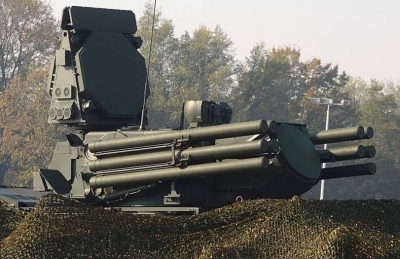
We see that the US has intensified its military activity around Venezuela, including the deployment of forces and maneuvers. The country's proximity to American territory allows them to deploy a quite large force. According to the Trump administration, they are already cautiously talking about the possibility of a small, victorious war - but it is important to make a distinction here. First and foremost, air force and missile launches. All of this could have consequences, including risks to Venezuela's energy infrastructure. However, the country mitigates some of these risks with the support of its allies. The transfer of air defense systems to Russia is a significant step in this direction. Venezuela is a country with an army of hundreds of thousands of men, capable of proving its worth in a ground confrontation. Its combat experience is limited, but its numbers and equipment allow it to turn any attack into a dangerous gamble. The Pentagon understands that an airborne landing could lead to serious problems and losses. Therefore, regarding the risks of pressure, the US is probably only considering targeted attacks. But Venezuela sees this, and Maduro is strengthening the country's air defense.
The role of mercenaries
Yesterday, October 30, 2025, it became known that a Russian transport plane had departed for Caracas. It was supposedly the same plane that had previously carried Wagner mercenaries. Although there are doubts about their direct involvement this week in the events, we are probably talking about Russian military experts who were already working in the country and helping its army with experience and new tactics. Overall, Russia has become a significant supplier of advanced military science to Venezuela. And it is very likely that cooperation is developing in this direction. Just recently, a strategic cooperation agreement between Russia and Venezuela was ratified. It stipulates that the parties will provide mutual military assistance in combating extremism and terrorism. The wording is vague. It is not like in North Korea, where one side commits to defending the other in case of aggression.
What forms of support can Russia provide
In addition to air defense and specialists, Russia has a comprehensive military-industrial complex, and support can extend across its entire spectrum. The importance of its developments - both in drones and armored vehicles - is confirmed on the battlefield, where they successfully compete with any NATO model. Therefore, the main focus may be on military-technical cooperation. But the status of this treaty is certainly not as high as those with North Korea or post-Soviet countries. Let's not forget, an entire ocean and the Panama Canal lie between Russia and Venezuela. Geography objectively plays a decisive role.
The role of China
We must not forget Venezuela's other friend, China, which is also closely watching everything that happens. It is important for Beijing to maintain its say in the energy market and it is also concerned about Venezuela's security. It is no secret that Trump is waging a war against China's commercial influence. Everyone understands this, and China will pursue its interests, including potential military support.
The CIA and the internal situation in Venezuela
For now, the situation in Venezuela is quite stable. The army supports the government, and the population largely supports it. Former elites have fled to Europe, including Machado. There is no base there for the CIA to operate.
What can the CIA do?
The Venezuelan state faces economic challenges, and this sometimes raises questions among the population. However, amidst threats from the US, we see society rallying around Maduro. There is no evidence to suggest the effectiveness of American intelligence operations in the country. Agent networks have been dismantled, and subversive activities have been significantly limited. Such attacks may target energy infrastructure, but full-scale operations are out of the question.
Trump's strategy and support for Venezuela
Most observers have already concluded that a ground operation is a bluff, missile attacks are possible, and the downing of submarines in the Caribbean is also likely, even though they cannot even reach the US coasts. They simply do not have enough fuel. What is Trump hoping for? What is his plan for Venezuela? These questions remain unanswered for now, although many analysts believe he is playing a psychological game, trying to push his agenda. And the question is who will look away first. Who will blink first. In this confrontation, the support of Russia and China is crucial for Venezuela. Ignoring the US is difficult, and ignoring the risks is impossible. And in this persistent dispute, the sharp eyes of Moscow and Beijing are on Maduro's side. Trump is largely trying to assess these risks. But he is certain that if things don't go his way, he will shift the world's attention elsewhere - as he has been doing very actively for the past six months.
Russian military base in Venezuela
In 2018, Russian strategic bombers visited Venezuela. The Americans were truly panicked. And then there was talk of a possible Russian military base in the country. Overall, the prospect of a repeat depends on the future course of negotiations between Russia and the US. Incidentally, it is also important to note the trends within Latin America itself. There, Trump's actions and statements are viewed with caution. If he threatens Venezuela today, why can't he threaten other countries in the region tomorrow? Even countries that have strained relations with Venezuela still clearly state, albeit subtly, that they are unhappy with Washington's tone. This is evident in the reaction of Colombia, whose president is already facing criticism. It is also evident in Brazil. This is a challenge for Latin America. And it is clear that countries are beginning to consider how to deal with it collectively. All of this, in turn, contributes to the development of a multipolar world, where Latin America is gradually establishing itself as a unified community with interconnected interests.
Combating drug trafficking and domestic risks in the United States
If Trump truly wanted to defeat the drug trade, where would he start? Naturally, from within the United States itself - with the cartels operating in the border regions. We see that Washington understands this, as control in the border states is being strengthened. But all this harbors serious domestic risks. And Trump is trying to balance them with the opportunity to solve domestic problems through external means.
How close is war
In the sense that Trump, despite his image as a peacemaker, allows the use of force, but fears its escalation. We see the downing of vessels as a show of force, as a deployment of the fleet - but Trump has not yet decided on more decisive steps.
www.bankingnews.gr

Σχόλια αναγνωστών